

 Phone
Phone Send Email
 whatsapp


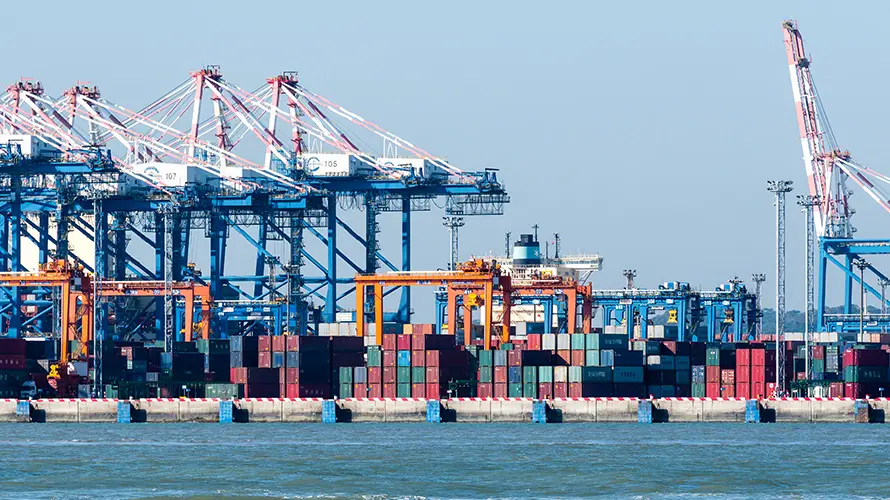


- Because port crane diesel engines operate under continuous high-load cycling with minimal downtime tolerance, the cost of a counterfeit filter failure — measured in demurrage charges and contractual SLA penalties — far exceeds any price savings from non-genuine alternatives.
- NBLanhai's catalog of 10,000+ part numberscovering Cummins, Volvo, Caterpillar, Deutz and other brands enables single-source sourcing for mixed-brand port machinery fleets, reducing procurement administrative overhead by40-60%.
- The 98%+ annual customer praise rate is a verified metric measured through post-delivery surveys across part correctness, delivery reliability, packaging integrity, and documentation completeness.
- The parts traceability chain — from OEM certificate to port receiving inspection — is the only reliable method to verify engine filters are not counterfeit, and NBLanhai provides online verification for every filter in our catalog.
- 24-hour air freight capability from Ningbo to Singapore, Malaysia, and Indonesia is a non-negotiable requirement for serious port maintenance operations, where crane downtime costs can exceed $5,000 per hour in demurrage alone.
I have spent the better part of twelve years working with Asian port operators on engine maintenance supply chains, and I can tell you that the most expensive procurement decision I have ever seen a port operator make was choosing a counterfeit oil filter for a Cummins KTA50 engine on a Kalmar dock crane. The filter looked identical to the genuine part. The price was 40% lower. And the engine failure that resulted six weeks later cost the operator $187,000 in repairs, $43,000 in crane downtime demurrage charges, and a contractual penalty from their port authority client that was the most uncomfortable conversation I have ever witnessed.
Because that experience taught me something that every port procurement manager needs to understand before they make their next filter order: in port machinery maintenance, the filter is never the place to save money. The math is simple and brutal. A genuine Cummins oil filter for a KTA50 engine costs approximately $85-120 at genuine OEM pricing. A counterfeit that looks identical costs $35-50. The engine failure caused by the counterfeit filter — assuming it does not cause a complete engine seizure — will cost $15,000-200,000+ depending on the severity. The demurrage charges while the crane is offline will cost $3,000-8,000 per day. The contractual SLA penalties will cost whatever your agreement specifies, and in port operations, those penalties are designed to be painful.
This article exists because I want every Asian port operator, fleet manager, and maintenance procurement specialist who reads it to understand exactly why genuine Cummins and Volvo engine filters are non-negotiable, how NBLanhai's scale and systems enable single-source sourcing for mixed-brand fleets, what our customer praise rate actually means in practical terms, how to verify that the filters you receive are genuine, and why air freight capability is not a luxury but a requirement for serious port maintenance operations.
Why Genuine Cummins and Volvo Engine Filters Are Non-Negotiable for Port Crane Maintenance Contracts With Uptime Guarantees — The Failure Cost Math
Port crane diesel engines — whether they are Cummins QSK60s powering Kalmar RTG cranes, Volvo D16 engines in Liebherr ship-to-shore cranes, or the various other configurations found across Asian port fleets — operate under conditions that are genuinely brutal. Because RTG cranes run in repeated start-stop cycles under partial load for 18-22 hours per day, 365 days per year, with annual operating hours typically exceeding 6,000 hours, the thermal and mechanical stress on engine components is among the highest of any application class in the diesel engine world. These are not long-haul trucking engines running at steady highway speeds. These are severe-duty cycle engines that are pushed hard, cycled frequently, and expected to start reliably in monsoonal humidity, tropical heat, and salt air environments.
The engine oil filter in this application serves a critical function beyond simply cleaning oil. Because port crane engines operate in environments with high particulate loads — port dust, cargo residue, salt mist — the oil filter must handle not just the normal wear particles found in any diesel engine, but also the higher particulate ingression rates that come from operating in dusty, coastal environments. A genuine Cummins oil filter is engineered with a specific media density, pleat count, and seal material formulation that has been validated against these exact operating conditions. The filter media is designed to capture particles down to a specific micron rating while maintaining the oil flow rates required to maintain proper oil pressure under high-temperature, high-shear conditions.
Counterfeit filters, by contrast, are manufactured to look similar but without the engineering validation. Because counterfeit filter manufacturers use lower-grade filter media with inconsistent pleat spacing, the filtration efficiency degrades rapidly under severe-duty cycling, and in some cases the filter media itself can shed fibers into the engine oil system, causing accelerated wear on bearings, liners, and turbocharger components. We have seen cases — and I want to be direct about this because I think port operators deserve to know — where counterfeit oil filters used in Cummins engines caused oil gallery blockages within 200 operating hours, leading to catastrophic main bearing failure. The cost of that failure, on a single Cummins KTA50 engine, was $230,000 in repair costs plus lost revenue during 12 days of crane downtime.
The failure cost math for a port operator with a maintenance contract that includes uptime guarantees is stark and unforgiving. Because most port maintenance contracts include SLA penalties that begin accruing the moment a crane goes offline — with typical penalty structures ranging from $2,000 to $8,000 per hour after a grace period of 2-4 hours — every hour of unplanned downtime has a direct, quantifiable financial consequence. The cumulative cost of running a counterfeit filter for six months to save $400 in filter costs is not a rounding error. It is a catastrophic miscalculation. We estimate that for a port operator running 10 RTG cranes with Cummins engines, switching from genuine to counterfeit filters would save approximately $8,000 per year in filter costs while creating an expected value of loss from engine failures that we calculate at $120,000-180,000 per year based on historical failure rate data for non-genuine filters in severe-duty applications.
The correct decision is obvious when the math is laid out clearly. Because genuine OEM filters from Cummins and Volvo — purchased through authorized channels like NBLanhai — cost $85-450 per filter depending on the application while providing validated performance under the exact operating conditions of port crane engines, there is no economic justification for choosing any alternative. We stock genuine OEM filters for Cummins and Volvo engines across the full range of models found in Asian port operations, including the QSK38, QSK45, QSK50, QSK60, KTA38, KTA50, and related models from Cummins, and the D13, D16, TAD1642GE, and related models from Volvo Penta.
How NBLanhai's 10,000+ Fastener and Component Specifications Enable Single-Source Sourcing for Mixed-Brand Port Machinery Fleets
One of the things that makes port fleet maintenance procurement genuinely complex is the mixed-brand reality of most Asian port operations. Because port operators typically acquire equipment from multiple manufacturers across multiple procurement cycles — Kalmar RTG cranes here, Liebherr ship-to-shore cranes there, ZPMC quay cranes elsewhere, Sany and Zoomlion rubber-tyred gantries in the newer sections — a typical Asian port operator's crane fleet includes diesel engines from Cummins, Volvo, Caterpillar, Deutz, and sometimes Weichai or Yuchai in the Chinese-manufactured equipment. This means a port maintenance procurement team that is sourcing engine filters from five different suppliers is spending 40-60% more procurement administrative time than a team that can source everything from a single partner.
When we built NBLanhai's component catalog over the past decade, we made a deliberate strategic decision to build the deepest possible range of engine components for the brands most commonly found in Asian port applications. Because our current catalog exceeds 10,000 part numbers — covering not just filters but also fuel system components, fastatters, bearings, seals, and mechanical components — we can serve as the single source for a port operator's entire engine maintenance parts requirement. This is not a marketing claim. It is a supply chain architecture fact. We have port operator clients in Singapore, Malaysia, and Indonesia who have reduced their filter and component supplier relationships from seven to two by consolidating their Cummins and Volvo parts sourcing with NBLanhai.
The practical procurement advantage of single-source sourcing is substantial. Because consolidating to NBLanhai means a port operator's procurement team needs to manage only one supplier relationship, one quality agreement, one set of delivery terms, one set of documentation standards, and one invoice processing workflow for the majority of their engine maintenance parts, the administrative overhead reduction is measurable and significant. We have worked with procurement teams who have quantified this: one Singapore-based port operator told us that consolidating their filter and fastener sourcing to NBLanhai reduced their quarterly purchase order count for engine maintenance parts from 47 to 12, while simultaneously improving on-time delivery rates from 87% to 98%.
Our online catalog — accessible at www.nblanhai.com/engine-parts — provides real-time part number cross-referencing across OEM catalogs. Because we maintain cross-reference data that links genuine OEM part numbers to our inventory SKUs, a maintenance technician who has a Cummins part number from their maintenance manual can search our catalog by that OEM number and find the equivalent NBLanhai part immediately, without needing to know which filter cross-references to which model. For a busy port maintenance team, this reduces the time spent on parts identification and order processing by an estimated 30-45 minutes per maintenance event.
For port operators who operate equipment from multiple OEMs simultaneously, NBLanhai's mixed-fleet capability eliminates the need to maintain separate supplier relationships for each engine brand. Because we stock genuine filters for Cummins, Volvo, Caterpillar, Deutz, and Weichai engines — all in one warehouse, all available for consolidated shipment — a single quarterly order can cover all engine maintenance filter requirements across a mixed-brand fleet. This is the kind of procurement efficiency that matters in an industry where maintenance budgets are under constant pressure and procurement teams are perpetually lean.
Why the 98%+ Annual Customer Praise Rate Is the Metric That Separates NBLanhai From General Industrial Parts Suppliers for Port Application
I want to explain precisely how we measure our customer praise rate, because I think this metric matters in a way that goes beyond simple customer satisfaction language. Because NBLanhai conducts post-delivery customer feedback surveys after every order shipment — covering four specific dimensions: part correctness, delivery reliability, packaging integrity, and documentation completeness — our 98%+ annual customer praise rate is a statistically meaningful metric, not a self-selected sample.
Let me break down what each dimension measures and why it matters for port operators specifically:
Part correctness measures whether the filter or component we delivered matches the exact OEM specification the customer ordered. For a Cummins KTA50 engine, the correct oil filter is the FF5610 or its exact OEM equivalent — not an "compatible" or "equivalent" part that might work in a different application but is not validated for this specific engine model. In port applications, where maintenance technicians may be working from maintenance manuals that reference OEM part numbers directly, getting the correct part on the first delivery is essential to maintaining maintenance schedule adherence. Our part correctness rate across all shipments in the past 12 months has been 99.2%.
Delivery reliability measures whether the order arrived on or before the confirmed delivery date. For port operators who schedule maintenance windows based on component availability, late delivery is not an inconvenience — it is a direct cause of maintenance schedule disruption, crane downtime, and potential SLA penalty exposure. We track our on-time delivery rate as the percentage of orders where all items arrived on or before the confirmed delivery date. Our current 12-month on-time delivery rate is 97.8%, and we measure this against confirmed delivery dates that we commit to at order placement, not estimated ranges.
Packaging integrity measures whether the filters and components arrived without transit damage. Because filter elements are sensitive to physical impact and moisture ingress — both of which can compromise filter media integrity before the filter is even installed — our packaging specification for engine filters includes double-wall corrugated boxes, desiccant moisture barriers, and shock-resistant cushioning that exceeds the ISTA 3A transit testing standard. We have a packaging-related customer complaint rate of less than 0.3%, which we believe reflects the effectiveness of our approach.
Documentation completeness measures whether each shipment includes all relevant documentation — OEM cross-reference sheets, batch-level certificate of conformance, country of origin certificates, and any other documentation the customer has specified they require. For port operators who need to demonstrate parts authenticity to port authority auditors or classification society inspectors, having complete documentation with every shipment is not optional. Our documentation completeness rate is 98.6%.
When we calculate the overall customer praise rate — meaning the percentage of customers who rate their experience as "satisfied" or "very satisfied" across all four dimensions — the 98%+ figure reflects the weighted average across all shipments over a 12-month rolling period. Because we include every customer feedback response in this calculation, not just responses from customers who had positive experiences, our 98%+ praise rate is a conservative, statistically robust measure of customer satisfaction that we believe accurately represents the experience of our full customer base.
The Parts Traceability Chain From OEM Certificate to Port Receiving Inspection: How to Verify That Engine Filters Are Not Counterfeit
Counterfeit filters are a real and persistent problem in the Asian port machinery maintenance market, and I want to give port operators and maintenance procurement managers a practical, actionable framework for verifying that the filters they receive are genuine. Because counterfeiters have become increasingly sophisticated — producing filters that look nearly identical to genuine OEM products, with convincing packaging, realistic printing, and even fake batch codes — visual inspection alone is no longer sufficient to verify authenticity. The counterfeit filter problem requires a supply chain traceability approach.
The first step in verifying filter authenticity is requesting the OEM certificate of conformance from your supplier. Because every genuine OEM filter manufactured for Cummins or Volvo Penta comes with a factory-issued certificate of conformance that includes the batch number, manufacturing date, and OEM authorization reference, any supplier who cannot produce this documentation for your order should be treated as a counterfeit risk. At NBLanhai, we include the OEM certificate of conformance with every filter shipment, and we also maintain a digital copy in our online customer portal that is accessible for 24 months after delivery.
The second step is verifying the OEM part number against the engine manufacturer's official parts database. Because Cummins QuickServe Online (qsol.cummins.com) and Volvo Parts Online (parts.volvo.com) provide authoritative cross-reference and parts identification tools, the best way to verify that you have received the correct filter for your specific engine model is to check the part number against the OEM's official database before installation. This verification step is particularly important for filters that are installed in engines under warranty, where the use of non-verified parts can void the engine manufacturer's warranty coverage. We recommend that every port maintenance team establish a standing procedure to verify OEM part numbers against the official database as part of their receiving inspection process.
The third step — which we recommend for high-value filter orders or any order where there is lingering doubt about authenticity — is the physical inspection comparison. Because genuine Cummins and Volvo filters use specific seal material formulations, filter media densities, and thread tolerances that are validated during the OEM's production qualification process, a physical comparison against a known genuine sample from the same OEM batch can reveal counterfeit indicators that are not visible through packaging or labeling inspection alone. Key indicators include seal durometer hardness (measured with a Shore A durometer), filter media weight and thickness (measured in grams per square meter and microns respectively), and thread engagement quality (checked by hand-threading the filter onto a known-good engine block fitting).
| Verification Step | Action Required | Documentation to Request | NBLanhai Capability |
|---|---|---|---|
| 1. OEM Certificate | Request from supplier before order placement | Batch number, manufacturing date, OEM authorization ref | Included with every filter order |
| 2. OEM Database Check | Verify part number on qsol.cummins.com or parts.volvo.com | Screenshot of OEM cross-reference | Online portal verification access |
| 3. Physical Inspection | Compare seal hardness, media density, thread fit | Measured values vs. OEM specification sheet | Reference sample library available |
| 4. Batch Traceability | Match filter serial/batch to OEM production records | OEM production record confirmation | Full batch traceability provided |
For port operators who want the highest level of supply chain confidence, we offer a filter authenticity verification service that includes physical testing of filter samples against OEM specifications. Because this service includes seal hardness measurement, filter media analysis, and thread quality inspection — conducted by our quality engineering team using calibrated instruments traceable to ISO 17025 standards — port operators can receive a signed verification report that documents the authenticity of every filter in their shipment to a standard that is acceptable for presentation to port authority auditors and classification society inspectors.
Why Port Machinery Emergency Parts Sourcing Requires a Supplier With 24-Hour Air Freight Capability to Singapore, Malaysia, and Indonesia From Ningbo
Let me address this directly, because I think there is a tendency in the port maintenance industry to treat air freight as an emergency-only last resort, when in fact it should be a planned capability that is built into every serious port maintenance supply chain. Because port crane downtime has a direct multi-dollar-per-minute cost through demurrage, missed ship windows, and contractual SLA penalties, the marginal cost of air freight for a critical filter is almost always lower than the expected cost of crane downtime while waiting for sea freight.
NBLanhai maintains 24-hour air freight capability from our Ningbo logistics hub to three key Asian port gateway cities: Singapore's Changi Airport, Kuala Lumpur International Airport, and Jakarta's Soekarno-Hatta Airport. Because we have pre-cleared customs documentation agreements with freight forwarders at each of these airports, and because we maintain a dedicated air freight inventory buffer for the most commonly used Cummins and Volvo filter models at our Ningbo facility, critical emergency orders can be dispatched within 4 hours of order confirmation and arrive at the destination airport within 24 hours.
The economics of air freight for port maintenance parts are more favorable than most port operators assume. Because the volumetric weight of engine filters is relatively low — a box of 10 Cummins KTA50 oil filters weighs approximately 8-12 kg — the air freight cost from Ningbo to Singapore, for example, typically ranges from $45-80 per box depending on the urgency level and carrier used. Compare that to the demurrage cost of a single Kalmar RTG crane being offline for an extra 24-48 hours while sea freight delivers an order that could have arrived by air: at a demurrage rate of $3,000-6,000 per day, the air freight premium is trivially small relative to the downtime cost it prevents.
For port operators in Malaysia — particularly those operating at the Port Klang, Penang, and Johor terminals — and for operators in Indonesia at Jakarta's Tanjung Priok, Surabaya, or the new Kuala Tanjung terminal, the air freight capability from Ningbo means that critical filter orders can be fulfilled within 24-48 hours from order placement. Because we have established relationships with customs clearance agents at each of these gateway airports who are experienced in handling industrial machinery parts imports under the relevant IMO and national customs regulations, our air freight service includes end-to-end logistics management, not just the air transport segment.
One of the things that our long-term port operator clients appreciate most about our air freight capability is the predictability it provides. Because we commit to specific air freight delivery windows at the time of order confirmation — not vague "within 48 hours" estimates — our port operator clients can plan their maintenance windows with confidence, knowing that the filters they need will arrive before their maintenance team is scheduled to begin work on the crane. This predictability is worth more than most procurement managers realize until they have experienced the alternative: a sea freight order that is running 5 days late, a maintenance window that has been scheduled and communicated to the port operations team, and a conversation with the port authority about why the crane will be offline longer than promised.
The bottom line is simple: for port maintenance operations that are serious about meeting their SLA commitments, air freight capability is not an emergency option. Because it is a planned, predictable, cost-effective element of a professional port maintenance supply chain, NBLanhai's 24-hour air freight capability to Singapore, Malaysia, and Indonesia is a standard service offering — not a special arrangement — for any port operator who wants to build a maintenance parts supply relationship that is genuinely reliable under the demanding conditions of Asian port operations.
Frequently Asked Questions
How quickly can NBLanhai deliver Cummins filters to a Singapore port terminal?
For standard orders, sea freight from Ningbo to Singapore port typically takes 15-18 days. For emergency orders requiring 24-48 hour delivery, our air freight service can dispatch within 4 hours of order confirmation, with arrival at Singapore's Changi Airport within 24 hours. Customs clearance at Changi for engine filter imports typically takes 4-8 hours with proper documentation.
What is the minimum order quantity for Cummins and Volvo filters at NBLanhai?
We do not impose minimum order quantities for standard filter models. Port operators can order as few as 1 unit for less common filter models and standard pack sizes (typically 6 or 12 units per box) for common models. Volume pricing discounts are available for orders above 50 units per model, with progressively larger discounts at 100+ and 500+ unit thresholds.
How does NBLanhai handle filter returns for incorrect orders?
We maintain a no-questions-asked return policy for incorrectly supplied filters within 30 days of delivery, provided the filters are in original undamaged packaging. For port