

 Phone
Phone Send Email
 whatsapp


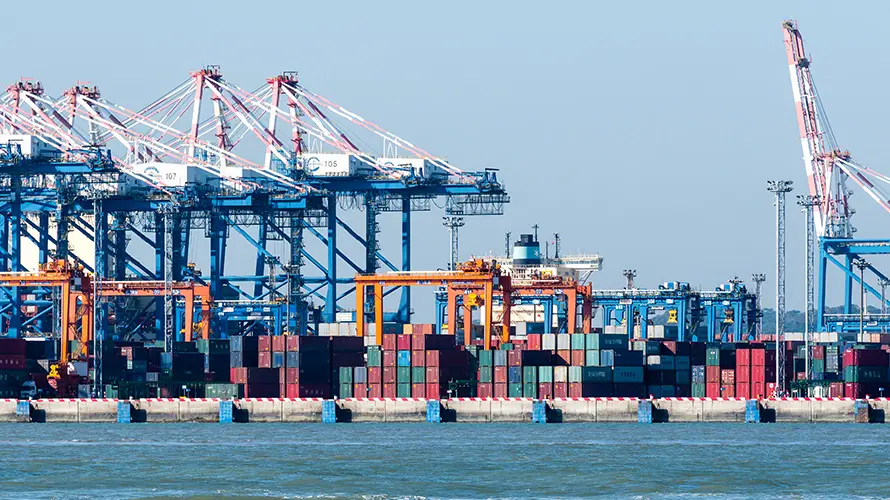


Rotterdam Port Authority's Kalmar 923141.0092 Hydraulic Pump Fleet Replacement: Model Compatibility
TL;DR:The Kalmar 923141.0092 Hydraulic pump is a critical component in the reach stacker fleet at ports across Europe — including the Port of Rotterdam, Antwerp-Bruges, Hamburg, and Valencia — where Kalmar reach stackers handle container movements in the yard and rail terminal operations. The 923141.0092 pump is the primary hydraulic power source for the reach stacker's lifting cylinder, tilting cylinder, and auxiliary functions. When the pump reaches the end of its service life (typically 8,000-12,000 operating hours in a European port environment), the port maintenance team must replace it with a pump that matches the original's flow rate, pressure rating, mounting configuration, and shaft connection. Sourcing the replacement pump from the OEM (Kalmar / Cargotec) carries a price premium of 200-400% over the equivalent aftermarket pump from Chinese manufacturers like Lanhai, who manufacture the pump to the same OEM specification with the same mounting dimensions, shaft size, and port threading. This article covers the OEM cross-reference verification, the hydraulic output parameters that must match the reach stacker's lift and tilt functions, the fleet replacement strategy (scheduled swap programs vs. run-to-failure), and the lead time expectations for European port authorities sourcing from a China-based manufacturer.

The Kalmar Reach Stacker Hydraulic System: Why the 923141.0092 Pump Is the Critical Part
The Kalmar reach stacker — the container handling vehicle that lifts, transports, and stacks shipping containers in port terminals and rail yards — operates a hydraulic system that powers three essential functions: the lifting cylinder (raises and lowers the telescopic spreader and the container), the tilting cylinder (tilts the mast forward and backward to position the spreader over the container), and the auxiliary functions (spreader twistlock engagement, side-shift, and cab tilt). The 923141.0092 pump is the sole hydraulic power source for all three functions — a pump failure means the reach stacker is immobile until the replacement pump is installed.
In the Port of Rotterdam, which operates the largest container terminal in Europe (14.3 million TEU handled in 2024), the Kalmar reach stacker fleet is estimated at 250-350 units across the various terminal operators (ECT, APM Terminals, Hutchison Ports, and the rail terminal operators at Rotterdam World Gateway). Each reach stacker's 923141.0092 pump runs 6-12 hours per day, 5-7 days per week, in a demanding operating cycle (the pump cycles from low pressure to high pressure 30-50 times per hour as the reach stacker lifts, travels, and lowers containers). The pump's service life in this application is 8,000-12,000 operating hours — approximately 2-3 years of operation — after which the pump's volumetric efficiency drops below 80% and the replacement interval begins.
For the port maintenance team managing a fleet of 50+ reach stackers, the replacement pump procurement is a continuous activity — 15-30 pumps per year for a fleet of 250 reach stackers — and the cost difference between OEM and aftermarket pumps makes a significant impact on the annual maintenance budget. The OEM pump price from Kalmar/Cargotec is €2,500-€4,500 per pump (depending on the port's contractual pricing tier). The aftermarket pump from Lanhai, manufactured to the same OEM specification, costs $450-$900 per pump FOB Ningbo — a cost saving of 65-85% per pump. For a port replacing 20 pumps per year, the annual saving from switching to aftermarket pumps is €30,000-€60,000.
OEM Number Cross-Reference: Verifying the Replacement Pump's Compatibility with Kalmar Engine Systems
The replacement pump must match the original Kalmar pump in three areas: the pump-to-engine interface (the mounting flange, the shaft coupling, and the hydraulic port locations), the pump's internal displacement (the flow rate in litres per minute at the engine's governed speed), and the pump's pressure rating (the maximum continuous operating pressure and the maximum intermittent pressure).
Mounting flange and shaft coupling: The 923141.0092 pump mounts directly to the Kalmar reach stacker's engine power take-off (PTO) housing — the pump's mounting flange is an SAE-A 2-bolt flange (standard for pumps with displacements below 50 cm³/rev) with a 13-tooth splined shaft (SAE 13T spline, 16/32 DP, 20° pressure angle, per SAE J744). The pump's shaft length and pilot diameter must be verified against the OEM pump's measurements — the pilot diameter is 63.5 mm (standard for SAE-A flange), and the shaft extends 31.75 mm beyond the flange face. Lanhai manufactures the replacement pump with the identical flange, shaft, and pilot geometry, so the pump bolts directly to the Kalmar PTO housing without adapters or modifications.
Hydraulic port locations: The pump has four ports — suction (S), pressure (P), and two ancillary ports (case drain and auxiliary pressure). The port locations on the pump body must match the reach stacker's hydraulic hose routing — the pressure port is at the 12 o'clock position (when viewed from the shaft end), the suction port is at the 6 o'clock position, and the case drain port is at the 3 o'clock position. The port thread sizes are: pressure port — SAE 12 (1-1/16-12 UNF straight thread with O-ring seal), suction port — SAE 16 (1-5/16-12 UNF). Lanhai's pump replicates the OEM port locations and thread sizes exactly, enabling a hose swap without hose modification.
Displacement verification: The 923141.0092 pump has a displacement of 36 cm³/rev. At the Kalmar reach stacker's engine governed speed of 2,200 RPM, the pump delivers a theoretical flow of 79.2 L/min (36 cm³/rev × 2,200 RPM = 79,200 cm³/min = 79.2 L/min). The actual flow at the pump outlet is reduced by the pump's volumetric efficiency — typically 92-95% for a new pump, meaning the delivered flow is 73-75 L/min. Lanhai's replacement pump is manufactured to the same displacement specification and tested at the rated speed before shipment, with the actual flow rate recorded on the test certificate.
Lanhai's product range for port equipment includes the Kalmar hydraulic pump replacement range, with the 923141.0092 model as the standard stock item.
Hydraulic Output Parameters: Flow Rate and Pressure Matching for Reach Stacker Lifting and Tilt Functions
The reach stacker's lifting and tilting functions each require a specific flow rate and pressure from the hydraulic system. The pump must deliver the correct flow rate to both functions simultaneously — the flow is divided by the reach stacker's control Valve bank according to the operator's joystick commands.
Lifting function — flow and pressure demand: The lifting cylinder raises the spreader and the container (the load). For a Kalmar reach stacker lifting a 40-tonne container, the lifting cylinder's bore diameter is 200-250 mm and the required lifting speed is 0.3-0.5 m/s (18-30 metres per minute). The flow rate required for the lifting function is: cylinder area (314 cm² for a 200 mm bore) × lifting speed (30 m/min = 3,000 cm/min) = 942,000 cm³/min = 942 L/min. This is significantly higher than the pump's rated flow of 79 L/min because the reach stacker uses a flow multiplier or regenerative hydraulic circuit — the pump charges a hydraulic accumulator during the lower-load phases of the operating cycle, and the accumulator supplements the pump flow during the high-flow lifting phase. The pump must deliver the base flow rate of 79 L/min and maintain a continuous pressure of 220-250 bar (the lifting system's relief valve setting) while the accumulator system provides the additional flow for the lifting speed.
Tilting function — flow and pressure demand: The tilting cylinder tilts the mast and the spreader forward and backward by 10-15° from vertical. The tilting cylinder is typically 100-150 mm bore diameter, and the tilting speed is 0.2-0.4 m/s (the mast tilts in 3-5 seconds). The flow required for the tilting function is 50-100 L/min (depending on the cylinder bore size and tilt speed) — within the pump's rated flow capacity. The tilting pressure demand is lower than the lifting pressure: 100-150 bar (the mast weight assists the forward tilt, and the hydraulic pressure is required primarily for the backward tilt against the mast weight).
The replacement pump must be capable of delivering 73-75 L/min actual flow at the engine's governed speed and at the system pressure of 220-250 bar — this is the continuous operating condition that the pump must sustain for 8-12 hours per day, 6-7 days per week. Lanhai's 923141.0092 replacement pump is tested at the combined condition (250 bar × 75 L/min) for 100 hours during the type test, with the pump's volumetric efficiency measured at 12-hour intervals — the efficiency must remain above 90% after 100 hours to pass the type test.
Fleet Replacement Strategy: Scheduled Swap-Pump Programs vs. Run-to-Failure for Port Equipment
European port maintenance teams operate their reach stacker fleets under two replacement strategies, and the choice between them affects the pump procurement quantity and the inventory management approach.
Scheduled swap-pump program (planned replacement at 9,000 operating hours): The port maintenance team replaces the 923141.0092 pump at a fixed operating hour interval — typically 9,000 hours, which is approximately 75% of the pump's expected service life. The replacement is scheduled in advance: the fleet operator's maintenance management system (CMMS — Computerized Maintenance Management System) generates a work order when each reach stacker approaches the 9,000-hour mark, the replacement pump is pulled from the port's inventory, and the pump is replaced during a planned maintenance shift (night shift or weekend) to minimise the reach stacker's downtime. The scheduled swap program requires the port to maintain a stock of 5-10 pumps (for a fleet of 50 reach stackers) as "float" pumps that cycle between the inventory and the machines. The advantage of the scheduled swap program is zero unplanned downtime from pump failure — the pump is replaced before it fails, so the reach stacker never stops working due to a pump issue.
Run-to-failure program (emergency replacement when the pump fails): The port does not replace pumps on a scheduled interval — the pump runs until it fails, and the replacement is done as an emergency repair. The run-to-failure approach is used by ports that have low pump replacement volumes (fewer than 10 pumps per year) or ports that have a large fleet with variable utilisation rates (it is more cost-effective to run the pump to failure because some reach stackers have low utilisation and the pump does not reach 9,000 hours within a reasonable calendar time). The disadvantage is the unplanned downtime: a pump failure during the day shift puts the reach stacker out of service for the remainder of the shift (4-8 hours for the replacement, depending on the technician's experience with the Kalmar hydraulic system).
For most European port fleets, the scheduled swap program at 9,000 operating hours provides the lowest total cost of ownership when the cost of unplanned downtime (€1,000-€5,000 per hour for a terminal operation) is factored into the maintenance cost calculation. Lanhai supports both strategies by maintaining stock of the 923141.0092 pump for immediate dispatch.
Lead Time and Stocking: What a European Port Authority Should Expect from a China-Based Supplier
For a European port authority ordering the 923141.0092 replacement pump from Lanhai in China, the lead time and inventory management considerations are different from ordering from the OEM's European warehouse. The trade-off (lower unit price vs longer lead time) is managed through the port's inventory strategy.
Stock order (pumps held at Lanhai's Ningbo warehouse): Lanhai maintains a minimum stock of 100 units of the 923141.0092 pump at the Ningbo factory warehouse. The stock is available for immediate dispatch — the order is packed and loaded into a container within 5 working days of the purchase order confirmation. Sea freight from Ningbo to Rotterdam (the primary port of entry for European-bound cargo from China) takes 28-32 days. The total lead time from order to arrival in the port's parts warehouse in Rotterdam or Antwerp is 5-6 weeks for a stock order.
Production order (pumps manufactured to order for a specific batch): For a port ordering 20-50 pumps (a full production batch), the pumps are manufactured to the port's specific requirements (the pump can be configured with the port's preferred seal material — FKM for biodegradable hydraulic oil or NBR for mineral oil — and the port's preferred shaft seal type). The production lead time is 25-30 working days from the order confirmation and deposit payment, plus 28-32 days sea freight. The total lead time is 11-13 weeks for a production order.
Emergency order (pumps shipped by express air freight): For a port that has a pump failure with no replacement pump in stock, Lanhai can dispatch up to 2 pumps by express air freight (DHL or FedEx) from the Ningbo warehouse. The air freight cost for a pump weighing 25 kg (the pump's shipping weight) is $400-$800, and the delivery time to Rotterdam Airport is 3-5 working days. The air freight option is recommended only for emergency situations because the freight cost exceeds the pump's FOB value (the pump costs $450-$900). Ports that order 10+ pumps per year should maintain a float stock of 2-3 pumps at the port's parts warehouse to avoid relying on emergency air freight.
Q&A: European Port Maintenance Teams Sourcing Kalmar Hydraulic Pumps from China
Q1: How does Lanhai verify that the replacement pump matches the Kalmar 923141.0092 specification?
A: Lanhai maintains a reverse-engineering file for the 923141.0092 pump — the OEM pump is disassembled, measured, and the measurements are recorded in a dimensional report that is verified against the Lanhai pump's manufactured dimensions. The critical dimensions — shaft spline profile, mounting flange pitch circle diameter, port thread and location, body envelope dimensions, and internal displacement — are measured on a CMM (coordinate measuring machine) and must match the OEM pump within the specified tolerance. The dimensional report is provided with each first-batch shipment.
Q2: Does Lanhai provide a guarantee that the pump will fit the Kalmar reach stacker without modification?
A: Yes. Lanhai provides a 100% fitment guarantee: if the pump does not fit the Kalmar reach stacker's PTO housing, the hydraulic hose connections, or the shaft coupling, Lanhai will accept the pump return and provide a full refund (including the return freight). The fitment guarantee is valid for 30 days from the pump's arrival at the port. However, we recommend the port's maintenance team verify the pump's mounting and port dimensions against the existing pump before placing a large batch order — the verification takes 15 minutes and requires a tape measure for the mounting flange and port locations.
Q3: What are the documentation requirements for a first order from a European port authority?
A: The first order requires a purchase order on the port authority's official letterhead, including: the buyer's company name, VAT number (for EU import VAT purposes), the ship-to address (the port's parts warehouse), the quantity of pumps, the agreed unit price, and the preferred payment terms. The documentation for the shipment includes: the commercial invoice, the packing list, the bill of lading, the certificate of origin (Form A for GSP preferential duty treatment — hydraulic pumps for port equipment typically have zero import duty under the GSP program when the correct HS code is declared), and the pump test certificate.
Q4: What is the pump test certificate that Lanhai provides?
A: Each pump is individually tested on Lanhai's hydraulic test bench before dispatch. The certificate records: the pump model and serial number, the test date, the test fluid type and temperature, the shaft speed (2,200 RPM), the pressure (tested at 250 bar continuous), the flow rate at no-load and at full pressure (recorded in L/min), the volumetric efficiency (calculated as actual flow ÷ theoretical flow), the case drain flow (the internal leakage flow from the pump's case drain port — a measure of the pump's internal clearance), and the noise level (dB(A) at 1 metre). The test data is compared to the acceptance criteria: volumetric efficiency ≥ 92% at 2,200 RPM and 250 bar, case drain flow ≤ 3 L/min at the rated condition, noise level ≤ 78 dB(A).
Q5: What is the warranty period on the Lanhai 923141.0092 pump?
A: Lanhai provides a 12-month warranty from the date of arrival at the port or 18 months from the date of the factory shipment, whichever expires first. The warranty covers manufacturing defects — pump seizure, shaft breakage, port thread stripping — and pump leakage (external leakage from the shaft seal, end cover gasket, or port O-ring seals). The warranty excludes: damage from contaminants in the hydraulic fluid (particles that score the pump internals), cavitation damage from operating the pump with low suction pressure (the pump's suction line must be restricted to no more than 0.3 bar vacuum), and damage from operating the pump at a speed or pressure above the rated specification.
Q6: What is Lanhai's recommended spare parts order with the first pump?
A: For the first pump order, we recommend ordering one seal kit (including the shaft seal, the end cover O-ring, the suction port O-ring, and the pressure port O-ring) and one control valve kit (if the pump has a pressure compensator or a load-sensing controller). The seal kit cost is $25-$50 per pump, and the control valve kit cost is $80-$150 per pump. The spare kit ensures that the port's maintenance team can reseal the pump during the installation if any of the original seals are damaged during handling or if the seal type does not match the port's hydraulic fluid (e.g., if the port uses biodegradable oil and the standard NBR seals are not compatible — the seal kit can be ordered with FKM seals).