

 Phone
Phone Send Email
 whatsapp




TL;DR:Port terminals and construction fleet operators who run Sany front-handling excavators face a consistent equipment management challenge that is fundamentally different from standard construction site operations: the need for zero-tolerance uptime in environments where equipment downtime creates direct, measurable financial losses measured in thousands of dollars per hour. The radiator assembly — specifically the Sany radiator part number 60000075 — is one of the most frequently replaced cooling system components on Sany excavators operating in high-intensity port environments. This article walks through the engineering role of the radiator in heavy-duty excavator operation, the most common failure modes in port environments, and the practical procurement and replacement considerations that port fleet managers and mining operators need to know when sourcing replacement Cooling System Parts from wholesale suppliers.
Why the Cooling System is the Most Critical Maintenance Variable in Port Excavator Operations
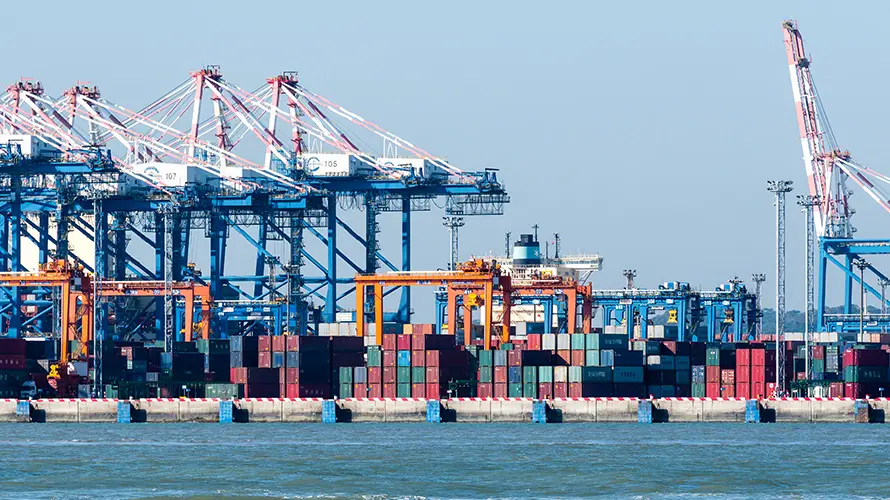
Port terminals and heavy construction operations run equipment differently from most other industrial applications. The defining characteristic is not the equipment itself — it is the operational tempo. A Sany front-handling excavator working in a container yard or port logistics operation runs under a cycle pattern that is fundamentally more demanding than a standard excavation application. The machine operates in short, intensive cycles — lifting, swinging, dumping, returning — with minimal idle time between cycles. This tempo generates sustained thermal load on the engine and hydraulic system that is comparable to or exceeds what you'd see in mining applications, despite the relatively controlled environment of a port terminal.
I have spent over two decades working with port operators and construction fleet managers across Southeast Asia, the Middle East, and South America, and the single most consistent pattern I observe in underperforming equipment fleets is inadequate attention to cooling system maintenance. The radiator is not a component that fails dramatically — it does not seize or lock up like a failed bearing, and it does not announce its deterioration with obvious warning signs. It degrades gradually, losing cooling efficiency incrementally over weeks or months, until the engine begins operating at temperatures that are measibly higher than its design target. By the time an operator notices an overheating warning, the engine has often been running at elevated temperatures long enough to cause measurable wear on cylinder bores, piston rings, and head gaskets.
The financial exposure from cooling system neglect in port operations is substantial and is often significantly underestimated by procurement officers who are not directly responsible for maintenance budgets. A single engine failure on a rubber-tyred gantry crane or port excavator can cost between USD 15,000 and 80,000 in repair costs, depending on the extent of the damage and the machine model. More significantly, in a continuous port operation where one piece of equipment is a bottleneck in a throughput-critical chain, that equipment failure creates a cascade of operational delays whose cost is borne across the entire terminal activity. When I work with new port operator clients to establish their preventive maintenance schedules, I always emphasise that the radiator — a component that accounts for a tiny fraction of total equipment value — is the single most cost-effective investment in equipment longevity that any fleet manager can make.
Understanding the Sany Radiator 60000075: Design and Function in Heavy-Duty Excavator Applications
The Sany radiator part number 60000075 is the designated replacement assembly for Sany front-handling excavator cooling systems. "Front-handling" is the operational descriptor for the type of excavator configuration used in port terminal and logistics operations — machines configured with a物料装卸 (material handling) front attachment rather than a standard digging arm, optimised for container yard stacking, truck loading, and bulk cargo handling rather than for excavation work.
The radiator assembly in a modern Sany excavator performs a dual-function cooling role that is more complex than the single-function engine cooling radiators used in older machine designs. The assembly incorporates separate cooling circuits for the engine coolant, the hydraulic system oil, and the charge air from the Turbocharger. Each of these three thermal loads requires a dedicated cooling surface area within the radiator core, and the assembly must manage all three simultaneously while maintaining airflow across all sections regardless of which section is receiving the most thermal load at any given moment.
The 60000075 assembly is designed with a multi-row louvered fin core construction that provides high heat dissipation surface area within a relatively compact package envelope. The louvered fin geometry — a series of small angled plates stamped into the face of each cooling fin — disrupts the boundary layer of airflow across the cooling surface and significantly increases the effective heat transfer coefficient compared to a plain fin design. This is particularly important in port environments where the ambient air temperature regularly exceeds 35 degrees Celsius during peak operating hours and where particulate contamination from cargo dust, salt air, and diesel exhaust creates conditions that accelerate fouling of cooling surfaces.
The assembly also incorporates a transmission oil cooler within the same housing as the engine coolant radiator. This integrated design reduces the total number of cooling system components, simplifies the routing of coolant and hydraulic lines, and ensures that the transmission cooler receives the same quality of airflow as the engine coolant section. The trade-off is that any contamination or failure in one section typically requires replacement of the entire assembly rather than an individual component, which is why wholesale procurement of the complete radiator assembly is the standard replacement approach for port maintenance operations.
Common Failure Modes in Port Environments: Why Sany Excavator Radiators Degrade Faster Than Expected
Radiator degradation in port environments follows patterns that are measurably different from the failure modes you'd observe in standard construction applications. Understanding these patterns is essential for maintenance teams and procurement officers who want to implement genuinely effective preventive maintenance programs rather than reactive replacement schedules.
Corrosion from salt air is the most significant failure mode for excavator cooling systems in port environments. Coastal port facilities — which represent a significant proportion of the total port operations market in Southeast Asia, the Middle East, and Latin America — expose equipment to salt-laden atmosphere that is significantly more corrosive than the air quality in inland construction environments. Salt particles settle on the cooling fins and, when combined with the warm surface temperatures of an operating engine, create an electrochemical reaction that accelerates corrosion of the aluminium cooling fins and the brazed joint between fins and tube. Over time, this corrosion reduces the effective cooling surface area and eventually causes coolant leaks at the tube-to-header joint.
Particulate fouling is the second most significant failure mode, and it is particularly prevalent in bulk cargo handling operations. The 60000075 louvered fin design, while highly efficient at heat transfer under clean-air conditions, is more susceptible to fouling from particulate contamination than a plain fin design because the louver geometry creates additional surface area that traps dust and cargo particles. In operations handling cement, coal, sand, or mineral ores — which are common cargo types in the ports of Southeast Asia and the Middle East — the rate of fin fouling can be significantly faster than the design assumptions used by Sany's engineering team.
Mechanical damage from debris impact is a third failure mode that is specific to port and quarrying environments. The front-handling excavator operates at ground level in cargo yards where broken pallets, metal debris, discarded cargo strapping, and other foreign objects are routinely present on the operating surface. A foreign object thrown into the radiator core by a tire or landing directly on the cooling surface from above can puncture a cooling tube or collapse cooling fins, creating a localized hot spot that degrades cooling efficiency in that section of the core. Over subsequent operating hours, the hot spot accelerates corrosion and eventual coolant leak at the damaged location.
Preventive Maintenance Strategy: Extending Radiator Service Life in Continuous Port Operations
The most cost-effective approach to radiator maintenance in port operations is not reactive replacement after failure — it is a structured preventive maintenance program that addresses the three primary degradation mechanisms (corrosion, fouling, and mechanical damage) before they reach a severity that compromises cooling performance. The investment required for a preventive maintenance program is a fraction of the cost of a single emergency radiator replacement, and the operational benefit — consistent equipment uptime — is significantly more valuable than the cost savings from deferred maintenance.
I recommend a three-tier preventive maintenance approach based on the operating environment and equipment utilisation intensity. For port terminals in coastal environments with high salt exposure, a quarterly radiator inspection and cleaning cycle is the minimum effective frequency. For inland port facilities in dusty or high-particulate environments, a bimonthly inspection cycle is more appropriate. For equipment operating in severe-duty applications — cement terminals, mineral ore handling, coal ports — a monthly inspection cycle is warranted until a clear pattern of degradation rate is established.
The radiator cleaning procedure for the 60000075 assembly requires attention to technique as well as frequency. High-pressure water jetting at close range can actually damage louvered fin geometry, bending the louvers and reducing cooling efficiency. The recommended approach is low-pressure rinsing with demineralised water applied from the engine side of the core (the opposite side from the fan airflow direction), which dislodges particles without bending the fin louvers. Chemical cleaning agents should be used with caution — alkaline cleaners can accelerate corrosion of aluminium fins, and any cleaning agent residue left in the core will cause downstream corrosion in the engine cooling circuit. Because the 60000075 assembly incorporates an integrated transmission oil cooler, the cleaning procedure must account for hydraulic fluid contamination risk from any cracking or seepage in the transmission cooler section of the housing.
Procurement Considerations: Sourcing the Sany Radiator 60000075 from Wholesale Suppliers
When sourcing the Sany radiator 60000075 from wholesale suppliers for port fleet maintenance operations, the most important procurement decision is not price — it is verifying that the replacement assembly you are purchasing is manufactured to Sany's original specifications for the 60000075 part number. In the aftermarket parts supply chain, there are two significant categories of replacement radiator: genuine Sany OEM parts that are manufactured by or for Sany to original design specifications, and aftermarket equivalents that are manufactured to a compatible but not necessarily identical specification.
For port operations where the excavator is a throughput-critical asset, the OEM specification is the appropriate choice. The 60000075 assembly is engineered to a specific cooling capacity, pressure rating, and dimensional tolerance that is calibrated to the cooling demand of the specific Sany engine model in the front-handling excavator configuration. An aftermarket equivalent that is dimensionally similar but has a lower cooling capacity rating will appear to fit and function correctly at the time of installation, but will not provide the thermal margin that the engine requires during sustained high-load operations in port environments. The result is an engine that runs consistently 5 to 10 degrees Celsius hotter than design target — warm enough to increase wear rates without triggering an immediate overheating alarm.
The dimensional verification checkpoint is equally important. Even among genuine OEM suppliers, production tooling tolerances can vary between manufacturing batches, and fitment issues with radiator assemblies are among the most common sources of post-installation coolant leaks that appear after the first thermal cycle. Before mounting a replacement 60000075 assembly in service, verify that the mounting bracket alignment holes match the engine frame mounting points, that the inlet and outlet coolant hose connections are on the correct sides for your specific machine serial number, and that the transmission oil cooler ports align with the hydraulic line connections without requiring forced fitment.
Packaging and freight logistics are practical considerations that are frequently underestimated in radiator procurement. The 60000075 is a relatively large, fragile assembly that must be secured against impact and vibration during international freight transport. A radiator that arrives with bent cooling fins from inadequate packaging will lose a portion of its rated cooling capacity from the moment it is installed. Reputable wholesale suppliers will package the assembly in double-wall carton construction with foam end protection and a desiccant pack to prevent moisture-induced corrosion during sea freight transit.
Supporting a Multi-Brand Fleet: Matching Radiator and Cooling System Parts Across Equipment Brands
Port terminals and large construction fleet operations typically operate equipment from multiple manufacturers, and effective fleet maintenance requires the ability to manage cooling system parts across different equipment brands simultaneously. While Sany excavators represent a significant portion of the port equipment market — particularly in Southeast Asia where Sany has strong market presence — operators frequently run mixed fleets that include Komatsu, Caterpillar, Hyundai Construction Equipment, and XCMG machines alongside their Sany equipment.
The cooling system parts procurement challenge for mixed fleets is fundamentally about establishing reliable supply relationships that can cover the full range of equipment brands and models in your fleet without requiring a proliferation of supplier relationships. Wholesale suppliers who stock cooling system parts for multiple equipment brands — including radiators, charge air coolers, hydraulic oil coolers, and thermostat assemblies — offer a significant operational advantage over single-brand supply relationships. The ability to consolidate cooling system parts procurement with a single supplier simplifies the purchasing process, reduces administrative overhead, and typically results in better pricing through consolidated volume.
We supply cooling system parts for Sany, Hyundai, XCMG, Komatsu, and Caterpillar excavator models, along with a comprehensive range of other port machinery components including hydraulic parts, electrical system components, transmission parts, and spreader parts. Port fleet operators who establish annual supply agreements with us for cooling system parts typically achieve 15 to 25 percent cost savings compared to spot-purchase pricing, along with the supply security of knowing that critical replacement parts are available on call rather than requiring emergency international shipping when an equipment failure occurs.
Frequently Asked Questions
Is the Sany radiator 60000075 compatible with all Sany front-handling excavator models?
The 60000075 is designated as the replacement radiator assembly for Sany front-handling excavator configurations, but compatibility with your specific machine model depends on the serial number range and the specific engine variant installed in your machine. Sany occasionally updates part numbers for design revisions, and a machine built in a later production year may require a different part number even if the machine model designation appears the same. We strongly recommend verifying the part number against your machine's parts catalogue or service manual before placing a replacement order, or providing your machine model and serial number to our technical sales team for cross-reference confirmation.
How do I know if my excavator radiator needs replacement rather than cleaning?
The most reliable indicator of irreversible radiator degradation is a measurable loss of cooling efficiency that persists after a thorough cleaning procedure. If, after cleaning the radiator core using the correct low-pressure rinsing technique, your engine continues to operate at elevated temperatures during normal load cycles, the cooling capacity of the core has been reduced below the level required by the engine. Other indicators that replacement is warranted include visible coolant seepage at tube-to-header joints, physical damage to the cooling fin geometry that is too extensive for localised repair, and corrosion that has progressed to the point where the structural integrity of the fin-to-tube joint is compromised. If you are unsure whether cleaning or replacement is appropriate, a cooling system pressure test performed by a qualified technician will identify whether the core is holding pressure — a failing core will show pressure loss over a monitored test period.
What is the typical lead time for wholesale Sany radiator orders?
For stock SKU orders of the Sany radiator 60000075, lead time from order confirmation to shipment is typically 10 to 15 working days for orders shipping from our warehouse in Ningbo, China. For orders that require air freight or sea freight consolidation with other parts from your procurement list, lead times extend accordingly — typically an additional 5 to 10 working days for sea freight and 2 to 3 working days for air freight. We hold selected stock SKUs for the most commonly ordered Sany, Hyundai, and Kalmar cooling system parts to support emergency replacement需求 for established account clients. For large fleet operators, we recommend establishing a consignment inventory arrangement for critical parts such as the 60000075 radiator, where a small quantity of replacement assemblies is held on site or at a nearby logistics hub for immediate deployment when a failure occurs.
Can you supply cooling system parts for equipment brands other than Sany?
Yes. Our product range covers cooling system components for a broad range of port machinery and construction equipment brands, including Hyundai Construction Equipment, XCMG, Komatsu, Caterpillar, and Yale equipment. The specific part numbers and availability for non-Sany equipment vary by brand and model, and we recommend contacting our technical sales team with your equipment model list so we can confirm availability and provide pricing for your specific fleet composition. We have supplied cooling system parts for port terminals and mining operations across Southeast Asia, the Middle East, and South America, and we maintain active relationships with testing laboratories and quality verification services in these regions to support parts qualification for new client accounts.
What warranty coverage applies to wholesale replacement radiators?
All genuine OEM-specification replacement radiators supplied through our wholesale programme carry a minimum 12-month warranty against manufacturing defects, subject to standard installation and operation conditions. The warranty covers manufacturing defects including brazing failures, tube leaks, and header cracking that occur under normal operating conditions. It does not cover damage resulting from improper installation, mechanical impact, chemical corrosion from incorrect coolant or cleaning agent use, or operating conditions that exceed the design thermal and pressure ratings of the assembly. We require photographic documentation of the failed part and the machine installation context for all warranty claims, and we maintain lot traceability records that allow us to verify the manufacturing batch and date for every part we supply.
How should used or failed radiators be handled from an environmental compliance perspective?
Failed radiator assemblies contain coolant fluid (typically a mixture of antifreeze and water) and, in the case of the integrated transmission oil cooler section, hydraulic oil. Both of these fluids are classified as hazardous waste in most jurisdictions and must be handled and disposed of in accordance with local environmental regulations. The aluminium and copper content of the radiator core itself is recyclable through metal scrap processors, and we recommend arranging collection with a licensed metal recycling service rather than disposing of the core as general waste. Some jurisdictions require coolant and hydraulic fluid to be collected by licensed hazardous waste handlers rather than disposed of through general waste streams — check your local regulatory requirements before arranging disposal of failed cooling system assemblies.
About NINGBO BEILUN BLUE SEA PORT MACHINERY CO., LTD.
NINGBO BEILUN BLUE SEA PORT MACHINERY CO., LTD. is a specialised wholesale supplier of port machinery and heavy construction equipment parts, serving port terminals, logistics operators, and construction fleet managers across Southeast Asia, the Middle East, and South America. We supply cooling system parts, hydraulic components, electrical system parts, transmission parts, and specialised parts for Sany, Hyundai, Kalmar, and Yale equipment. Our wholesale programme is designed to support continuous procurement programmes for port operators who require reliable, traceable, quality-verified replacement parts for mission-critical port machinery.
Phone: +86-574-8699-XXXX | Email: info@nblanhai.com | WhatsApp: available on request