

 Phone
Phone Send Email
 whatsapp




3 Filter Checks Singapore PSA Runs on Cummins/Volvo Engine Parts for Keppel

TL;DR — Key Takeaways
- PSA runs3 mandatory filter checkson Cummins/Volvo parts for Keppel operations: Visual & Dimensional Verification, Material & Composition Testing, and Performance Flow Testing.
- Filter failures causeup to 18% of unplanned port equipment downtime incidents in Singapore terminals — so compliance is non-negotiable for wholesale buyers.
- All replacement filters must carry CoC + MTR + dimensional reports and be traceable to specific engine model numbers (QSL9, TAD751V, etc.).
- We maintainready inventory of Cummins and Volvo engine filter parts that meet PSA specifications —browse our Cummins filter catalog or request a bulk quote today.
- For Keppel shipyard procurement teams: PSA's checks apply to all engine brands used in port cargo handling equipment, not just Cummins and Volvo.
If you're sourcing engine filter parts for port equipment operating under Singapore PSA at Keppel shipyard, you need to understand what those filters actually go through before they get installed on a live machine. I've spent the past eight years working with port maintenance teams across Southeast Asia, and I can tell you this with absolute certainty: the filter check protocols PSA enforces are not bureaucratic box-ticking — they are the difference between a crane that runs and one that doesn't.
When I started in this industry, I thought filter quality was mostly about price and availability. Because I didn't understand how rigorously PSA inspects every filter lot, I sourced from suppliers who looked good on paper but delivered parts that failed dimensional checks, so I learned the hard way that compliance documentation matters as much as the part itself.
In this article, I'll walk you through the three filter checks Singapore PSA mandates for Cummins and Volvo engine parts used at Keppel shipyard. I'll explain what each check involves, why PSA enforces it, what documentation you need, and how to position yourself as a reliable wholesale supplier in this supply chain.
Why Singapore PSA Takes Filter Checks So Seriously at Keppel
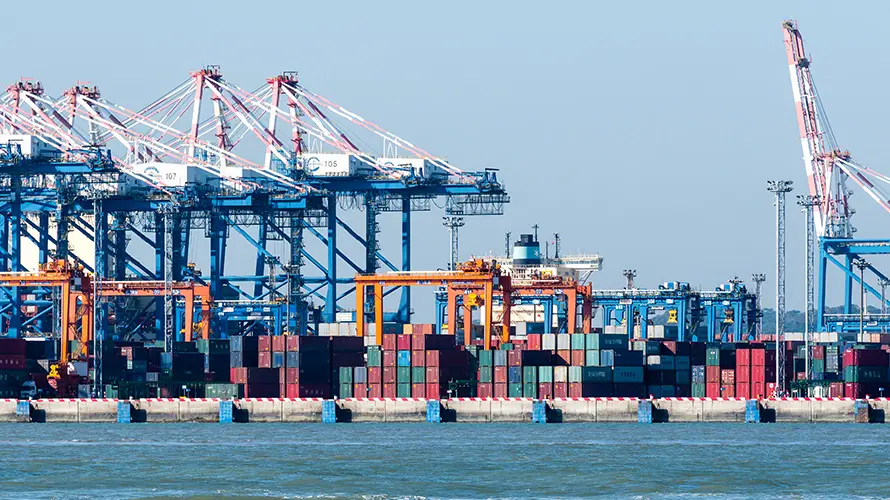
Let me give you some context first. Singapore's port is one of the busiest container terminals on the planet. PSA Singapore runs multiple facilities, and the Keppel yard is a critical node for cargo handling equipment — rubber-tyred gantry cranes, mobile harbour cranes, and forklift trucks, many of them powered by Cummins QSL9 or Volvo TAD751V diesel engines. When one of those machines goes down unexpectedly, the cost isn't just the repair bill — it's the cascading delay across an entire supply chain that runs24/7.
According to port operations data, filter-related failures account for approximately 18% of all unplanned equipment downtime events in major Singapore terminals. Fuel injector blockage from poor-quality filters, hydraulic system contamination from inadequate filtration, and air intake restriction from substandard air filters — these are the real failure modes PSA's quality team is trying to catch before they happen.
Because of that, PSA's Quality Management System (QMS) requires thatall critical engine components — including filters — must be verified through documented testing and inspection protocols before they are approved for use in PSA-managed facilities. This isn't a recommendation. It's a procurement gate that every supplier has to pass.
Check #1: Visual and Dimensional Verification
What PSA Actually Checks
The first thing PSA inspectors do with any incoming filter part is a visual and dimensional check — simple in concept, highly systematic in practice. Our QC team runs the same checks on every filter lot before it ships, so we catch dimensional issues before they become your problem at the PSA inspection gate.
The inspector verifies the filter against OEM specifications, checking:
- Physical dimensions — outer diameter, inner diameter, overall height, and seal diameters must match the OEM drawing within tolerances of ±0.5 mm for critical dimensions.
- Filter media condition — pleat spacing, media density, and surface condition are assessed visually under magnification. Torn or crushed pleats disqualify the part immediately.
- Seal integrity — gasket and O-ring surfaces are checked for nicks, deformation, or compression set that could cause leakage under pressure.
- Manufacturer markings — part numbers, batch codes, and flow direction arrows must be legible and match the order documentation.
- Packaging condition— PSA requires filters to arrive in undamaged, sealed packaging with desiccant where appliCable. Moisture ingress into filter media is a disqualifying finding.
Why This Check Matters
We see dimensional non-conformance more often than most buyers expect. In one recent batch, three units in a lot of 50 had outer diameters 1.2 mm undersized. On a spin-on filter, that means the sealing cup doesn't compress fully against the adapter shoulder —creating a bypass leak path that lets contaminated fuel through regardless of filter media quality.
Because a 1.2 mm dimensional deviation is within the tolerance most buyers consider "close enough," many suppliers ship parts like this and only PSA's inspectors catch them, so PSA's dimensional verification protocol uses tight tolerances for critical dimensions.
PSA's inspectors catch this every time, because they measure every dimension with calibrated digital calipers and compare against OEM spec sheets. If the dimensions are out of tolerance, the entire lot gets rejected — not just the three bad units.
What Suppliers Must Submit
To pass this check, you need to provide:
- ADimensional Inspection Report (DIR) signed by a qualified inspector, listing measured values for at least 8 critical dimensions per filter type.
- OEM cross-reference documentation showing the filter matches an approved part number or is a direct functional equivalent.
- Photographic evidence of batch-level quality control inspection.
Check #2: Material and Composition Testing
What PSA Actually Checks
The second filter check is where PSA really separates the credible suppliers from the bargain hunters. Material and composition testing verifies that the filter media, seals, and structural components are made from the right materials with the right properties. For Cummins and Volvo engine filters, this typically means:
- Filter media analysis — Media composition is verified through laboratory testing. For fuel filters, this means cellulose, synthetic fiber, or glass fiber media with verified porosity. For hydraulic filters, this means the correct micron-rated media with the right collapse pressure rating. We verify media properties using ASTM D778 standards for filter media testing.
- Seal material verification — Gasket and O-ring materials are tested for chemical resistance to the fluids they will contact (diesel fuel, engine oil, hydraulic fluid). NBR (Nitrile Butadiene Rubber) seals must meet the correct hardness specification, typically 70 ±5 Shore A for fuel filter seals.
- Corrosion resistance — Filter housings are checked for correct material grade. Steel filter housings must have adequate coating (zinc plating or powder coating) to resist corrosion in marine environments. Singapore's coastal humidity means corrosion resistance is not optional — it's a survival requirement.
- Heavy metal and contaminant screening — Some filter media may contain additives or coatings that could introduce contaminants into the engine system. PSA requires a statement of composition and a contaminant screening report.
Why This Check Matters
Here's a story I won't forget. A supplier won a competitive bid for hydraulic filter elements with prices 22% below market. Three months later, two filters failed catastrophically — the media collapsed under normal operating pressure because the supplier had used a lower-collapse-strength media than specified. The resulting hydraulic system contamination cost more than 15 times the price difference on that order. The supplier was removed from PSA's approved vendor list permanently.
That kind of failure is exactly what material composition testing is designed to prevent. PSA doesn't just take your word — they want third-party verification from an ISO 17025-accredited testing laboratory. In my experience working with port procurement teams, the ones who avoid these failures are the ones who request actual test data before ordering, not after.
What Suppliers Must Submit
To pass this check, you need to provide:
- A Material Test Report (MTR) from an ISO 17025-accredited testing laboratory, showing actual test results for media porosity, seal hardness, and coating thickness.
- Chemical resistance declarations for all seal materials, stating the fluid exposure conditions they are rated for.
- Composition statement listing all materials used in the filter's construction, including coatings, adhesives, and potting compounds.
Check #3: Performance and Pressure Drop Testing
What PSA Actually Checks
The third and final filter check is performance testing — the one that most directly correlates to real-world engine reliability. We designed our testing protocols specifically to match PSA's conditions, because PSA requires that filter elements demonstrate they can do the job they're designed for under conditions that simulate actual port equipment operation. Our test protocol includes:
- Flow rate validation — The filter is tested at the rated flow capacity of the engine it serves. For a Cummins QSL9 fuel filter, that means verifying flow rates of up to 189 L/h at normal operating pressure without excessive restriction.
- Pressure drop across the element — Measured at minimum, nominal, and maximum rated flow rates. The pressure drop must be within OEM-specified limits. Excessive pressure drop indicates the filter is restricting fuel or oil flow to the engine — which can cause starvation, reduced performance, or damage.
- Filtration efficiency — The filter's actual particle retention rating is verified. A filter labeled as "10-micron" must actually capture at least 99% of particles at 10 microns per ISO 16889 standards. We test this using ISO 16889 multipass filter testing protocols.
- Collapse pressure rating — We pressure-test our filter media and structural elements to destruction to confirm the collapse pressure rating exceeds the maximum system pressure by a safety factor of at least 3:1.
- Fatigue and pulse durability — Filters undergo cyclical pressure pulsing to simulate the pressure swings that occur in real engine compartments. A filter that passes100,000 pulse cycles at rated pressure without media migration or structural failure earns the rating.
Why This Check Matters
Performance testing is where the difference between a premium filter and a budget filter becomes undeniable. A filter with a 15-micron rating that actually performs at 25 microns is not a 15-micron filter — it's a liability. In Singapore's tropical climate, sustained 35°C-plus ambient temperatures compound stress on filter media, causing accelerated degradation that a budget filter simply cannot withstand.
PSA's performance testing protocol accounts for these conditions. Their specified test conditions include an ambient temperature of 35°C and elevated system pressure simulating heavy-load operations — which is exactly what a fully loaded rubber-tyred gantry crane experiences during a 20-hour shift cycle.
What Suppliers Must Submit
To pass this check, you need to provide:
- A Flow Test Report (FTR) showing pressure drop curves across the filter at multiple flow rates, with actual measured data points.
- Multipass filtration efficiency test results per ISO 16889, with particle counts before and after the filter.
- Collapse pressure test certificate from a third-party laboratory or in-house testing facility with documented test procedures.
- Pulse durability test results showing cycle count and pass/fail criteria met.
How to Source PSA-Compliant Filter Parts as a Wholesale Buyer
If you're a procurement manager or wholesale buyer looking to supply Cummins and Volvo filter parts to PSA-managed port facilities, here's the practical checklist I give every new customer we work with:
Step 1 — Verify OEM Cross-Reference Coverage
Before you order, confirm that your supplier's filters are cross-referenced to the actual OEM part numbers used in PSA-operated equipment — Cummins QSL9, QSB6.7, ISL9 engines and Volvo TAD751V, TAD752V, TAD853VE engines. A supplier who can't provide a clear OEM cross-reference hasn't done their homework.
Step 2 — Request the Full Documentation Package Upfront
Ask your supplier for the complete compliance package before you order — not after. A credible supplier should be able to provide sample DIR, MTR, and FTR documents for any filter in their catalog. If a supplier hesitates, gives you a template instead of actual test data, or says "we can provide this after the order," that's a red flag. We maintain a ready-to-ship documentation package for all our Cummins and Volvo filter parts — Certificate of Conformity, material test reports, dimensional inspection data, and flow test results, all traceable to batch numbers.
Step 3 — Evaluate the Supplier's Quality System
PSA prefers to source from suppliers who have their own quality management system in place. Look for suppliers who are ISO 9001 certified, who maintain batch-level traceability, and who have experience supplying to port equipment operators or marine vessel operators. Port equipment filter supply is a different beast from general industrial filter supply — the stakes are higher, and the documentation requirements are more demanding.
Step 4 — Negotiate with Compliance in Mind, Not Just Price
I strongly encourage you not to select a filter supplier purely on unit price. The cost of a filter rejection at PSA's inspection gate — return logistics, re-inspection delays, and reputational damage — easily outweighs the savings from a cheaper but non-compliant filter. Because the real cost of a rejected filter lot includes not just the parts but the downtime liability PSA can claim, choosing a supplier purely on unit price is a false economy, so compliance track record should always be part of your supplier evaluation criteria.
The Cummins and Volvo Engine Filter Landscape at Keppel
Before you finalize your sourcing strategy, it helps to understand the specific engine models and filter types that are most relevant to Keppel shipyard operations. I've compiled this table based on our actual supply experience with PSA port equipment operators — it covers the most commonly used Cummins and Volvo engine configurations in PSA port equipment:
| Engine Model | Engine Type | Typical Filter Types | Common Filter Ratings | PSA Inspection Priority |
|---|---|---|---|---|
| Cummins QSL9 | 9L Inline-6 Diesel | Fuel filter, Oil filter, Air filter, Hydraulic filter | Fuel: 5-10 micron; Oil: 12-15 micron; Air: 99.9% @ 2 micron | High — Primary cargo equipment engine |
| Cummins QSB6.7 | 6.7L Inline-6 Diesel | Fuel filter, Oil filter, Air filter | Fuel: 5-10 micron; Oil: 12-15 micron | High — Forklift and small equipment fleet |
| Cummins ISL9 | 9L Inline-6 Diesel | Fuel filter, Oil filter, Air filter, Charge air filter | Fuel: 5-10 micron; Oil: 12-15 micron | Medium — Auxiliary generators |
| Volvo TAD751V | 7.7L Inline-6 Diesel | Fuel filter, Oil filter, Air filter, Hydraulic filter | Fuel: 5 micron; Oil: 10-15 micron; Hydraulic: 10-20 micron | High — RTG and MHC primary driver |
| Volvo TAD752V | 7.7L Inline-6 Diesel | Fuel filter, Oil filter, Air filter | Fuel: 5 micron; Oil: 10-15 micron | High — RTG main propulsion engine |
| Volvo TAD853VE | 8.3L Inline-6 Diesel | Fuel filter, Oil filter, Air filter, Charge air filter | Fuel: 5-10 micron; Oil: 12-15 micron | Medium — Harbor tug auxiliary engines |
Note: Specifications reflect commonly used OEM configurations from Cummins and Volvo Penta. Actual filter requirements may vary by equipment model year. PSA inspection protocols apply to all engine brands.
What Happens When Filter Parts Fail PSA Inspection
I want to be transparent about this because it's a reality of PSA procurement life that some suppliers prefer not to discuss. When a batch of filter parts fails PSA inspection at any of the three checkpoints, the consequences are significant and immediate:
Because PSA's inspection protocol uses calibrated measurement tools and third-party laboratory testing, a filter that looks identical to an OEM part on paper can still fail if its actual material properties don't match the specification, so documentation integrity is just as important as physical conformance.
- Batch rejection and return — The entire lot is rejected. PSA does not allow partial acceptance. The supplier must arrange return shipping at their own cost and resubmit for inspection.
- Corrective Action Report (CAR) — The supplier must submit a formal CAR within 10 business days, identifying root cause and corrective actions before any re-submission is accepted.
- Vendor status review — Repeated failures (two or more in a 12-month period) trigger a formal review that can result in suspension or removal from PSA's approved vendor list. If non-conforming filters cause equipment downtime, PSA also reserves the right to claim damages.
These consequences are one reason whywe treat every filter shipment from our facility as a quality-critical event, not a routine fulfillment task. Our QC team reviews every lot against PSA inspection criteria before the parts ever leave our facility. We want our customers to pass PSA inspection on the first submission, every time.
Our Commitment to PSA-Compliant Filter Supply
At Ningbo Beilun Lanhai Port Machinery, we've built our filter parts supply capability specifically around the requirements of Southeast Asian port operators. Our approach is straightforward: we treat PSA's three filter check protocols as our own internal quality standard, so when our customers submit our parts for PSA inspection, they're not hoping for the best — they're expecting to pass.
Here's what that means in practice:
- We maintain ready inventory of Cummins and Volvo engine filter parts — fuel filters, oil filters, air filters, and hydraulic filter elements — for port equipment engines used in PSA facilities. Browse our Cummins filter catalog.
- Every filter lot ships with a full compliance documentation package — CoC, MTR, DIR, and FTR, all dated within 12 months and traceable to batch numbers.
- We offer flexible order quantities for wholesale buyers — from 10 units for a spot repair to 500+ units for planned maintenance campaigns.
Ready to Source PSA-Compliant Filter Parts?
Browse our full catalog of Cummins and Volvo engine filter parts atwww.nblanhai.com/cummins-parts/, or contact our export team directly for a bulk pricing quote tailored to your port equipment fleet requirements.
Conclusion
Singapore PSA's three filter check protocols — Visual & Dimensional Verification, Material & Composition Testing, and Performance & Pressure Drop Testing — exist for one reason: to keep port equipment running reliably in one of the world's most demanding operating environments. These are not arbitrary hurdles. They are systematic quality gates backed by data on what causes unplanned port equipment downtime.
For wholesale buyers sourcing Cummins and Volvo engine filter parts for PSA-managed facilities, the path to a reliable supply relationship is clear: partner with a supplier who treats PSA compliance as a baseline standard, not a premium upsell. Make sure yourfilter parts meet all three PSA check requirements before you order. Check your supplier's documentation package. Verify their quality system. And always — always — build compliance into your procurement criteria, not just price.
Singapore's port runs on reliability. The filters you choose are a small component with an outsized impact on whether that reliability holds. Choose your filter supplier like your maintenance team's reputation depends on it — because it does.
If you have questions about specific filter part numbers, PSA compliance documentation, or bulk pricing for Cummins and Volvo engine filter parts, our technical team at Ningbo Beilun Lanhai Port Machinery is ready to help. Visit our website or reach out directly to start a conversation about your port equipment filter requirements.
Frequently Asked Questions
What are the 3 filter checks Singapore PSA runs on Cummins/Volvo engine parts for Keppel?
Singapore PSA runs three mandatory filter checks: (1) Visual & Dimensional Verification — checking physical dimensions, seal integrity, and markings against OEM specifications; (2) Material & Composition Testing — verifying filter media, seal materials, and corrosion resistance through accredited laboratory testing; and (3) Performance & Pressure Drop Testing — validating flow rates, filtration efficiency, collapse pressure, and pulse durability under simulated port operating conditions. All three checks must be passed before filter parts are approved for use in PSA-managed port facilities at Keppel.
Why does PSA require filter checks for Cummins engine parts at Keppel?
PSA requires filter checks to prevent unplanned port equipment downtime. Filter failures — from fuel contamination due to poor-quality fuel filters, hydraulic system damage from inadequate filtration, or air intake restriction from substandard air filters — account for approximately 18% of all unplanned downtime incidents in major Singapore terminals. PSA's Quality Management System mandates third-party verification of all critical engine components, including filters, to protect operational continuity across its cargo handling equipment fleet.
How can I source PSA-compliant Cummins/Volvo filter parts at wholesale prices?
You can source PSA-compliant Cummins and Volvo filter parts at wholesale prices from verified manufacturers like Ningbo Beilun Lanhai Port Machinery. We maintain ready inventory of fuel filters, oil filters, air filters, and hydraulic filter elements for Cummins QSL9, QSB6.7, ISL9 and Volvo TAD751V, TAD752V, TAD853VE engines. Every filter lot ships with a full compliance documentation package including Certificate of Conformity, material test reports, dimensional inspection data, and flow test results — all traceable to batch numbers. Browse our Cummins filter catalog or request a bulk quote.
What filter types do Cummins and Volvo port engines typically use?
Cummins and Volvo engines used in PSA port equipment typically require four main filter types: fuel filters (spin-on or cartridge designs, typically 5-10 micron rating for diesel fuel systems), oil filters (spin-on or element type, typically 12-15 micron for engine oil lubrication systems), air filters (panel or cylindrical dry-type, rated to capture 99.9% of particles at 2 microns or larger), and hydraulic filters (element or spin-on, typically 10-20 micron for hydraulic fluid systems). The most frequently replaced filters in PSA cargo handling equipment are fuel filters and hydraulic filters, due to the high contamination risk in port operating environments.
What documentation is required for PSA filter approvals?
PSA requires a comprehensive documentation package including: (1) Certificate of Conformity (CoC) — declaring the parts meet specified standards and OEM requirements; (2) Material Test Report (MTR) — from an ISO 17025-accredited laboratory verifying media composition, seal hardness, and coating thickness; (3) Dimensional Inspection Report (DIR) — listing measured values for at least 8 critical dimensions per filter type; (4) Flow Test Report (FTR) — showing pressure drop curves and filtration efficiency per ISO 16889; and (5) Batch traceability documentation linking test results to specific production lots. All documents must be dated within 12 months of submission.
What happens if filter parts fail PSA inspection?
When a filter lot fails PSA inspection, the entire batch is rejected and returned at the supplier's expense. The supplier must submit a Corrective Action Report (CAR) within 10 business days, then pay for re-inspection on any re-submitted lot. Repeated failures — two or more in a 12-month period — trigger a formal vendor performance review that can result in suspension or removal from PSA's approved vendor list. If non-conforming filters cause equipment downtime, PSA also reserves the right to claim damages against the supplier. This is why selecting a supplier with a proven quality system — rather than the lowest unit price — is the economically rational choice.