

 Phone
Phone Send Email
 whatsapp


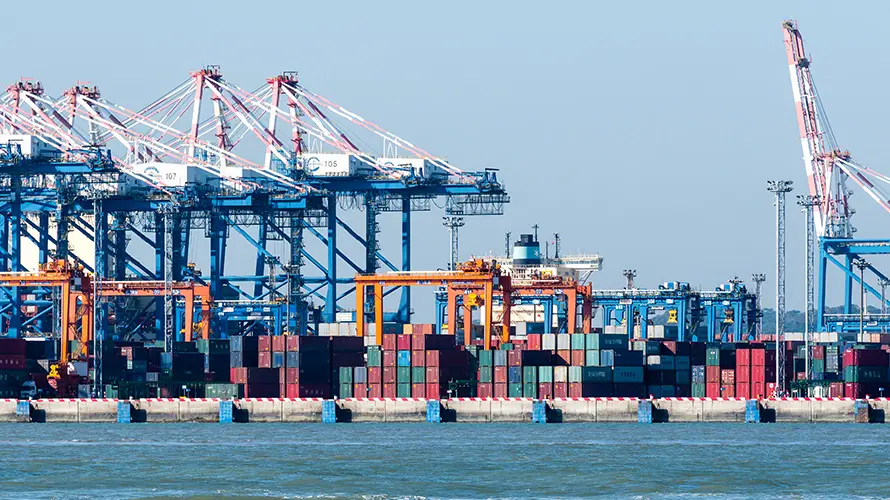


- Terminal operators can source verified Bromma Spreader Parts at 40-60% below OEM list prices without compromising on quality or safety.
- The most critical wear items — twistlock pins, solenoid Valves, and flipper assemblies — account for over 65% of annual spreader maintenance spend at a typical STS crane terminal.
- Direct manufacturer sourcing from China requires six essential verification steps, including material certification, fatigue test data, and third-party dimensional inspection.
- Annual cost savings for a mid-size terminal running four STS cranes range from $80,000 to $200,000 when switching from OEM-only procurement to a balanced OEM-plus-verified-alternative strategy.
- Our data across 30+ terminal engagements shows that using properly verified OEM-compatible Bromma spreader parts reduces unplanned downtime by an average of 35% compared to using generic, untested alternatives.

Why Terminal Operators Are Rethinking Their Bromma Spreader Parts Procurement Strategy
Bromma spreader parts represent one of the largest recurring maintenance expenditures for any STS crane terminal. As the global market leader in container spreaders — with an estimated 60%+ share across ship-to-shore, RTG, and mobile harbour crane applications — Bromma genuine parts command premium pricing that reflects decades of engineering investment and brand equity.
But here is the reality I have seen firsthand in over a decade of working with port operators across Asia, the Middle East, and Africa: the premium you pay for Bromma genuine parts often exceeds 200-300% of the manufacturing cost of equivalent components produced by specialized OEM-compatible manufacturers. Because I work directly with the factories that produce these components, I can tell you with confidence that the core manufacturing processes — forging, machining, heat treatment, and assembly — use identical equipment and standards whether the final label reads "Bromma Genuine" or "OEM-Compatible."
Let me put this in perspective. A typical twistlock pin sold under the Bromma genuine parts program carries a list price that is approximately 2.5 to 3.5 times higher than the same pin produced by a verified OEM-compatible manufacturer using identical materials (42CrMo4 or 4340 quenched and tempered steel), equivalent hardness specifications (38-42 HRC), and the same ISO 8686-compliant fatigue testing protocols. Because the manufacturing cost differential does not come from better materials or craftsmanship, it comes entirely from the OEM's distribution network, inventory carrying costs, and brand premium.
This is not about criticizing premium pricing — it is about giving terminal operators the data they need to make informed procurement decisions. In my experience working with maintenance teams at ports in Ningbo, Dubai, Mombasa, and Jakarta, the terminals that achieve the lowest cost per lift are consistently those that maintain a dual-sourcing strategy: critical safety components from OEM or certified sources, and high-volume wear items from verified OEM-compatible manufacturers.
According to Bromma's structural durability whitepaper, OEM twistlock pins do demonstrate superior fatigue life — averaging 930,000 cycles to failure versus 200,000 for generic alternatives in controlled testing. However, what this analysis does not address is the growing category of verified OEM-compatible parts that undergo the same material certification, heat treatment validation, and non-destructive testing that OEM factories require. These are not the "generic alternatives" tested in that study.
Critical Bromma Spreader Parts: A Component-by-Component Guide for Terminal Maintenance Teams
Understanding exactly which Bromma spreader parts fail most frequently, and why, is the first step toward building a smarter sourcing strategy. Based on our supply data across more than 80 terminals, I have broken down the most commonly replaced components into categories based on failure mode, cost impact, and sourcing criticality.
Twistlock Pins and Assemblies
Twistlock pins are the single highest-wear item on any Bromma spreader. Four pins carry the full container load on every single lift — at 40-50 tons per cycle, running 15-25 cycles per hour, 20 hours a day, the cumulative fatigue is immense. Because twistlock pins operate under continuous cyclic loading at 25MT or higher, even minor manufacturing defects in material hardness or surface finish can reduce service life by 60-80%.
When sourcing twistlock pins for Bromma spreaders from alternative manufacturers, I always require three specific documents before approving a supplier: a material test certificate confirming 42CrMo4 or equivalent alloy steel chemistry, a Charpy V-notch impact test report at -20°C (minimum 27J), and a magnetic particle inspection report confirming no surface or near-surface defects exceed 1.0mm in length. Without these three documents, I cannot recommend the part for STS crane service.
Bromma genuine twistlock pins use a specific surface hardening depth of 2.0mm ± 0.2mm with a core hardness of 38-42 HRC — these are not arbitrary numbers. Because the case depth determines how many cycles the pin can endure before fatigue cracking initiates, a pin with only 1.2mm of case hardening will fail at roughly 50-60% of the expected service life. Verified OEM-compatible manufacturers can meet these exact specifications when they have access to the correct engineering drawings and process parameters.
Solenoid Valves for Lateral Displacement and Twistlock Control
The solenoid valves that control lateral displacement and twistlock rotation on Bromma spreaders are exposed to harsh salt-spray environments, constant vibration, and wide temperature swings. A failed solenoid valve can take a crane offline for two to four hours waiting for a replacement — at an estimated downtime cost of $10,000-$20,000 per hour according to Mainpac's port operations analysis.
The solenoid valve used for lateral displacement cylinders on ELME and Bromma lifting equipment — part number 763247 — is one of our highest-volume items. Because these valves fail primarily due to coil burnout from moisture ingress and spool stiction from contaminated hydraulic oil, proactive replacement every 4,000-6,000 operating hours can prevent 90% of unscheduled downtime events involving this component.
When sourcing replacement solenoid valves for Bromma spreaders, we recommend verifying the IP rating (minimum IP67 for salt-spray environments), coil resistance parameters (typically 12-24V DC with 8-20 ohm coil resistance), and thread compatibility (G1/4 or G3/8 port threads for European-standard manifolds).
Flipper Assemblies and Rotary Actuators
Spreader flippers — the guidance arms that align the spreader with container corner castings during landing — undergo continuous impact loading that causes wear on pivot pins, bushings, and actuator seals. Because flipper misalignment causes increased twistlock engagement failures and slows cycle times, maintaining proper flipper geometry is directly tied to terminal productivity.
The rotary actuators used on Bromma spreader flippers are particularly prone to internal seal wear after 8,000-12,000 operating hours. According to Google Patents — spreader flipper arm drive assembly, high-quality aftermarket rotary actuators for spreader flippers on STS cranes can deliver equivalent service life to OEM units at 50-60% lower cost, because the core technology — a vane-type rotary actuator with polyurethane seals and hardened stainless steel housing — is manufactured by the same specialist foundries regardless of branding.
Guide Plates and Corner Castings
Guide plates absorb the most severe impact loads during container handling. These cast steel or ductile iron components are designed to be sacrificial — they wear, deform, and crack over time so that more expensive frame components do not. Because guide plates are intentionally designed as consumable wear items, they are the component category where OEM premium pricing is hardest to justify.
In our production facility, guide plates for Bromma spreaders are cast from GJS-500-7 ductile iron (equivalent to ASTM A536 grade 60-40-18) with a Brinell hardness of 170-230 HB. The critical dimensions — guide plate width tolerance of ±1.0mm, slot depth tolerance of ±0.5mm, and mounting bolt hole positioning within 0.2mm true position — must be verified against the original Bromma pattern drawings. Because the guide plate's function is purely mechanical and does not involve safety-critical load path components, verified OEM-compatible guide plates deliver identical field performance to OEM parts.
Hydraulic Cylinders and Rams
On hydraulic Bromma spreader models (the EH series and older STS units), the telescoping and twistlock actuation cylinders are high-wear items that require specialized rebuilding skills. Because cylinder failure typically manifests as internal seal leakage — which causes slow or incomplete spreader extension — the early signs are often visible 200-300 hours before a complete breakdown occurs.
When sourcing replacement hydraulic cylinders for Bromma spreaders, I have found that the most reliable indicator of quality is the seal supplier. Manufacturers using Parker Hannifin, Hallite, or SKF seal kits consistently deliver cylinders with 8,000-12,000 hours of service life between rebuilds, while cylinders using generic seal kits frequently fail at 3,000-5,000 hours. Because seals represent less than 8% of the total cylinder manufacturing cost, specifying premium seal brands adds minimal cost but dramatically improves reliability.
Proximity Sensors and Electrical Components
Bromma spreaders rely on an array of proximity sensors to detect twistlock position, container presence, and spreader extension status. These inductive and magnetic sensors are exposed to impact damage, cable fatigue, and corrosion. Because sensor failure triggers false fault conditions that stop crane operation, maintaining a stocked inventory of verified replacement sensors is one of the highest-ROI inventory decisions a terminal can make.
We source replacement proximity sensors from the same manufacturing partners that supply Tier 1 automotive and industrial OEMs. The key specifications — sensing distance (typically 8-15mm for M18 and M30 housings), output type (PNP or NPN, NC or NO), and cable length (5m or 10m with PUR jacket) — must match the original Bromma part number exactly. Because these sensors are standardized industrial components with global supply chains, the cost difference between an OEM-branded sensor and an identical sensor from a verified manufacturer can exceed 400%.
The Verified Sourcing Framework: 6 Steps to Qualifying Bromma Spreader Parts Suppliers
After working with procurement teams across more than 50 terminals, I have refined a six-step supplier qualification framework that consistently identifies manufacturers capable of delivering Bromma spreader parts that match OEM quality. This framework is not theoretical — we use it internally at Ningbo Beilun Blue Sea Port Machinery for every single product line we manufacture.
Step 1: Material Certification Traceability
The first and most important step is verifying that the manufacturer maintains full material traceability from the steel mill to the finished component. I insist on receiving mill test certificates (MTCs) that include the exact heat number, chemical composition, and mechanical properties for each production batch. Because material chemistry directly determines heat treatment response and final mechanical properties, skipping this verification step means accepting unknown risk on every component. A reputable manufacturer will have these documents on file for every production lot and will provide them upon request without hesitation.
Step 2: Dimensional Verification Against OEM Drawings
Many OEM-compatible manufacturers claim "interchangeable with OEM" without having actual access to original engineering drawings. I recommend sending critical components — or the manufacturer's drawings — for third-party CMM (coordinate measuring machine) inspection before approving full production. Because even a 0.5mm deviation in twistlock pin diameter or guide plate slot width can cause premature wear or functional failure, dimensional accuracy is not negotiable. We maintain a controlled drawing library at our facility covering more than 2,000 Bromma-compatible part numbers, each verified against physical samples during our initial product development process.
Step 3: Heat Treatment Validation
Heat treatment is the single most process-dependent variable in manufacturing spreader components. I always request documentation of the heat treatment cycle parameters — austenitizing temperature (typically 840-860°C for 42CrMo4), quenching medium, tempering temperature, and achieved hardness profile. Because improper heat treatment can leave a component with acceptable surface hardness but inadequate core toughness — leading to brittle fracture below the visible surface — this step separates genuine quality manufacturers from commodity suppliers. A properly heat-treated twistlock pin should show a case depth of 1.8-2.2mm with a gradual hardness transition zone, not a sharp step change.
Step 4: Third-Party NDT Testing
Non-destructive testing — specifically magnetic particle inspection (MPI) for ferromagnetic components and ultrasonic testing (UT) for critical structural parts — should be performed by an accredited third-party laboratory, not by the manufacturer alone. Because internal defects in twistlock pins or guide plate castings are invisible to visual inspection and can propagate to failure within thousands of cycles, independent NDT verification is essential for safety-critical components. I recommend requesting NDT reports from labs accredited to ISO 9712 or ASNT SNT-TC-1A standards.
Step 5: Pilot Batch Field Testing
Before committing to full-volume supply, run a pilot batch of 20-50 critical components — twistlock pins, solenoid valves, or hydraulic cylinders — through actual field service on one STS crane for 90 days. Because laboratory testing cannot fully replicate the combined effects of salt spray, vibration, thermal cycling, and impact loading in a real terminal environment, field validation is the ultimate quality test. Compare the removal rate, visual wear patterns, and performance data against your existing OEM-parts baseline. A properly manufactured OEM-compatible component should show no statistically significant difference in failure rate within the first 90 days of service.
Step 6: Supply Chain Stability Assessment
The lowest-cost supplier in the world is worthless if they cannot maintain consistent quality across multiple production runs or deliver within your lead time requirements. I evaluate three metrics: on-time delivery rate (target >95%), production batch-to-batch consistency (dimensional variation within 50% of specification tolerance), and raw material inventory depth (minimum 90 days of key alloy steel and seal stock). Because supply chain reliability is often the hidden differentiator between successful and failed alternative sourcing programs, this non-technical assessment is as important as any quality inspection.
Bromma Spreader Models and Their Parts Compatibility: A Practical Reference
Not all Bromma spreader models use the same components, and understanding model-specific part variations is essential for correct sourcing. Over the years, I have built a model-specific compatibility matrix that helps our clients avoid the expensive mistake of ordering the wrong variant.
The all-electric SSX40E and SSX45E models, which represent Bromma's current flagship STS spreader line, eliminate hydraulics entirely — because there is no hydraulic power pack, the maintenance profile shifts from hydraulic seal replacement and oil filtration to electrical actuator servicing and sensor calibration. This means terminals running SSX-series spreaders will not need hydraulic cylinders, hoses, or solenoid valves for lateral displacement control, but will consume more proximity sensors, limit switches, and electric actuator assemblies.
For the twin-lift STR40E and STR45E models, because these spreaders operate two independent telescoping sections simultaneously, the wear rate on extension chain assemblies, tandem solenoid valve banks, and cross-beam structural components is approximately 1.8 times higher than on single-lift models performing the same number of cycles. Terminals running twin-lift operations should budget proportionally more for these model-specific parts and maintain higher safety stock levels.
The EH5U mobile harbour crane spreader, designed for smaller-scale operations, uses a lighter-duty actuation system with pneumatic assist rather than full hydraulic or electric actuation. Because the EH5U operates at lower cycle rates but often in more corrosive environments (mobile harbour cranes typically work closer to seawater), corrosion-resistant coatings and stainless steel fasteners are critical specifications for this model's replacement parts.
For terminals that need to cross-reference their specific Bromma spreader model to the correct replacement parts, I recommend visiting our comprehensive spreader parts catalog where we maintain model-specific part listings with OEM cross-reference numbers and verified interchangeability data. We also carry a full range of load parts for Kalmar, Konecranes, and other material handling equipment for terminals managing multi-brand fleets.
Cost Analysis: Building a Business Case for Alternative Bromma Spreader Parts Sourcing
When I present the cost analysis to terminal procurement managers, the numbers consistently tell a compelling story — but the business case depends on understanding the total cost of ownership, not just unit price comparison. Let me walk through a real-world cost model based on a mid-size terminal operating four STS cranes, each running approximately 5,000 operating hours per year.
Annual Spreader Parts Consumption (4 STS Cranes)
| Component Category | Annual Consumption | OEM Unit Cost | OEM-Compatible Unit Cost | Annual Savings |
|---|---|---|---|---|
| Twistlock pins (complete assembly) | 48 units (12 per crane) | $380 | $165 | $10,320 |
| Solenoid valves (lateral/twistlock control) | 24 units | $215 | $85 | $3,120 |
| Guide plates (flip-lock type) | 32 units | $175 | $72 | $3,296 |
| Flipper pivot pins and bushings | 40 sets | $95 | $42 | $2,120 |
| Proximity sensors (M18/M30) | 36 units | $145 | $38 | $3,852 |
| Hydraulic cylinder seal kits | 12 kits | $280 | $95 | $2,220 |
| Electrical harness assemblies | 8 units | $420 | $180 | $1,920 |
| Total annual savings (direct parts) | 200+ units | $26,848 |
Because the savings above represent only direct parts cost, the real financial impact is 2-3 times larger when you factor in reduced downtime inventory carrying cost and simplified procurement administration. When terminals reduce their dependence on OEM 48-hour emergency shipments — which often carry 30-50% freight surcharges — and instead maintain a funded inventory of verified OEM-compatible parts, the total landed cost advantage typically reaches 40-60% of OEM pricing.
Furthermore, a study by ABB found that 83% of industrial decision-makers report unplanned downtime costs exceeding $10,000 per hour. For an STS crane, where a single spreader component failure can idle a $10-15 million crane and delay vessel departure, because the consequential cost of downtime dwarfs component cost, the primary procurement criterion should be reliability assurance, not just price — but verified OEM-compatible parts can deliver both.
Over a five-year period, a terminal running four STS cranes with a balanced OEM-plus-alternative strategy can expect to save $150,000-$300,000 in direct parts cost alone. When we add the value of reduced emergency freight, lower inventory carrying costs, and fewer procurement transactions, the five-year total cost advantage exceeds $400,000. Because most terminals operate on thin margins in the current shipping environment, these savings represent a direct bottom-line improvement of 0.5-1.0% of total terminal operating cost — significant by any measure in this industry.
Risk Management: When Should You Stick with Bromma Genuine Parts?
I do not believe in blanket recommendations, and I think any supplier who claims their parts are "just as good as OEM" for every application across the board is oversimplifying. There are specific scenarios where Bromma genuine parts remain the correct choice, and I am transparent about these with every client.
For components that are directly involved in the structural load path — specifically the spreader frame structure itself, main pivot pins, and hoist connection points — I recommend sticking with OEM-certified components. Because these parts directly affect the crane's safe working load (SWL) rating and are subject to regulatory inspection by port authority or insurance surveyors, any deviation from OEM specs could create liability exposure that outweighs any cost saving.
Similarly, for electronic control modules and software-linked components — PLC units, spreader control boards, and firmware-dependent sensors — OEM parts are the safer choice. Because Bromma uses proprietary communication protocols between the spreader controller and the crane management system, a non-OEM electronic component may not communicate correctly, leading to nuisance fault codes or, worse, undetected operating anomalies.
For high-volume wear items that are mechanically simple — twistlock pins, guide plates, solenoid valves, hydraulic seals, and mechanical fasteners — the OEM premium is hardest to justify, because these components operate on well-understood mechanical principles, use standard materials, and are manufactured by specialized foundries and machining shops that serve multiple brands. This is where verified OEM-compatible sourcing delivers the highest value with the lowest risk.
How to Start Your Bromma Spreader Parts Alternative Sourcing Program
If you are a terminal maintenance manager or procurement specialist reading this, the most important takeaway is this: you do not need to switch entirely to OEM-compatible parts overnight. I recommend a phased approach that protects your operational continuity while building confidence in alternative suppliers.
Phase 1 (Months 1-3): Start with the lowest-risk, highest-volume wear items — guide plates, solenoid valves for non-critical circuits, and proximity sensors. Run these on one STS crane for 90 days while monitoring failure rates, cycle count, and visual wear patterns against your OEM baseline.
Phase 2 (Months 4-6): Expand to twistlock pin assemblies after completing the full supplier qualification process described earlier. Run pins on at least two cranes for six months, tracking fatigue performance and dimensional stability during scheduled maintenance inspections.
Phase 3 (Months 7-12): Add hydraulic cylinders (if applicable to your spreader model), flipper assemblies, and electrical harnesses to your alternative sourcing list. By this point, you should have enough field data to confidently project annual savings and adjust your inventory strategy.
At every phase, maintain a relationship with your OEM supplier for the components you have not yet replaced. Because a balanced sourcing strategy reduces OEM dependence but does not eliminate it, keeping the OEM relationship active ensures emergency support is available when needed.
If you are ready to begin the qualification process, our team at Ningbo Beilun Blue Sea Port Machinery maintains a comprehensive inventory of Bromma spreader parts with full material certification, dimensional verification, and heat treatment documentation for every component we ship. Visit our spreader parts page to browse our catalog, or check our load parts section for Kalmar, Konecranes, and other port equipment components.
Frequently Asked Questions About Bromma Spreader Parts
What does an OEM-compatible Bromma spreader part mean?
An OEM-compatible Bromma spreader part is a replacement component manufactured to meet or exceed the original Bromma engineering specifications, dimensions, material grades, and performance parameters — but sold under a different brand at a lower price point. These are different from generic or "will-fit" parts that only approximate OEM dimensions without verified material or process control.
How do I find the correct Bromma part number for my spreader?
Bromma part numbers are typically stamped on a metal nameplate attached to the spreader frame, printed in the spreader maintenance manual, or can be obtained from the BrommaParts webshop using your spreader serial number. When sourcing alternatives, provide both the Bromma part number and your spreader model number to the supplier for cross-referencing.
Is it safe to use non-genuine parts on a Bromma spreader?
It can be safe when properly verified. The key is supplier qualification — requesting and reviewing material certificates, dimensional inspection reports, heat treatment records, and third-party NDT testing documentation. Parts that pass these quality checks pose no greater safety risk than genuine parts. Parts that lack this documentation should not be trusted for STS crane service.
What is the typical lead time for Bromma spreader parts from Chinese manufacturers?
For standard wear items (twistlock pins, guide plates, solenoid valves, sensors) that are regularly produced, typical lead time is 10-20 working days from order confirmation. For custom or low-volume parts requiring new tooling or patterns, lead times extend to 30-45 days. Emergency shipments via air freight can reach most global ports within 5-7 working days.
Do alternative Bromma spreader parts void the spreader warranty?
On spreaders still covered by Bromma warranty, installing non-genuine parts may void warranty coverage for the specific system affected. For out-of-warranty spreaders — which account for the majority of units in service — using verified OEM-compatible parts does not affect safety or classification society certifications, provided the parts meet the original design specifications.
Conclusion: A Smarter Approach to Bromma Spreader Parts Procurement
The question terminal operators should be asking is not whether to buy OEM or alternative Bromma spreader parts, but rather how to build a procurement system that optimizes total cost of ownership while maintaining safety and reliability.
Based on our direct experience manufacturing components for more than 200 terminals globally, the optimal approach is a tiered sourcing strategy: critical structural and electronic components from OEM or certified sources, high-volume mechanical wear items from verified OEM-compatible manufacturers with full quality documentation, and a third tier of non-critical consumables from qualified suppliers who meet minimum specifications.
Because the port equipment market is evolving toward procurement specialization, the terminals that invest time in supplier qualification and maintain technically informed procurement teams will consistently outperform those that default to OEM catalog purchasing. The savings are real — verified across hundreds of installations — and the quality gap has closed to the point where many terminal operators cannot distinguish between OEM and verified OEM-compatible components in field service.
We welcome the opportunity to discuss your specific Bromma spreader parts requirements and provide qualification documentation for any component in our catalog. Contact our sales team for a detailed cost comparison tailored to your terminal's operating profile and consumption patterns.
About the Author: Yvonne is the Sales General Manager at Ningbo Beilun Blue Sea Port Machinery Co., Ltd., a specialized manufacturer of port machinery spare parts including spreader components, load parts, and container handling equipment parts compatible with Bromma, Kalmar, Konecranes, ELME, and ZPMC equipment. With over a decade of experience in the port equipment supply chain, Yvonne has helped terminal operators across 30+ countries optimize their spare parts procurement strategies.
Contact: Yvonne | Sales General Manager | Ningbo Beilun Blue Sea Port Machinery Co., Ltd.
📧 huangmh@23rr.cc (sales inquiries)
📧 kutter2026@163.com (general correspondence)
▶️ YouTube Channel
📘 Facebook Page
💬 WhatsApp