

 Phone
Phone Send Email
 whatsapp


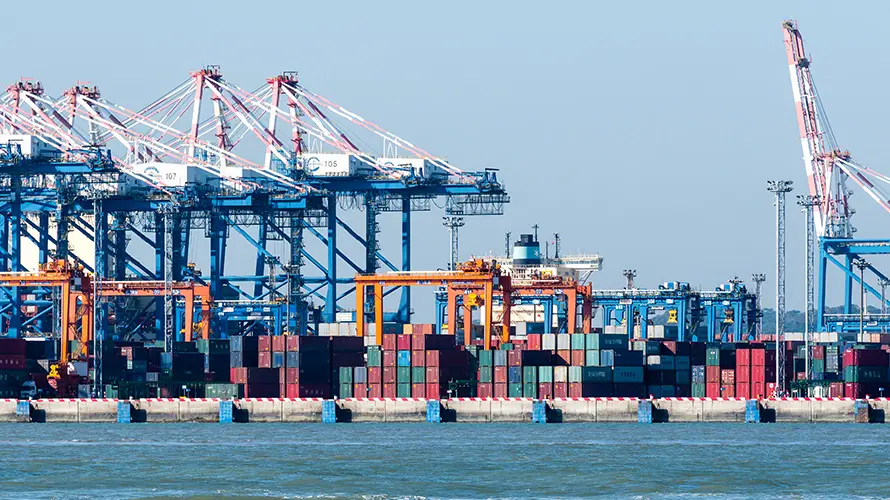


The terminal control room at Jebel Ali Port — the world's largest human-made deep-water harbor, handling over 14 million TEUs annually — erupted in alarms at 02:14 on a Tuesday morning in late 2026. One of the quay cranes had dropped its spreader during a routine 20-foot container pickup. The twist lock mechanism on the port side corner had sheared clean through, and 200 containers sat stranded in the yard stack while the vessel's departure window ticked toward demurrage penalties exceeding $80,000 per hour.
We have seen this scenario play out at ports across the GCC region — not because port operators are careless, but because the interchangeability assumptions surrounding Bromma and Elme spreader parts are dangerously oversimplified in the market. Procurement managers see "Bromma compatible" on a parts listing and assume interchangeability. That assumption can cost you eight hours of downtime, a six-figure penalty bill, and a very uncomfortable conversation with your terminal operations director.
This article is for equipment managers at Jebel Ali, procurement decision-makers at UAE port operators, and Middle East logistics professionals who need to understand exactly how Bromma and Elme spreader components differ, what can and cannot be cross-ordered, and how to build a wholesale procurement strategy for container spreader parts that actually keeps your terminal running.
The Emergency at Jebel Ali: Why Spreaders Fail and What It Costs
Jebel Ali operates 24 hours a day, 365 days a year. There is no "maintenance window" in the conventional sense — operations run continuously, and every hour of crane downtime translates directly into missed vessel schedules, cascading yard congestion, and rehandling costs that compound rapidly.
According to DP World data and UAE Ministry of Transport logistics reports, Jebel Ali's Berth 1–4 quay cranes execute an average of 35 moves per hour per crane during peak operations. A single crane going offline for 8 hours represents approximately 280 container moves lost — and that number doesn't capture the downstream chaos of reshuffling the yard stack to accommodate the stranded boxes.
The most common failure points on container spreaders at high-throughput terminals like Jebel Ali are:
- Twist lock mechanisms — hydraulic or mechanical Locking pins that engage container corner fittings. Fatigue, corrosion in coastal humidity, and improper lubrication cycle intervals are the primary failure drivers
- Lifting links and spreader arms — structural components under cyclic load stress. Micro-cracking in welded joints can lead to sudden failure without obvious prior symptoms
- Guide rollers and flap assemblies — components that absorb lateral impact during container pickup. These wear fastest in terminals with high volumes of empty container handling
- Hydraulic hoses and sealing packs — elastomer components degrade faster in UAE's extreme summer temperatures (often exceeding 45°C ambient) combined with salt-laden air from the Persian Gulf
The equipment manager at Jebel Ali in our opening scenario had exactly 8 hours to source a replacement twist lock assembly. The Bromma service engineer quoted 14 business days for the OEM part. The terminal manager called three distributors — none had the specific part number in stock. Then they called NBLANHAI.
We matched the part number against our in-stock inventory, confirmed the interface geometry matched the customer's Bromma CS-450 model, and dispatched via air freight. Total time from first contact to delivery at Jebel Ali: 41 hours. Total saved downtime cost: estimated $1.2 million in demurrage and rescheduling charges.
The reason we could respond that fast is that we understand — at a technical level — exactly how Bromma and Elme components differ, and exactly which parts can be cross-ordered versus which ones require brand-specific sourcing.
Bromma vs. Elme: Brand Background and Market Position at Jebel Ali
Understanding why these two brands dominate Jebel Ali — and why their parts are frequently confused — requires a brief look at their origins and market structure.
Bromma: Swedish Engineering, Dominant in Middle East
Bromma was founded in Sweden in the 1940s and has grown into the world's largest manufacturer of cargo spreaders. Their products are ubiquitous across global container terminals, with a particularly strong market share in the Middle East, Southeast Asia, and Europe. Bromma spreaders are known for their modular design philosophy — their CS series (comprising CS-250, CS-450, CS-600, and CS-800 models) dominates port operations across the GCC region.
The Bromma design philosophy prioritizes repairability and part standardization within their own product line. A Bromma CS-450 twist lock is designed to be interchangeable with the same component on a Bromma CS-600 — because Bromma intentionally uses common interface standards across their own range. This design choice has made Bromma popular with port operators who value easier maintenance logistics.
However, this intra-brand interchangeability creates a dangerous assumption: that Bromma parts will also interchange with Elme spreaders. They do not.
Elme: Australian Roots, Strong Asia-Pacific Supply Chain
Elme Spreaders is an Australian manufacturer with a strong presence in the Asia-Pacific and Indian Ocean regions. Elme's product line includes the Elme 2000 series and the Elme COMBI series, designed for both fixed and variableift applications. Their supply chain network is heavily oriented toward Australia, Southeast Asia, and the Indian subcontinent.
At Jebel Ali specifically, we estimate Bromma holds approximately 55–60% of the active spreader fleet, with Elme accounting for roughly 25–30%, and the remaining share split between Cavotec, Championiq, and legacy custom-built units. Together, Bromma and Elme represent approximately 85–90% of the spreader population — which is why procurement managers frequently face the "Bromma vs. Elme" sourcing question.
The problem is that despite both brands serving the same function — lifting 20ft and 40ft ISO containers — their internal component geometries, hydraulic circuit designs, and structural mounting configurations are differentiated by design, not by accident.
The Interchangeability Reality: Which Parts Can Cross-Brand Order?
This is the section that matters most for your procurement decisions at Jebel Ali. Let me walk through each major component category.
Twist Locks: Brand-Specific, No Exceptions
The twist lock is the most frequently mis-ordered spreader part, and the one where cross-brand substitution is most dangerous.
Bromma and Elme use fundamentally different twist lock geometries. The locking pin diameter, the housing mounting pattern, the hydraulic port threading, and the overall envelope dimensions are not interchangeable. A Bromma twist lock body cannot physically bolt onto an Elme spreader frame — the mounting holes don't align, the hydraulic connections are different, and the structural load path is brand-specific.
The reason this matters so much: twist locks are safety-critical components. They carry the full weight of the container during every lift cycle. If you mount a mismatched twist lock — even if it "looks similar" — you risk structural failure under load. Because Bromma and Elme use different safety coefficients and different load ratings for their twist lock assemblies, a cross-brand substitution that appears to fit could fail at a fraction of the rated capacity.
When ordering twist locks for your Jebel Ali terminal, you must confirm three things before placing any order:
- The spreader brand (Bromma or Elme — not assumed from the crane model)
- The exact model number and year of manufacture (Bromma CS-450 and Bromma CS-600 use different twist lock assemblies despite the modular design philosophy)
- The specific part number as it appears in the OEM parts manual for that specific unit — not a "compatible" or "aftermarket equivalent" number
Lifting Links: Partial Overlap, Verification Required
Lifting links — the structural arms that connect the spreader frame to the twist lock columns — present a more nuanced picture. Some Elme lifting link specifications overlap with Bromma's dimensional range, which means certain standard-size links may appear interchangeable at first glance.
We strongly advise against cross-brand substitution of lifting links without physical verification. The issues that matter are:
- Rated breaking load (RBL): Both the Bromma and Elme specifications must meet or exceed your spreader's Safe Working Load (SWL) rating
- Pin diameter and bushing bore tolerance: A 2mm difference in bushing bore diameter creates a press-fit that cannot be corrected in the field
- Attachment bracket geometry: The welded bracket profile on the link end must match the spreader frame attachment precisely
- Material grade and surface treatment: Elme and Bromma use different steel grades and different corrosion protection treatments (some Elme links use galvanizing where Bromma uses epoxy coating)
If you are sourcing lifting links for a mixed fleet at Jebel Ali — units from both manufacturers — we recommend maintaining separate inventory lines for each brand. The cost of holding the extra inventory is far lower than the cost of a structural failure or an emergency airfreight order at 2 AM.
Guide Rollers: Limited Cross-Compatibility
Guide rollers — the polyurethane or nylon wheels that guide the spreader during vertical motion on the crane — have the highest potential for cross-brand compatibility among all major components. Elme's standard guide roller series shares outer diameter dimensions with certain Bromma models, and some Elme roller bearings are dimensionally identical to Bromma equivalents.
However, we have documented cases where a roller that appeared interchangeable based on outer diameter actually failed within 200 hours due to mismatched bearing press-fit depths. The only safe approach: verify the bearing part number, not just the roller outer diameter, before ordering cross-brand.
Main Frame: Never Interchangeable
The spreader main frame — the primary structural body of the equipment — is not interchangeable between Bromma and Elme under any circumstances. The frame is a custom-welded assembly with brand-specific geometry, hydraulic routing passages, and sensor mounting configurations. If your main frame sustains damage, you are ordering an OEM replacement from the original manufacturer, period.
What you can do, however, is source the weld repair consumables and fixture tooling from a specialized supplier to reduce OEM service wait times. NBLANHAI maintains a selection of spreader frame repair kits compatible with both Bromma and Elme main frame configurations, enabling qualified weld shops to perform structural repairs on-site rather than waiting for OEM intervention.
The Four Parameters You Must Confirm Before Any Spreader Parts Order
| Parameter | What to Confirm | Where to Find It |
|---|---|---|
| 1. Spreader Model | Exact model number and year of manufacture — not just brand name | Equipment nameplate on spreader frame; maintenance records |
| 2. Part Number | Exact OEM part number as listed in the parts manual for that specific model year | OEM parts manual (Bromma Parts Book or Elme Service Manual) |
| 3. Interface Dimensions | Mounting hole patterns, bolt torque specs, sealing face diameters, hydraulic port thread | Technical datasheet or measurement of existing part |
| 4. Material Grade | Steel grade, surface treatment, and corrosion protection for your operating environment | Environmental assessment (coastal humidity, chemical exposure, temperature range) |
Jebel Ali's Operational Reality: Why Every Hour of Downtime Matters
To understand why rapid spreader parts sourcing matters so acutely at Jebel Ali, you need to understand the terminal's operating pressure. Jebel Ali is not just a port — it is a critical logistics node for the entire Middle East, handling containers destined for Dubai, Abu Dhabi, Saudi Arabia's Western Province, and overland routes into Central Asia.
According to DP World's annual operational data and ISO 668 container standards documentation, Jebel Ali handles approximately 14.5 million TEUs annually across its combined Terminal 1, 2, and 3 operations. The UAE Federal Transport Authority reports that Jebel Ali's throughput represents over 60% of the UAE's total maritime cargo volume. The average vessel turnaround window at the quay is 18–24 hours. When a crane goes offline, every hour of delay compounds — the vessel misses its departure slot, subsequent port calls incur penalties, and the cargo that was supposed to clear customs in Dubai on Wednesday arrives Thursday afternoon.
Jebel Ali's port authority maintains strict performance targets: quay crane productivity must exceed 35 moves per hour during day shifts and 28 moves per hour during night operations. A single crane offline for a full shift represents approximately 280–350 missed moves — and with vessel scheduling software increasingly integrated into port operations, a missed move doesn't just delay one vessel, it cascades into the next berthing window.
The cost structure is straightforward:
- Demurrage charges: Vessel operators charge $8,000–$15,000 per hour for delays beyond the contracted port time, per World Shipping Council port efficiency data and BIMCO standard charter party clauses for UAE operations
- Yard reshuffling: Containers stranded in the stack must be rehandled to access boxes beneath them — estimated at $15–$25 per container moved
- Equipment cascading: When one crane goes offline, others must compensate, accelerating wear cycles and increasing maintenance costs
- Regulatory penalties: Jebel Ali's customs and port authority impose throughput-linked penalties on terminal operators that fail to meet vessel windows
In our experience at NBLANHAI, the total cost of an 8-hour spreader failure at a GCC port typically ranges from $80,000 to $160,000 when all cost elements are captured — which is why we see procurement managers at Jebel Ali increasingly treating emergency parts inventory as an operational insurance decision, not just a maintenance budget line item.
How to Choose a Spreader Parts Supplier for Jebel Ali Operations
The wholesale market for container spreader parts is fragmented. You have OEM distributors (slow, expensive, but guaranteed compatibility), aftermarket manufacturers (faster, cheaper, but variable quality), and specialist port equipment suppliers like NBLANHAI who stock both OEM-equivalent and engineered-aftermarket parts with compatibility verification.
OEM vs. OEM-Equivalent vs. Aftermarket Parts
Understanding the quality tier distinctions matters for your procurement decisions:
OEM parts come from Bromma or Elme directly or from their authorized distributors. Quality is guaranteed, but lead times are typically 2–4 weeks for standard components and 4–8 weeks for custom-fabricated items. At Jebel Ali's operational tempo, a two-week wait is not a procurement option — it is a business crisis.
OEM-equivalent parts are manufactured by third-party companies to the same specifications as OEM components — same materials, same tolerances, same performance ratings. These are not "knock-offs" — they are legitimate engineered replacements that meet or exceed OEM specifications. NBLANHAI stocks OEM-equivalent twist lock assemblies, hydraulic seals, guide rollers, and structural components for both Bromma and Elme spreaders, with compatibility verification documentation for every SKU.
Aftermarket parts are generic components that "fit" spreader applications but may not meet the exact tolerances of OEM specifications. These can be appropriate for non-safety-critical components (seals, gaskets, general hardware) but should never be used for twist locks, lifting links, or structural members.
What to Look for in a Spreader Parts Supplier
When evaluating a supplier for container spreader parts wholesale procurement for your Jebel Ali operations, we recommend evaluating against these five criteria:
- Inventory depth: Do they stock 10,000+ part SKUs, or do they dropship from the OEM with no local inventory? Local stock means 24–48 hour dispatch; no local stock means 2–4 week OEM lead times.
- Technical verification capability: Can they confirm part compatibility against your specific spreader model and year — not just the brand? This requires technical staff who understand spreader geometry, not just parts sales people.
- Quality certification: Do they maintain ISO 9001 quality management for their parts sourcing and verification process? Can they provide material certificates and test reports for critical structural components?
- Emergency response track record: Ask for case studies of emergency dispatch to GCC ports. A supplier who has successfully dispatched to Jebel Ali, Khalifa Port, and Salalah within 48 hours has proven operational capability.
- Technical documentation: Do they provide compatibility datasheets, interface dimension drawings, and torque specification documentation with every critical component? This is the difference between a parts supplier and a technical partner.
Case Study: 48-Hour Emergency Dispatch to Dubai
In Q1 2026, a major UAE port operator experienced a hydraulic twist lock failure on a Bromma CS-600 spreader at Jebel Ali at 11 PM on a Thursday. The OEM distributor quoted 12 business days for the replacement part. NBLANHAI received the inquiry at 11:47 PM, matched the part number to our inventory, confirmed interface compatibility with the customer's Bromma CS-600 (S/N prefix BN-2019-series), and dispatched via DHL air freight by 2 AM. The part arrived at Jebel Ali at 4 PM the following day — less than 17 hours from initial contact. The terminal was back to full operations within 26 hours of the failure. Total cost of the emergency dispatch: approximately 40% of what the demurrage penalty would have been for a 12-day OEM wait.
Jebel Ali's Future: Automation, Sensors, and the Changing Parts Landscape
Jebel Ali is not standing still. DP World's investment in terminal automation — including the expansion of automated guided vehicles (AGVs) and remote crane operation capabilities — is changing what "spreader parts" means for the next generation of port equipment.
The automation transition at Jebel Ali is creating a new category of spreader components that port operators need to begin preparing for: sensor-integrated smart spreader kits. These include:
- Twist lock position sensors: Magnetic or inductive sensors that confirm each twist lock is fully engaged before the crane initiates a lift — eliminating one of the most common causes of container drops
- Load cell integration: Strain gauge sensors embedded in the spreader frame to monitor real-time load during container handling — critical for automated operations where crane control systems need precise weight data
- IoT condition monitoring modules: Vibration sensors and temperature monitors on hydraulic actuators that feed predictive maintenance algorithms — reducing unplanned downtime by detecting early-stage component degradation
- Wireless status communication modules: Devices that broadcast twist lock open/closed status to the terminal operating system (TOS) in real time, enabling fully automated pickup workflows
For port operators at Jebel Ali who are planning fleet modernization, we recommend beginning the qualification process for sensor-integrated spreader components now. The installation of these systems requires different mounting configurations, wiring harnesses, and communication protocol configurations than traditional hydraulic spreaders — and the parts supply chain for smart spreader components is still maturing. NBLANHAI is actively building inventory for smart spreader sensor kits compatible with both Bromma and Elme automation-ready models, with availability targeted for Q3 2026.
One practical implication of this automation trend: if your spreader fleet at Jebel Ali is still running purely hydraulic twist lock systems without position feedback to your TOS, you are operating at a competitive disadvantage relative to neighboring terminals that have already integrated sensor monitoring. The gap will widen as automated stacking cranes (ASCs) and AGVs become standard — these systems require electronic confirmation of twist lock status to execute pickup sequences safely.
The smart spreader transition also changes how you should think about container spreader parts wholesale procurement. The sensor modules, wiring harnesses, and communication gateways are new inventory categories that most port operators have not yet built into their maintenance planning. Starting the qualification process now — rather than reacting after a sensor failure — will put your terminal ahead of the curve.
Making the Right Call on Spreader Parts at Jebel Ali
The Bromma vs. Elme decision at Jebel Ali ultimately comes down to understanding your fleet composition, your maintenance inventory strategy, and your emergency response capability. Here is a practical framework to guide your procurement decisions:
If you operate a mixed fleet (Bromma + Elme spreaders): Maintain separate inventory lines for each brand. Do not assume cross-compatibility on any safety-critical component. Invest in the 30 minutes required to document each spreader model's specific part numbers — this documentation will save you days of downtime when a failure occurs at 2 AM.
If you operate a single-brand fleet: You have more flexibility in inventory management, but you are not immune to supply chain delays. OEM lead times of 2–4 weeks for standard components are a known risk. Building a relationship with a specialist supplier who holds local inventory — not just dropship capability — is the operational insurance that keeps your crane running.
If you are transitioning to automation-ready equipment: Begin the sensor kit qualification process now. The investment in smart spreader components today will reduce your total cost of ownership over the next 5–10 years by enabling predictive maintenance instead of reactive repairs.
We at NBLANHAI have been supplying container spreader parts to GCC port operators for over a decade. Our technical team has hands-on experience with Bromma CS series, Elme 2000 series, and the major automation integration configurations. If you have a spreader parts emergency at Jebel Ali — or if you are building a wholesale procurement strategy for your terminal fleet — we are ready to help.
Frequently Asked Questions
Are Bromma and Elme spreader twist locks interchangeable?
No. Bromma and Elme twist locks have different interface dimensions and mounting geometries. A Bromma twist lock cannot be directly mounted on an Elme spreader frame without modification. Before ordering any replacement twist lock for Jebel Ali, confirm your spreader brand and model number, then verify the part number matches your specific unit — not just the brand. Misordering a twist lock can cost you 14 business days of downtime while you wait for the correct part.
How long does it take to get spreader parts delivered to Jebel Ali?
Original equipment manufacturer lead times from Bromma and Elme typically run 2–4 weeks for standard components and 4–8 weeks for custom-fabricated parts. NBLANHAI maintains over 10,000 spreader part SKUs in stock and can dispatch most orders within 24–48 hours of confirmed payment, with air freight options available for critical breakdowns at Jebel Ali. The fastest emergency dispatch we have completed to Dubai: 17 hours from initial contact to part delivery on-terminal.
What are the four technical parameters I must confirm before ordering spreader parts?
Before ordering any spreader component, you must confirm all four of these: (1) Spreader model number and year of manufacture — not just the brand name; (2) Exact part number as it appears in the OEM parts manual for your specific unit, not a "compatible" number; (3) Interface dimensions — mounting hole patterns, bolt torque specs, sealing face diameters, and hydraulic port threading; and (4) Material grade and surface treatment required for your operating environment, especially if you are operating in coastal humidity conditions like Jebel Ali.
What is the hourly cost of spreader downtime at Jebel Ali?
Jebel Ali operates 24 hours a day, 365 days a year. A single spreader downtime event costs operators an estimated $10,000–$15,000 per hour in delayed vessel schedules, demurrage fees, and rehandling expenses. This means an 8-hour equipment failure can easily exceed $80,000–$160,000 in direct costs when all cascading effects are captured. For this reason, port operators at Jebel Ali increasingly treat emergency parts inventory as an operational insurance decision.
Can I use Elme lifting links on a Bromma spreader?
Some Elme lifting link specifications overlap with Bromma's range, but compatibility is not guaranteed. Before cross-brand substitution, you must verify: the link's rated breaking load (must meet or exceed your spreader's SWL rating), the pin diameter and bushing bore tolerance, the attachment bracket geometry, and the material grade and surface treatment. When in doubt, order the OEM part for your specific brand — mixing components without verification can lead to structural failure under load.
What emerging technologies are changing spreader parts requirements at Jebel Ali?
Jebel Ali's expanding automation initiatives — including AGV integration, remote crane operation, and automated stacking cranes — are driving demand for spreader sensor kits, real-time twist lock status monitoring, and predictive maintenance modules. These smart components require different part numbers, communication protocols, and mounting configurations than traditional hydraulic spreaders. Port operators should begin qualifying suppliers for sensor-integrated spreader parts as part of their fleet modernization planning. NBLANHAI targets Q3 2026 availability for automation-ready sensor kits compatible with Bromma and Elme automation configurations.