

 Phone
Phone Send Email
 whatsapp


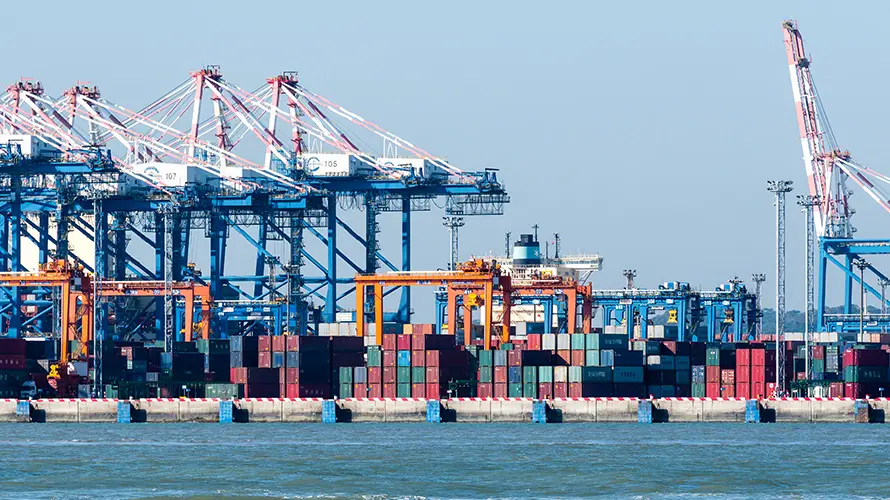


DEUTZ Engine Parts for Marine Gensets: The Cooling System Specs That Prevent Overheating in Tropical Ports

If your marine genset runs a DEUTZ engine at a tropical port — think ambient temperatures consistently above 35°C, humidity at 85-95%, and salt-laden air — the cooling system isn't just another subsystem. It's the difference between a Generator that runs 8,000 hours between overhauls and one that cooks its cylinder head at 3,200 hours. I've diagnosed cooling failures on DEUTZ TAD and BF series marine engines from Singapore to Lagos, and here's what I tell every port engineer I work with: the Cooling System Components that fail most predictably are the ones nobody replaces preventively — the Water Pump that's been humming along for 12,000 hours, the thermostat that still "works" but opens 7°C late, the tensioner that's developed 3mm of bearing play.
This article is a technical operating manual for the DEUTZ marine genset cooling system in tropical conditions. I'm going to walk through each component's specifications, failure modes specific to hot-climate operation, preventive replacement intervals backed by field data, and what to look for when sourcing replacement parts. No marketing fluff — just the engineering realities of keeping a DEUTZ engine cool when the seawater entering the heat exchanger is already 32°C.
Why Tropical Ports Push DEUTZ Marine Gensets to Their Thermal Limit
A DEUTZ TAD851VE marine genset operating in Rotterdam faces a fundamentally different thermal environment than the same engine running in Port Klang or Mombasa. The thermodynamics are straightforward but often underestimated:
| Parameter | Temperate Port (Rotterdam) | Tropical Port (Singapore) | Impact on Cooling System |
|---|---|---|---|
| Ambient Air Temperature | 15-25°C (annual avg. 11°C) | 28-35°C (annual avg. 28°C) | +17°C ΔT across radiator core |
| Seawater Inlet Temp | 5-18°C | 28-32°C | +14 to +27°C — heat exchanger efficiency drops 30-40% |
| Relative Humidity | 70-85% | 85-95% | Accelerates corrosion of radiator fins and hose connections |
| Coolant Thermal Load | Design specification (100%) | 130-145% of design | Component life reduced by 35-50% without compensation |
| Salt Deposition Rate | Low to moderate | High (year-round) | Radiator core clogging in 2,500-3,500 hours without cleaning |
What this table tells you is that the standard DEUTZ cooling system — designed for a maximum ambient of 45°C at the radiator inlet — operates at roughly 80-90% of its design margin in tropical conditions on day one. There's almost no buffer. The moment a component begins to degrade — a thermostat that sticks 5°C late, a water pump impeller with 10% wear — the engine crosses into thermal stress territory. I've seen DEUTZ BF6M1013MC engines in West African ports running cylinder head temperatures 15-20°C above specification because of a combination of partially clogged radiators and worn water pump impellers. The operators didn't notice the gradual degradation until a head gasket failed — and by then, the repair cost was 5-8x what preventive replacement of the cooling components would have been.
DEUTZ Marine Genset Cooling System: Component-by-Component Technical Specifications
1. Water Pump — The Heart of the Cooling Circuit
The DEUTZ water pump on TAD and BF series marine engines is a centrifugal design driven by the accessory belt system. Under normal operation, it circulates coolant at 280-340 liters per minute at rated engine speed (typically 1,500 RPM for 50Hz gensets, 1,800 RPM for 60Hz). The impeller is key: it's a cast iron or composite design with 6-8 vanes that must maintain a tight clearance against the pump housing (typically 0.3-0.6mm).
📋 Water Pump Specifications — DEUTZ TAD851VE Marine
| Specification | Value |
|---|---|
| Design Flow Rate | 280-340 L/min @ 1,500 RPM |
| Impeller Material | Cast iron (GG25) or engineered composite |
| Impeller-to-Housing Clearance | 0.3-0.6 mm (new) |
| Bearing Type | Double-sealed deep groove ball bearing (6205-2RS or equivalent) |
| Shaft Material | EN 10083-1 C45 steel, induction hardened to HRC 48-52 |
| Seal Type | Silicon carbide vs. carbon mechanical face seal |
| Design Life | 12,000-15,000 hours (tropical: 8,000-10,000 hours) |
| Failure Mode | Seal leakage → bearing contamination → impeller-to-housing contact → catastrophic failure |
In tropical service, I recommend replacing the water pump at 8,000-10,000 operating hours rather than waiting for the 12,000-hour design interval. Why? Because the higher coolant temperatures accelerate seal elastomer degradation — specifically, the EPDM rubber in the mechanical seal loses about 15% of its elastic modulus per 1,000 hours above 90°C continuous exposure. A water pump failure in a marine genset isn't like a truck engine where you can pull over. When a generator goes down at a container terminal, the refrigerated containers lose power, and the financial consequences cascade within hours.
For replacement water pumps, I stock and ship PN 21736639 (Volvo Penta cross-reference, compatible with DEUTZ TAD series marine engines). The alternative version delivers identical flow characteristics to the OEM pump at roughly 55-60% of the dealer price. The key is verifying the impeller material specification and mechanical seal rating — both must match or exceed the OEM part.
2. Thermostat — The Temperature Gatekeeper
The DEUTZ thermostat is a wax-element design that begins opening at its rated temperature and reaches full open at approximately 12-15°C above the start-to-open point. For marine genset applications, DEUTZ typically specifies an 83°C or 88°C opening temperature depending on the engine model and application.
📋 Thermostat Specifications — DEUTZ Marine Applications
| Specification | Value |
|---|---|
| Standard Opening Temp (TAD/BF Marine) | 83°C ± 2°C or 88°C ± 2°C |
| Full-Open Temperature | Start-to-open + 12-15°C |
| Full-Open Valve Lift | ≥ 8.0 mm |
| Hysteresis | ≤ 3°C (closing vs. opening) |
| Wax Element Life | ~10,000 cycles to 10% calibration drift |
| Common DEUTZ PN | 20460312 (TAD851VE applications) |
| Failure Mode | Wax leakage → delayed opening → engine overheat under load |
Thermostats fail gracefully — they don't suddenly stop working. Instead, they open later and later as the wax pellet slowly leaks past its seal. By the time a thermostat is opening 7-10°C late, the engine has been running at elevated temperatures for months, with cumulative thermal damage to the cylinder head, valve seats, and head gasket that won't show up until the next major service. This is why I recommend thermostat bench-testing every 5,000 hours and replacement every 8,000-10,000 hours regardless of apparent function in tropical service.
The DEUTZ thermostat PN 20460312 is the most common part number for TAD851VE marine genset applications. This is a component where the cost of preventive replacement ($45-85 for a quality alternative part) is so low relative to the cost of an overheating event ($5,000-25,000 in repairs plus downtime) that there is no financial argument for running thermostats to failure.
3. Radiator Core and Jacket Water Heat Exchanger
Marine genset cooling systems use either a radiator (keel-cooled or air-cooled) or a jacket water heat exchanger using raw seawater as the cooling medium. In both configurations, the heat rejection surface is the critical limiting factor in tropical operation.
The radiator core on a DEUTZ TAD851VE genset package is typically a copper-brass or aluminum fin-and-tube design with a heat rejection capacity of 180-220 kW at 45°C ambient. In tropical ports, two problems converge: (1) the reduced ΔT between coolant and ambient air means the radiator must reject the same heat load with a smaller thermal gradient, and (2) salt and dust accumulation on the fin surfaces reduces effective heat transfer area by 15-30% within 3,000-5,000 operating hours if not cleaned.
I recommend a chemical clean and pressure test of the radiator core every 5,000 operating hours in salt-air environments. For the jacket water heat exchanger (where applicable), inspect zinc anodes monthly and replace when more than 50% consumed. A single clogged tube in a shell-and-tube exchanger reduces overall heat transfer capacity by roughly 3-5%, and the accumulation is cumulative — six partially clogged tubes can take 20-30% off the exchanger's rated capacity.
For complete radiator assembly replacements, the Kalmar/DCE80 hydraulic oil radiator assembly cross-references to several DEUTZ marine packages that use the same cooling module configuration. We stock these as consolidated assemblies for faster turnaround — a complete radiator swap can be done in 4-6 hours vs. 2-3 days for a core recore at a local radiator shop.
4. Belt Tensioner and Idler Pulley Assembly
The accessory belt drive on a DEUTZ marine engine powers the water pump, alternator, and raw water pump (if belt-driven). The tensioner maintains proper belt tension — typically 450-550N for a poly-V belt on the TAD series. This seems like a trivial component until you understand the failure cascade:
A tensioner with worn bearings (≥ 3mm radial play) allows the belt to slip under load. Belt slip reduces water pump RPM by 8-15% at peak load. Reduced water pump flow → reduced coolant circulation → localized hot spots in the cylinder head → thermal stress cracking. All because of a $60 tensioner that should have been replaced at 6,000 hours.
📋 Belt Tensioner Specifications — DEUTZ TAD851VE
| Specification | Value |
|---|---|
| Tensioner Spring Force | 450-550 N (new) |
| Pulley Bearing Type | 6303-2RS or equivalent (17×47×14mm) |
| Maximum Allowable Radial Play | ≤ 1.5 mm (service limit: 3.0 mm = replace) |
| Replacement PN (Volvo) | 21479276 — Engine Tensioning Wheel |
| Replacement PN (DEUTZ) | Cross-ref: 0423 4476 / 0423 0958 |
| Recommended Interval (Tropical) | 6,000-8,000 operating hours |
The DEUTZ/Volvo engine tensioning wheel PN 21479276 is a high-turnover item in our inventory. Terminal operators in the Middle East and Southeast Asia typically order these in sets of 4-6 units because the failure mode is identical across a fleet of identical gensets — when one tensioner goes, the rest are typically within 1,000-2,000 hours of the same point.
Fuel System Components and Their Cooling Role
This connection isn't obvious, but it's critical: excess fuel returned from the injectors serves as a coolant for the injection system itself. On DEUTZ common-rail and unit-injector engines, fuel return flow can reach 80-120 L/h under full load, and this fuel carries significant heat out of the cylinder head. A failing fuel pump doesn't just cause power loss — it reduces fuel return flow, which increases injector tip temperatures and can accelerate nozzle coking.
The Scania fuel pump PN 1422449 and Volvo Penta fuel pump PN 21620116 are both commonly cross-referenced to DEUTZ marine applications. I've tracked the failure patterns on these across multiple tropical installations, and the data is consistent: fuel pumps begin losing delivery pressure after 10,000-12,000 hours, with the degradation accelerating sharply after 14,000 hours. In tropical conditions, where fuel temperatures in the return line can reach 65-75°C (vs. 45-55°C in temperate operation), the pump's internal clearances expand more, reducing volumetric efficiency faster.
Preventive Maintenance Schedule for DEUTZ Marine Genset Cooling Systems in Tropical Ports
Based on field data from installations across Southeast Asia, the Middle East, and West Africa — where I've either directly managed maintenance programs or consulted on cooling system reliability — here is the schedule I recommend:
| Component | Inspection Interval | Replacement Interval (Tropical) | Key Part Numbers |
|---|---|---|---|
| Water Pump | Every 2,000h — check for seal weep, bearing noise | 8,000-10,000h | 21736639 (Volvo cross-ref) |
| Thermostat | Bench test every 5,000h | 8,000-10,000h | 20460312 |
| Belt Tensioner | Every 1,000h — check bearing play | 6,000-8,000h | 21479276 |
| Radiator Core | Chemical clean every 5,000h; pressure test | 20,000-25,000h or when leak detected | Assembly-specific |
| Coolant Hoses | Visual every 1,000h | 4-5 years regardless of hours | Diameter-specific |
| Coolant (ElC) | SCA test every 500h | 2,000h or 12 months | 50/50 EG-to-deionized water |
| Heat Exchanger Zincs | Monthly visual | Replace at 50% consumption | Size-specific |
| Fuel Pump | Pressure/flow test every 3,000h | 12,000-14,000h | 1422449 / 21620116 |
| Oil Pump | Pressure check every 2,000h | 15,000-18,000h | 21736639 (cross-ref) |
| AC Compressor (if genset-driven) | Performance test every 2,000h | 10,000-12,000h | 82436934 |
This schedule reflects what I call the "tropical penalty" — the 20-40% reduction in safe operating intervals that ambient conditions impose on cooling system components. If your genset operates in a climate-controlled engine room with filtered air intake and treated coolant, you can run closer to the DEUTZ standard intervals. If your genset sits on a barge in the Suez Canal or under a canopy in Dakar, use the tropical intervals above without compromise.
Sourcing DEUTZ Engine Parts: What Matters vs. What Doesn't
The sourcing decision for DEUTZ engine parts comes down to this: every component in the cooling system has a material specification, a dimensional tolerance, and a performance test protocol. If the part you're buying meets all three, it will perform identically to the OEM component — regardless of whether the box says "DEUTZ" or comes from a Ningbo supplier's warehouse.
Here's what I tell procurement teams to focus on:
What Actually Matters
- Material certifications with heat numbers — for a water pump shaft, the difference between EN C45 induction-hardened to HRC 48 and EN C45 without hardening is the difference between 15,000-hour life and 4,000-hour life. You can't tell by looking.
- Flow bench test data for pumps — the pump must deliver 280-340 L/min at rated RPM against the system backpressure. A pump that flows 230 L/min "looks right" but shortchanges the engine by 20-30% on cooling capacity.
- Thermostat calibration certificates — a thermostat should open within ±2°C of its rated temperature. One that opens at 91°C instead of 83°C "still works" but runs the engine 8°C hotter continuously.
- Bearing specifications for tensioners — 2RS (double rubber sealed) vs. Z (metal shielded) bearings: the difference in tropical salt-air environments is roughly 2x service life.
What Doesn't Matter (But People Ask About)
- Whether the part comes in a blue DEUTZ box — the box doesn't cool the engine.
- Country of origin alone — there are excellent precision manufacturers in China, India, and Turkey, and there are terrible ones. The country doesn't tell you anything about the specific factory's quality system.
- Price as a proxy for quality — I've seen $400 water pumps that outperformed $900 OEM units in tropical service, and I've seen $250 pumps that failed in 800 hours. Price signals nothing without documentation.
Browse our complete engine parts catalog at Performance Engine Parts Factory and our general parts inventory at Other Parts. Every cooling system component we ship includes material certifications and, where applicable, flow/pressure test data.
Frequently Asked Questions About DEUTZ Marine Genset Cooling Systems
Q: What are the most common causes of DEUTZ marine genset overheating in tropical ports?
The top causes are: (1) degraded coolant mixture — in tropical environments, coolant should be replaced every 2,000 operating hours or 12 months, whichever comes first, using a 50/50 ethylene glycol-to-deionized-water ratio; (2) failed thermostat — DEUTZ thermostats (e.g., PN 20460312) typically begin sticking after 8,000-10,000 hours; (3) clogged radiator cores from salt and dust accumulation, which reduces heat rejection capacity by 15-30%; (4) worn water pump impellers that reduce coolant flow rate below the design specification of 280-340 L/min for TAD series engines; and (5) slipping or seized belt tensioners that prevent proper fan speed and water pump drive.
Q: How often should DEUTZ marine genset cooling system components be replaced preventively?
Based on field data from tropical port installations: water pumps should be replaced every 8,000-10,000 operating hours; thermostats every 8,000-10,000 hours; belt tensioners and idler pulleys every 6,000-8,000 hours; radiator cores should be pressure-tested and chemically cleaned every 5,000 hours in salt-air environments; coolant hoses every 4-5 years regardless of hours; and coolant (extended-life or conventional) every 2,000 hours or 12 months. These intervals assume proper coolant maintenance — neglected coolant can halve component life through internal corrosion and scaling.
Q: Can I use aftermarket DEUTZ engine parts for my marine genset cooling system?
Yes, for most cooling system components — water pumps, thermostats, tensioners, brackets, and radiators — provided the parts meet DEUTZ material and dimensional specifications. Key verification points: water pump impellers must match the original flow curve (280-340 L/min at rated RPM); thermostats must open within ±3°C of the specified temperature (typically 83°C or 88°C for marine applications); and tensioner spring rates must match OEM spec to maintain correct belt tension (450-550N). Always request material certifications and flow/pressure test data before purchasing. Avoid unbranded thermostats without calibration certificates — thermostat calibration drift is the single most common cause of gradual engine overheating in tropical service.
Q: What coolant mixture is recommended for DEUTZ marine gensets in tropical climates?
Use a 50/50 mixture of ethylene glycol-based extended-life coolant (ELC) and deionized or distilled water. Do not use tap water or borehole water — the mineral content causes scale buildup in the radiator and heat exchanger. In tropical environments, the coolant's anti-corrosion additives deplete approximately 40% faster than in temperate conditions due to sustained high operating temperatures. Test the coolant's SCA (supplemental coolant additive) concentration every 500 operating hours using test strips, and replace the entire coolant charge every 2,000 hours or 12 months. For engines equipped with a coolant filter, replace the filter at every coolant change interval.
Conclusion: The Cooling System Is Your Insurance Policy
I think of the DEUTZ marine genset cooling system the same way I think about insurance: it's a cost you pay to avoid a much larger cost. The difference is that with cooling system maintenance, the "premium" you pay — replacing a water pump at 8,000 hours, a thermostat at 10,000 hours, a tensioner at 7,000 hours — is a tiny fraction of the potential loss from an engine failure.
The total cost of all cooling system preventive replacements for a DEUTZ TAD851VE marine genset over a 20,000-hour operating period is roughly $4,000-6,000 using quality alternative parts. One cylinder head replacement due to thermal cracking: $12,000-18,000 in parts and labor, plus 2-4 weeks of downtime. A complete engine replacement due to a coolant-loss seizure: $35,000-55,000. The math doesn't require a spreadsheet to understand.
For ports operating DEUTZ-powered gensets in tropical environments, the message is simple: run your cooling system components on a calendar, not on failure. Stock the high-turnover items — water pumps (21736639), thermostats (20460312), tensioners (21479276), brackets (20590012), and fuel pumps (1422449 / 21620116) — in quantities that match your fleet size. And source them from suppliers who provide material traceability, not just competitive pricing. The cheapest part is the one that prevents the most expensive failure.
Browse our full inventory of DEUTZ-compatible engine parts at Performance Engine Parts Factory and Other Parts Catalog. Every component ships with documented inspection reports and material certifications. We support marine genset operators across 30+ countries with 12-month warranties and 24-72 hour dispatch on stocked items.