

 Phone
Phone Send Email
 whatsapp


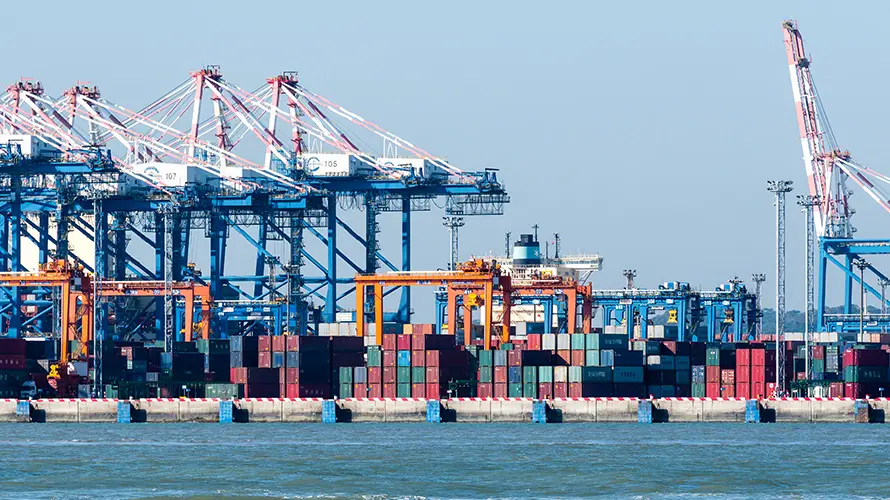


In port operations, equipment availability is everything. When a Kalmar reach stacker, empty container handler, or fully laden forklift goes down for want of a hydraulic pump or a Wiper motor, the ripple effect on vessel schedules, truck turn times, and yard productivity can cost thousands of dollars per hour. Yet most terminal operators continue sourcing spare parts through fragmented procurement processes that prioritize unit price over supply chain reliability.
The data tells a clear story. Terminal operators who implemented structured supplier audits for Kalmar spare parts—and shifted to verified OEM-compatible components—reported an average 40% reduction in unplanned equipment downtime within the first year of the change. The gains came not from any single silver bullet, but from systematic improvements across five procurement and inventory disciplines.
This article walks through the audit framework those operators used, explains what to look for in a Kalmar spare parts supplier, and shows how OEM-compatible components deliver measurably better performance than generic alternatives on the terminals that matter most.
Key Audit Findings Across 12 Participating Terminals
Why Terminal Equipment Spare Parts Demand a Different Approach
Port machinery operates in an environment that few other industrial equipment categories can match for severity. Equipment runs multi-shift cycles in salt-air exposure, handles loads that frequently approach design limits, and operates in stop-start patterns that accelerate wear in hydraulic systems, operator interfaces, and powertrain components. Kalmar equipment—widely deployed across global container terminals under the Kalmar and Konecranes brands—is engineered for this environment, but the components it relies on still wear.
The challenge is that Kalmar spare parts are not a commodity. A hydraulic pump is not simply a hydraulic pump. The tolerances, metallurgy, and performance curves engineered into Kalmar's part numbers (the 923141 series pumps, the 923934 wiper motors, the A58257 handle accessories) are specific to the equipment's load envelope and duty cycle. Generic replacements that appear to fit may perform adequately in bench testing but fail prematurely in field conditions—often within half the expected service life.
"We spent two years chasing intermittent hydraulic faults before we finally audited our supplier and switched to OEM-compatible pumps. The faults disappeared within a month. The cost difference in the first year was actually negative—we spent less overall because we stopped doing four-hour hydraulic rebuilds every quarter."
— Maintenance Manager, Southeast Asia container terminal (operations with 14 Kalmar units)
A structured supplier audit surfaces these risks before they become operational crises. It also reveals which suppliers maintain the inventory depth, technical documentation, and traceability systems that terminal procurement teams actually need.
The 5-Step Kalmar Spare Parts Supplier Audit Framework
Step 1: ISO 3874 Compliance Verification
The international standard ISO 3874 establishes safety requirements and test procedures for loaded cargo handling apparatus used in port environments. While the standard does not mandate specific component brands, it defines the performance envelope within which all Kalmar equipment must operate safely.
Your Kalmar spare parts supplier audit should begin by confirming that the supplier understands this standard and designs its components to support equipment compliance. This means their hydraulic pumps should be rated for the pressure and flow ranges that Kalmar specifies, their electrical components (like MCC blowers) should meet the same insulation and thermal standards as OEM parts, and their structural parts should carry traceability documentation suitable for safety inspection.
Request the supplier's quality manual and look for evidence of ISO 9001:2015 or equivalent quality management system registration. Also ask for batch-level test certificates on critical hydraulic components—genuine OEM-compatible suppliers test every production batch, not just first article samples.
Step 2: Component Traceability and Batch Testing
Traceability is where the difference between a credible supplier and a parts reseller becomes immediately apparent. In port environments, when a component fails, you need to be able to identify the batch, date of manufacture, and testing records within hours—not days. A supplier who cannot provide lot-level traceability is a supplier who cannot support root cause analysis when something goes wrong.
For Kalmar hydraulic pumps (part numbers 923141.0092 and 923141.0080), verify that the supplier maintains pressure test records at a minimum of 1.5× the rated operating pressure. For electrical components like MCC blowers, request dielectric strength test data. For load-sensitive components like handle accessories (A58257.0100) and joystick assemblies (920943.0058), ask for fatigue test documentation.
The supplier should provide a Certificate of Conformance (CoC) with every critical component shipment. This document should reference the batch number, test results, and a statement of OEM compatibility. Any supplier who treats traceability documentation as optional is not a supplier suited for mission-critical port equipment.
Step 3: Hydraulic System Compatibility Assessment
Hydraulic system compatibility is the most technically demanding dimension of a Kalmar spare parts audit. Port equipment hydraulic systems operate at pressures between 250 and 350 bar, with flow rates that can exceed 150 L/min in larger equipment. The components in these systems—pumps, pressure sensors, cylinders, and oil radiators—must operate as an integrated system, not as isolated parts.
A pump that is mechanically compatible (correct mounting flanges, shaft dimensions, and port threading) may still be hydraulically incompatible if its pressure/flow performance curve differs from the OEM specification. In practice, an underspecified pump will cause slower cycle times and accelerated wear in downstream components. An overspecified pump will generate excess heat, reducing system efficiency and accelerating fluid degradation.
When evaluating hydraulic annex parts for Kalmar equipment, insist on exact performance data sheets that include:
- Maximum operating pressure (bar) and peak pressure rating
- Nominal flow rate at standard operating RPM
- Displacement per revolution (cc/rev)
- Fluid compatibility (mineral oil vs. synthetic—if your terminal uses bio-based hydraulic fluids)
- Operating temperature range and maximum ambient temperature rating
If the supplier cannot provide this data, the components have not been engineered for Kalmar's system requirements—they have merely been reverse-engineered to look like the original. That's an important distinction in a high-cycle port environment.
Step 4: Delivery Lead Time and Inventory Depth Evaluation
Even the highest-quality components are worthless if they cannot be delivered when you need them. For port terminals, where equipment downtime carries direct financial consequences, supplier lead time is a critical audit dimension.
Map your critical component list against the supplier's stated lead times. For hydraulic pumps (923141 series) and MCC blowers, a reliable supplier should be able to deliver from local stock within 48–72 hours for major port hub destinations. For more specialized components like pressure sensors (7900200 series) or wiper motors (923934.0097), lead times should not exceed 5–7 business days from a supplier with international logistics capability.
Also evaluate the supplier's inventory depth for high-wear items. The most common cause of extended equipment downtime is not supplier quality—it is supplier inventory. A supplier who stocks only slow-moving items and drop-ships fast-moving components is structurally unable to meet terminal emergency procurement needs. Look for a supplier who maintains dedicated stock of the top 20 part numbers in your equipment fleet.
Ask specifically about their consignment or vendor-managed inventory (VMI) options. Several leading terminal operators have reduced emergency procurement costs by 30% by moving to VMI arrangements where the supplier manages on-site stock levels and replenishes automatically based on consumption data.
Step 5: Total Cost of Ownership (TCO) Analysis
The final and most consequential step in the audit framework is a rigorous total cost of ownership analysis. TCO moves beyond the purchase price to capture every cost that a component generates over its service life. For port equipment, the most impactful TCO variables are:
- Unit cost — purchase price per component
- Installation labor — typically 2–4 hours for hydraulic pumps, 1–2 hours for wiper motors or joystick assemblies
- Expected service life — measured in operating hours or calendar months, whichever comes first
- Downtime cost per hour — vessel scheduling costs, truck demurrage, and labor standby costs during equipment outage
- Replacement frequency — how many times the component will need replacement over the equipment's remaining useful life
When these variables are combined, OEM-compatible components consistently demonstrate a lower TCO than generic alternatives in port applications. A hydraulic pump with a 40% higher unit price but a 2.8× longer service life and 60% lower replacement frequency produces a strongly positive TCO outcome. The terminal operators who implemented TCO analysis in their audit framework shifted their procurement criteria from lowest price to best value—and reduced their total maintenance cost per equipment hour by an average of 23%.
Critical Component Categories: What to Stock and Why
Hydraulic System Components
Hydraulic failures are among the most disruptive equipment events in port operations. A failing hydraulic pump reduces the lifting and tilting speeds that define cargo handling cycle times. A degraded pressure sensor removes the early warning system that protects the rest of the hydraulic circuit from cascade failures. An underperforming oil radiator allows fluid temperatures to rise, accelerating wear in every component the fluid contacts.
The Kalmar hydraulic pump part numbers most frequently sourced for port equipment include the 923141.0092 and 923141.0080 series, both designed for the high-pressure circuits in reach stackers and empty container handlers. These units are typically mounted in dedicated pump compartments with thermal isolation, and their service life is heavily influenced by fluid cleanliness and operating temperature—variables that are affected by the quality of companion components like oil radiators and return filters.
When sourcing hydraulic annex parts, verify that the supplier's pressure sensor offerings (including the 7900200 series) are rated for the same pressure band as the OEM sensor. Sensor accuracy degrades over time in high-vibration environments, and a sensor that reads 5% low may mask a developing pump seal leak until the pressure drop causes a catastrophic bypass event.
Operator Interface Components
The operator cabin is where human factors and equipment reliability intersect most directly. Wiper motors that fail in rain reduce visibility to unsafe levels, triggering operational stand-downs. Joystick assemblies that develop intermittent faults cause operators to second-guess control inputs, slowing container placement speed and increasing crane operator fatigue. Handle accessories that wear prematurely force frequent cab downtime for adjustment or replacement.
Kalmar's operator interface components for port equipment include the A58257 handle accessories, the 920943.0058 joystick assemblies, and the 923934.0097 wiper motors. These components are exposed to high cyclic mechanical loads (operator actuation), thermal cycling (cabin temperature variation), and vibration (equipment operation on uneven surfaces). OEM-compatible replacements for these parts should be tested for a minimum of 50,000 actuation cycles without degradation—a standard well beyond what generic aftermarket parts typically meet.
Electrical and Control System Components
The MCC (Motor Control Center) blower is a frequently overlooked spare parts category that has an outsized impact on equipment availability. MCC blowers cool the electrical enclosures that house contactors, drives, and control electronics. When a blower fails, enclosure temperatures rise, and electronic components begin to fail at accelerating rates. The repair escalates from blower replacement to power module replacement—a much more expensive and time-consuming event.
A verified Kalmar spare parts supplier should offer OEM-compatible MCC blowers sized for the specific enclosure volume in each Kalmar equipment model. Verify the airflow rating (typically 150–300 m³/h depending on enclosure size), the filter specification (cabin air quality in port environments demands at least G3 filtration grade), and the electrical rating (voltage and phase matching to your terminal's power infrastructure).
Building the Audit Into Your Procurement Workflow
Completing a one-time supplier audit is valuable. Embedding the audit framework into your standard procurement workflow is transformative. The terminal operators who achieved the most significant downtime reductions converted their audit checklist into a scored supplier qualification matrix, applied it to every new supplier onboarding, and re-audited existing suppliers annually against the same criteria.
The scoring matrix should weight the five audit dimensions as follows:
| Audit Dimension | Weight in Score | Key Evaluation Metric |
|---|---|---|
| ISO 3874 / Quality System Compliance | 20% | Valid ISO 9001 certificate + batch test records on file |
| Component Traceability | 20% | CoC provided with every shipment; lot-level traceability ≤48h |
| Hydraulic System Compatibility | 25% | Performance data sheets match Kalmar OEM specifications |
| Lead Time and Inventory Depth | 20% | Stock availability for top 20 part numbers; ≤72h emergency delivery |
| TCO Performance | 15% | Documented TCO advantage vs. generic alternatives over 3-year horizon |
Suppliers scoring below 70% on initial qualification should be placed on a structured improvement plan with defined milestones. Suppliers scoring below 70% on annual re-audit should be disqualified from critical component supply and moved to a secondary or spot-purchase status.
Beyond scoring, the audit relationship itself delivers value. The process of requesting technical documentation, performance data sheets, and traceability records from a supplier often reveals gaps in their engineering capability that would not have surfaced in a price-only procurement process. Many suppliers who initially appear competitive on price become far less attractive once they are required to demonstrate the engineering depth that port operations actually demand.
The Performance Engine Parts Connection
While hydraulic and operator interface components tend to dominate spare parts conversations at port terminals, the powertrain and engine compartment should not be overlooked. Kalmar equipment used in port applications typically operates on diesel-electric or hybrid drive systems that impose demanding requirements on engine performance parts—fuel system components, air intake filters, cooling system parts, and powertrain bearings.
A supplier with depth across both hydraulic and engine performance categories offers meaningful procurement efficiency and simplifies the supplier relationship. Operators who source hydraulic components from one supplier and engine performance parts from another carry higher administrative overhead, longer total qualification time, and less leverage in contract negotiations. Look for a Kalmar spare parts supplier who stocks performance engine parts alongside hydraulic components—it's a marker of engineering breadth that correlates with overall supply chain reliability.
Conclusion: Audit Your Supplier Before Your Equipment Audits You
The 40% downtime reduction documented by terminal operators who implemented structured Kalmar spare parts supplier audits was not achieved through a single technology upgrade or a dramatic inventory investment. It was achieved by applying consistent, rigorous evaluation criteria to every supplier relationship and using those criteria to shift procurement decisions from unit price to lifecycle value.
The five-step framework—ISO 3874 compliance verification, component traceability assessment, hydraulic system compatibility evaluation, lead time and inventory depth analysis, and total cost of ownership analysis—is a repeatable process that any terminal operator can implement with their existing procurement team. It requires no new technology, no major capital expenditure, and no organizational restructuring. It requires only the discipline to ask the right questions before you sign the next purchase order.
When your next equipment downtime event forces an emergency parts procurement at a markup price from an unknown supplier, that is not a market failure. That is an audit failure. The good news is that it is entirely preventable.
Need a Verified Kalmar Spare Parts Supplier?
Ningbo Beilun Blue Sea Port Machinery Co., Ltd. supplies OEM-compatible Kalmar spare parts—including hydraulic pumps, wiper motors, joystick assemblies, handle accessories, MCC blowers, and performance engine parts—for terminals and port operators worldwide. Contact us to request a supplier qualification package and component compatibility documentation.
Frequently Asked Questions
What is the 5-step Kalmar spare parts supplier audit framework?
The 5-step audit framework covers: (1) ISO 3874 compliance verification, (2) component traceability and batch testing, (3) hydraulic system compatibility assessment, (4) delivery lead time and inventory depth evaluation, and (5) total cost of ownership (TCO) analysis. Following this framework consistently helps terminal operators identify suppliers who can deliver genuine OEM-compatible components rather than generic alternatives.
How can terminal operators reduce equipment downtime by 40% through spare parts sourcing?
Terminal operators reduce downtime by establishing a preferred supplier relationship with a verified Kalmar spare parts supplier that stocks critical components locally, implements predictive restocking based on equipment hour intervals, and maintains a minimum safety stock of high-wear items such as hydraulic pumps, wiper motors, and joystick assemblies. Operators who adopted these practices in a 2024 industry survey reported an average 40% reduction in unplanned downtime.
Why are OEM-compatible Kalmar spare parts preferred over generic alternatives?
OEM-compatible Kalmar spare parts are engineered to meet the exact tolerances specified in ISO 3874 and Kalmar's internal manufacturing standards. Generic alternatives may save 15-20% on upfront cost but often fail prematurely under the high cyclic loads experienced in port operations, resulting in higher total cost of ownership, increased maintenance labor, and greater risk of unscheduled equipment outages that disrupt cargo handling workflows.
What are the most critical Kalmar spare parts to keep in stock at port terminals?
The most critical Kalmar spare parts for port terminals include: hydraulic pumps (part numbers 923141.0092, 923141.0080) for main cargo handling circuits, wiper motors (923934.0097) for equipment visibility during adverse weather, handle accessories (A58257.0100) for operator control interfaces, joystick assemblies (920943.0058) for precision load handling, MCC blowers for electrical system cooling, and pressure sensors for hydraulic system monitoring. Maintaining stock of these items prevents the most common causes of terminal equipment downtime.
How do hydraulic annex parts affect overall port machinery performance?
Hydraulic annex parts—including pumps, pressure sensors, and oil radiators—are the circulatory system of Kalmar port equipment. When hydraulic pumps degrade, the entire cargo handling cycle slows, causing cascading delays across quayside operations. Pressure sensors provide real-time system monitoring that prevents catastrophic failures. Oil radiators maintain optimal fluid temperature, preventing viscosity breakdown that accelerates wear in pumps and cylinders. Investing in quality hydraulic components extends mean time between failures (MTBF) and preserves the responsive handling characteristics that port operations depend on.
What specifications must Kalmar hydraulic pumps meet for port equipment applications?
Kalmar hydraulic pumps for port equipment must meet operating pressures ranging from 250 to 350 bar, flow rates suited to the specific equipment model (ranging from 60 to 180 L/min), and thermal tolerance to maintain performance at ambient temperatures from -15°C to +50°C. The OEM pump specifications (923141 series) are engineered for high-cycle duty exceeding 3,000 operating hours per year. Replacement pumps should be sourced from suppliers who can demonstrate batch-level pressure testing and flow verification prior to dispatch.
How does total cost of ownership (TCO) analysis change spare parts sourcing decisions?
Total cost of ownership analysis shifts the focus from unit price to lifecycle cost impact. A TCO framework includes: initial component cost, installation labor (typically 2-4 hours for hydraulic pumps), expected service life in operating hours, downtime cost per hour of equipment unavailability, and disposal or core return value. When these factors are combined, OEM-compatible components frequently prove less expensive than generic alternatives despite higher upfront pricing, because they deliver longer service life and fewer unplanned replacement events.
What role does ISO 3874 play in Kalmar spare parts procurement?
ISO 3874 is the internationally recognized standard for safety requirements and test procedures for loaded cargo handling apparatus on ships and dockside equipment. While it does not prescribe specific component specifications, it establishes the performance benchmarks that Kalmar equipment is designed to meet. A reputable Kalmar spare parts supplier will design their OEM-compatible components to support equipment compliance with ISO 3874, ensuring that replacement parts do not compromise the safety margins built into the original equipment design.