

 Phone
Phone Send Email
 whatsapp


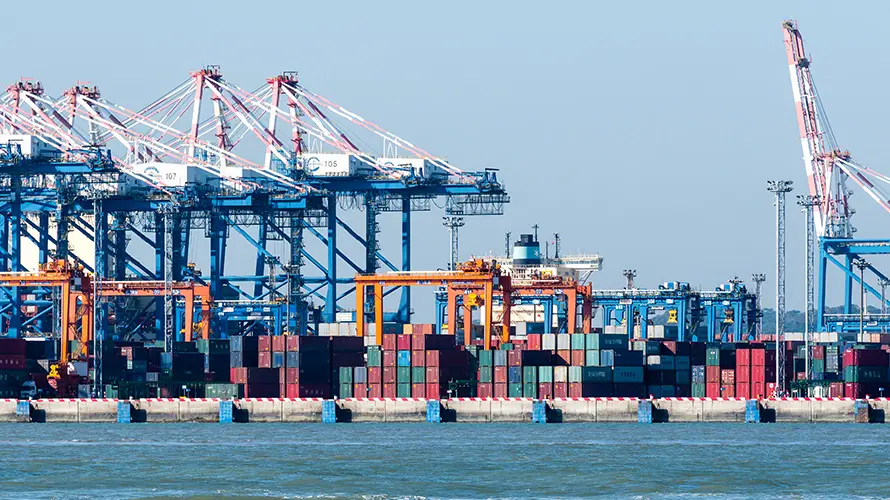


Port Machinery Emergency Parts Sourcing: The 48-Hour Response Protocol When Your STS Crane Goes Down

What You'll Learn
- Why the First 48 Hours Determine Your Recovery Speed
- Hour 0–6: Triage, Contain, and Identify the Critical Part
- Hour 6–24: Activate Emergency Sourcing Channels
- Hour 24–36: Expedited Logistics and Pre-Positioning
- Hour 36–48: Installation, Commissioning, and Restart
- Building Your Permanent Emergency Response Protocol
A Ship-to-Shore (STS) crane going offline is never just one problem. It's a financial hemorrhage that starts the moment the hoisting chain stops moving. At a medium-sized container terminal processing 1,500 moves per day, a single crane outage can cost anywhere from $8,000 to $25,000 per hour in missed berth windows, delayed vessels, and reshuffled yard operations. When a critical mechanical failure strikes without warning, the difference between a 48-hour recovery and a week-long ordeal often comes down to whether your team has a documented, repeatable emergency parts sourcing process already in place. NBLanhai Load Parts as outlined in ISO 12100 safety of machinery for port equipment per DNV maritime port machinery operational standards.
In this guide, we break down the complete 48-hour response protocol for port machinery emergency parts sourcing — from the first hour of failure through full operational restoration. Whether you're managing a fleet of STS cranes, RTG cranes, or mobile harbor cranes, these steps apply.
Why the First 48 Hours Determine Your Recovery Speed
Port machinery emergencies follow a predictable deterioration curve. In the first six hours, the direct costs of downtime accumulate. Between six and twenty-four hours, secondary impacts begin — vessel delays trigger demurrage claims, feeder connections are missed, and customer confidence erodes. Beyond forty-eight hours, the incident transitions from an operational hiccup to a full-scale crisis management situation, often requiring executive-level escalation and potentially triggering contractual penalty clauses with shipping line partners.
The goal of the 48-hour protocol is to arrest this escalation at the earliest possible stage. That means decisions made in the first six hours — specifically around parts identification and supplier activation — set the trajectory for the entire recovery. Operators who treat emergency sourcing as an ad-hoc, reactive process consistently experience longer downtime windows. Those with pre-established protocols and trusted supplier relationships routinely recover in half the time.
Critical Statistic
Industry data from the International Association of Ports and Harbors (IAPH) indicates that terminals with documented emergency parts protocols experience an average of 62% shorter downtime for critical equipment failures compared to those without structured response plans. The single biggest time saver? Pre-identified supplier contacts and pre-verified part availability.
Hour 0–6: Triage, Contain, and Identify the Critical Part
The clock starts the moment your crane goes down. The first six hours are triage — your goal is damage control, accurate diagnosis, and initial supplier contact. Here's how to structure it:
1. Secure the Scene and Assess the Failure
Before any sourcing begins, the physical condition of the crane must be assessed by a qualified marine terminal engineer or OEM-certified technician. Attempting to commission replacement parts for a misdiagnosed failure is one of the most common time-wasting mistakes in emergency response. A drive motor failure, for example, can mimic symptoms of a power conversion module failure — ordering the wrong component wastes critical hours.
At this stage, compile three pieces of information: the exact OEM model and serial number of the affected crane, the subsystem involved (hoisting, traversing, spreading, or power), and a preliminary failure mode determination from your on-site technician. Photograph the fault panel display, note any error codes, and identify the specific component that has failed.
2. Cross-Reference Your Parts Inventory
If your terminal maintains a critical spares inventory — and any serious port operation should — this is the moment to check it. Common high-criticality items that are often pre-stocked include brake pads, sheave bearings, wire rope sections, electrical fuses, and sensor modules. For components not in your local inventory, you need to move immediately to supplier identification.
For specialized mechanical and hydraulic components that aren't stocked, established suppliers like NBLanhai's load parts division maintain rapid-response channels specifically for emergency scenarios. Their technical team can cross-reference OEM part numbers against their available inventory and identify cross-compatible alternatives within the first hours of an incident.
3. Categorize the Failure by Urgency
Not every crane failure requires the same emergency escalation level. Use a three-tier urgency matrix to direct your response:
| Urgency Level | Impact | Typical Response Window | Example |
|---|---|---|---|
| Critical | Full crane offline, berth blocked | 24–48 hours to operational | Main hoist motor failure |
| High | Crane partially functional, reduced throughput | 48–72 hours acceptable | Trolley travel drive fault |
| Medium | Non-essential system, full operation maintained | 1–2 weeks | Camera system, lighting |
Your STS crane going down with a main hoist failure is unambiguously Critical tier. Every action in this protocol is calibrated for Critical-tier events.
Hour 6–24: Activate Emergency Sourcing Channels
This is where the difference between organized emergency response and panic-driven procurement becomes stark. By the end of hour six, you should already have your initial parts identification completed. Now you enter the sourcing phase.
4. Contact OEM and Aftermarket Suppliers Simultaneously
For a critical STS crane failure, you should be running two parallel sourcing tracks simultaneously. The OEM track gives you brand-certified components with full warranty coverage — but OEM supply chains for specialized port machinery parts can be slow, especially for older crane models no longer in current production. The aftermarket track, particularly from established port machinery specialists, often delivers faster while meeting or exceeding OEM quality specifications.
Established suppliers maintain parts libraries for major crane brands including ZPMC, Konecranes, Liebherr, and Sany. For spreader-related failures — one of the most common STS crane failure modes — specialized suppliers with dedicated spreader parts inventory can often ship replacement components within 24–48 hours from established warehouse stock. The key is making that first contact within hour six, not hour eighteen.
5. Leverage Your Terminal Network
If you have relationships with neighboring port terminals or have operational presence at multiple facilities, this is the moment to leverage them. Inter-terminal borrowing of spare parts — particularly standardized components like electrical modules, hoses, and bearings — can shave significant time off your sourcing window. Many terminals have mutual aid agreements specifically for this purpose. If your crane shares OEM lineage with equipment at a nearby facility, a same-day parts transfer could be your fastest path to recovery.
6. Define Your Logistics Urgency Profile
By hour eighteen, you should have identified the source of your replacement part. Now the question becomes: how do you get it to your terminal fastest? Evaluate three logistics pathways:
- Standard air freight (48–72 hours): Suitable for high-urgency but not critical-tier. Typically the default for international parts sourcing.
- Expedited air freight (24–48 hours): Worth the premium for Critical-tier failures. Many logistics providers offer next-flight-out service for industrial cargo.
- Charter or dedicated courier (under 24 hours): Expensive but justifiable when crane downtime costs exceed $15,000 per hour. Reserve this for the highest-stakes scenarios.
The most expensive part in a port machinery emergency is the crane sitting idle. Every dollar spent accelerating logistics is almost always recouped within the first day of restored operation.
Hour 24–36: Expedited Logistics and Pre-Positioning
Between hours twenty-four and thirty-six, the focus shifts from sourcing to logistics execution. Your replacement part has been identified and potentially confirmed available. Now you need it on-site and installation-ready.
7. Pre-Position Installation Resources
Do not wait for the part to arrive before mobilizing your installation crew. By hour twenty-four, your maintenance team should be preparing the work zone, sourcing any secondary tools or lifting equipment needed for the installation, and confirming the availability of OEM or third-party technical support for the commissioning phase. Every hour saved on logistics and prep work compounds — a part that arrives on-site with everything ready to install goes in faster than one that arrives to a team still organizing.
8. Manage Customs and Regulatory Compliance
If your emergency parts are crossing international borders, this is the window where documentation failures cause the most damage. For critical industrial components being imported into a port jurisdiction, ensure your logistics partner has pre-filed any necessary customs documentation. Industrial machinery parts typically fall under specific tariff classifications — having the HS code and technical specifications ready in advance prevents the most common clearance delays.
Many established port machinery suppliers have experience navigating customs clearance for industrial equipment and can provide pre-packaged documentation packages that streamline the process. This is one of the hidden time-sinks in international emergency sourcing that teams without established supplier relationships consistently underestimate.
9. Communicate with Stakeholders
During this window, your terminal management should be communicating proactively with vessel schedulers, shipping line representatives, and port authority contacts. A vessel delay that's announced at hour thirty-six with a clear estimated recovery time is far less damaging than one announced at hour forty-eight with no timeline. Shipping lines can sometimes rearrange port rotation schedules — but they need lead time. Don't let this communication lag become a secondary crisis on top of your primary equipment failure.
Hour 36–48: Installation, Commissioning, and Restart
The final phase is execution. The part has arrived or is arriving imminently. Your team is mobilized. Now you execute.
10. Execute Installation Under Qualified Supervision
For mechanical and electrical components in STS cranes, installation must be supervised by a qualified marine terminal engineer or OEM-certified technician. Attempting to rush installation to meet a timeline without proper technical oversight is a false economy — a poorly installed component that fails within days creates another emergency, compounding your downtime. Follow OEM torque specifications, use calibrated tools, and document every step of the installation process for your maintenance records.
11. Commission and Load Test Before Full Operations
After installation, the crane must undergo commissioning and load testing before returning to full operational service. This is non-negotiable and should never be shortcut in an emergency scenario. The commissioning process for an STS crane after a critical component replacement typically includes: functional testing of the affected subsystem, full travel and hoisting cycle tests under no-load, and incremental load testing up to rated capacity. Document these tests — your insurance carrier and OEM warranty documentation will both require verification of this process.
12. Post-Incident Review and Parts Restocking
Once your crane is back online and operational, the emergency isn't completely over. The forty-eight-hour protocol includes a mandatory post-incident review within seventy-two hours of recovery. Document what worked, what was slow, and where your parts sourcing pipeline had gaps. This review feeds directly into your permanent emergency protocol (see below) and informs what critical spares should be added to your on-site inventory for future events.
The Golden Rule of Emergency Parts Sourcing
Every hour you spend preparing your emergency protocol before a failure occurs saves three hours of panicked response when the failure happens. The terminals that recover fastest from STS crane failures aren't the ones with the biggest budgets — they're the ones with the most organized preparation.
Building Your Permanent Emergency Response Protocol
The 48-hour protocol described above is only as effective as the documentation and training that supports it. A protocol that exists only in someone's memory is not a protocol — it's a hope. Here's how to make your emergency response capability permanent and institutionalized:
Document Your Critical Parts Catalog
Maintain a current list of all critical components across your crane fleet, including OEM part numbers, cross-reference numbers, primary supplier, and emergency contact for each. This catalog should be updated every quarter and stored in a location accessible to maintenance staff even when main terminal systems are offline. Digital copies should exist on mobile devices, and physical copies should be maintained in the crane control room and maintenance office.
Establish Supplier Emergency Agreements
Pre-negotiate emergency response terms with your key parts suppliers. Establish dedicated emergency procurement channels, agreed-upon response times, and expedited logistics protocols before an emergency happens. Suppliers who know your protocol and have advance notice of your emergency escalation procedures can respond significantly faster than those contacted for the first time during a live crisis. The best suppliers in the port machinery space — companies like NBLanhai that specialize in rapid response — build their service models around this reality.
Conduct Quarterly Emergency Drills
Like any safety-critical protocol, an emergency response plan requires rehearsal to remain effective. Run quarterly drills that simulate a critical crane failure scenario, with different failure modes rotated each quarter. Measure your team's response time against the 48-hour target and identify bottlenecks in your process. A drill run in calm conditions exposes gaps that a live emergency will punish mercilessly.
Maintain a Rolling Critical Spares Inventory
Use your incident history to inform which parts are most likely to fail and which failures have the highest operational impact. Stock the highest-criticality, highest-probability items on-site in your maintenance facility. Even a modest inventory of five to ten critical spare components — motor modules, brake assemblies, bearing sets, electrical contactors — can eliminate the first twenty-four hours of emergency sourcing from your response timeline entirely for common failure modes.
Conclusion
Port machinery emergency parts sourcing is not fundamentally a procurement challenge — it's an operational readiness challenge. The terminals that navigate STS crane failures most effectively are not those with unlimited budgets; they're the ones who have thought through their response protocol in advance, established trusted supplier relationships, and trained their teams to execute under pressure.
The 48-hour protocol gives you a structured roadmap: triage and diagnose in the first six hours, activate emergency sourcing channels in the next eighteen, execute logistics and pre-positioning in the following twelve, and complete installation and commissioning in the final twelve. Every phase has specific actions, and every action saves time. Follow it, adapt it to your specific fleet and operational context, and maintain it as a living document.
When your STS crane goes down, the last thing you want to be doing is figuring out your response process from scratch. That process should already be defined, documented, drilled, and ready to execute.