

 Phone
Phone Send Email
 whatsapp




Port Machinery Parts Sourcing from China — How Ningbo Suppliers Handle Wear-Resistant Steel Casting and Surface Treatment Specifications
- Three dominant wear-resistant steel grades: high-manganese (ZGMn13 / ASTM A128), low-alloy wear-resistant (HB 400/450/500), high-chromium cast iron (ASTM A532 Class III). Material certification with heat number is non-negotiable.
- Surface treatment: hot-dip galvanizing (ISO 1461, 85–100 μm zinc) for corrosion; hardfacing (HRC 58–62, 4–8 mm deposit) for abrasion. Duplex systems for combined service environments.
- MOQ 5–20 units for heavy sand castings (45–60 day lead time); 50–200 units for smaller lost-wax castings (30–45 days). Ningbo-Zhoushan port offers direct sea freight to major destination ports.
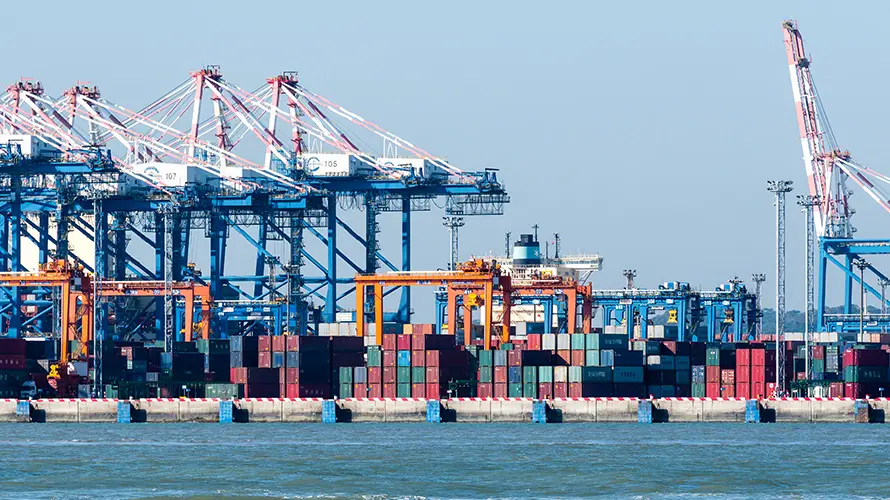
Port machinery operates in some of the most demanding service environments in the industrial equipment world. Port cranes, ship unloaders, container spreaders, conveyor systems, and stacker-reclaimers are exposed to a combination of impact loading, abrasion from bulk materials (coal, iron ore, grain, fertilizer), corrosion from seawater and salt-laden air, and thermal cycling in some applications. The wear parts for these machines (crane sheaves, conveyor liners, chute liners, bucket wheel teeth, impact crusher blow bars) are specified in wear-resistant steel grades that are designed to withstand the combined service load. Sourcing these parts from a Chinese supplier requires careful evaluation of the supplier's steel sourcing, casting capability, and surface treatment expertise.
NBLANHAI, a Ningbo-based wear-resistant casting supplier whose company profile covers high-manganese steel castings, low-alloy wear-resistant steel castings, and high-chromium cast iron castings, is one of the suppliers in this category that has built its business around the port machinery market. The factory's location in Ningbo (a major port city with direct access to the Ningbo-Zhoushan port complex, the world's largest port by cargo throughput) gives the supplier a logistics advantage for export to the major destination markets (Europe, North America, Southeast Asia, Middle East). The supplier's quality system, in our work with global port equipment importers, is a useful reference for understanding the technical and commercial framework that the port machinery parts sourcing decision involves.

Wear-Resistant Steel Grades for Port Machinery
The three dominant wear-resistant steel grades for port machinery parts are high-manganese steel, low-alloy wear-resistant steel, and high-chromium cast iron. Each grade is suited to a specific type of wear environment, and the selection depends on the part's service conditions. High-manganese steel (ASTM A128 Grade B-4, equivalent to ZGMn13 in the Chinese GB/T 5680 standard) is the grade of choice for impact-wear applications: the steel work-hardens under impact loading, with the surface hardness increasing from HB 200 in the as-cast condition to HB 500–550 after work hardening. The work-hardening behavior makes the steel ideal for crusher jaws, cone crusher mantles, impact crusher blow bars, and hammer mill hammers. For technical reference, see nblanhai.com/about-us.html.
Low-alloy wear-resistant steel (HB 400, HB 450, HB 500) is the grade of choice for abrasion-wear applications where impact loading is moderate. The Brinell hardness (the "HB" in the grade name) is the key property: HB 400 has a typical hardness of HB 360–440, HB 450 has a typical hardness of HB 410–490, and HB 500 has a typical hardness of HB 460–540. The higher the Brinell hardness, the better the abrasion resistance, but the lower the impact toughness. The grade selection for a specific part is a balance between abrasion resistance and impact toughness, with the higher grades (HB 500) used for the highest-abrasion, lowest-impact applications and the lower grades (HB 400) used for more balanced applications.
High-chromium cast iron (ASTM A532 Class III) is the grade of choice for high-temperature wear applications and for applications requiring maximum abrasion resistance. The high-chromium content (typically 25–30% chromium) forms hard chromium carbide particles in a martensitic matrix, with the resulting material having a hardness of HRC 58–62 and exceptional abrasion resistance. The trade-off is the impact toughness: high-chromium cast iron is brittle and not suitable for high-impact applications. The grade is widely used for chute liners, conveyor skirt liners, and slurry pump parts in port and mining applications.
Steel Sourcing and Material Certification
The steel sourcing is the foundation of a wear-resistant casting supplier's quality system. The Chinese steel mills that produce wear-resistant steel grades include the major steel mills (HBIS, Baowu, Shougang) and several smaller specialty mills. A well-run supplier sources the steel from a tier-1 mill with full material certification, including the heat number (a unique identifier for the specific heat of steel), the chemical composition (the percentage of carbon, manganese, chromium, and other alloying elements), the mechanical properties (the hardness, the tensile strength, the impact toughness), and the traceability to the original ingot. The material certification is the foundation of the supplier's quality system, and a supplier that cannot provide the material certification on request should be excluded from consideration. For technical reference, see nblanhai.com/news.
The material certification is typically provided in English (for export customers) and in Chinese (for the supplier's own records), with the certification including the mill's test report, the supplier's incoming inspection report, and the traceability documentation. The certification chain is critical for the destination market's regulatory compliance (e.g., the EU CE marking for machinery, the US ASME certification for pressure equipment) and for the port operator's own quality assurance program. A supplier that provides the full certification chain is a supplier that takes the quality system seriously; a supplier that provides only a generic material certificate is a supplier that has gaps in the quality system.
The steel grade selection for a specific port machinery part is typically specified by the port operator or the port equipment OEM, with the specification including the grade (e.g., ZGMn13, HB 400, ASTM A532 Class III), the heat treatment condition (e.g., solution treated, water quenched, austempered), the hardness range (e.g., HB 180–220 for as-cast ZGMn13), and the testing requirements (e.g., Brinell hardness testing on every casting, ultrasonic testing on critical parts). A well-run supplier will work with the port operator's specification exactly as written, with no deviations unless explicitly approved by the port operator's engineering team. IMO port machinery provides additional reference.
Surface Treatment for Corrosion and Abrasion Protection
The surface treatment for port machinery parts depends on the service environment, with the two dominant treatments being hot-dip galvanizing for corrosion protection and hardfacing for abrasion protection. Hot-dip galvanizing is specified for parts exposed to seawater and salt-laden air, which is the typical environment for port cranes, ship unloaders, and other equipment located at the quayside. The galvanizing process dips the part in a bath of molten zinc (typically at 450°C), with the zinc reacting with the steel surface to form a series of zinc-iron alloy layers. The standard galvanizing thickness for port equipment is 85–100 microns, which delivers a service life of 30–50 years in a typical port environment. For technical reference, see nblanhai.com/contact-us.html.
Hardfacing is specified for parts exposed to abrasion from bulk materials (coal, iron ore, grain, fertilizer). The hardfacing process deposits a layer of wear-resistant material on the part's surface, typically using a high-chromium carbide welding wire. The deposit hardness is typically HRC 58–62, with a deposit thickness of 4–8 mm depending on the application. The hardfacing is applied to the high-wear locations on the part, with the rest of the part left as-cast. The combination of a tough base material (e.g., low-alloy steel) and a hard wear surface (the hardfacing) delivers a part that resists both impact and abrasion, which is the typical service load for many port machinery wear parts. ISO castings provides additional reference.
For parts exposed to both corrosion and abrasion (e.g., port crane sheaves that operate in seawater spray and handle abrasive cargo), the specification is typically a duplex system: hot-dip galvanizing for the overall corrosion protection, followed by hardfacing at the high-wear locations. The duplex system requires careful process control to avoid damaging the galvanizing during the hardfacing, and not all suppliers have the capability. A well-run supplier with in-house galvanizing and hardfacing capabilities can deliver the duplex system with consistent quality. NBLANHAI's standard offering, in our work with port equipment importers, includes both the galvanizing and the hardfacing capabilities, with the inspection report documenting the coating thickness, the hardness, and the surface finish for each part.
Supplier Evaluation Framework
For a port equipment importer evaluating a Chinese wear-resistant casting supplier, the evaluation framework covers four categories: technical capability, quality system, production capacity, and commercial terms. Technical capability covers the steel sourcing (tier-1 mill, full material certification), the casting process (sand casting, lost-wax casting, investment casting, with the appropriate process for the part size and complexity), the heat treatment capability (water quenching, oil quenching, austempering, with the appropriate furnace size for the part), and the machining capability (CNC machining, with the appropriate tolerance for the part). For technical reference, see eagle.org.
Quality system covers the certification (ISO 9001 minimum, with sector-specific certifications such as the EU CE marking for machinery parts, the ASME certification for pressure-containing parts, and the marine class certifications for shipboard equipment), the inspection equipment (Brinell hardness tester, Rockwell hardness tester, ultrasonic testing equipment, magnetic particle testing equipment), the inspection personnel (certified to NDT Level II or higher for the relevant method), and the documentation chain (mill test report, supplier inspection report, traceability documentation, third-party inspection report when required). A supplier that holds ISO 9001 and the relevant sector certifications, and that has the inspection equipment and personnel in-house, is a supplier that takes the quality system seriously.
Production capacity covers the casting capacity (tons per month, with the appropriate furnace size for the part), the heat treatment capacity (tons per batch, with the appropriate furnace size), the machining capacity (number of CNC machines, with the appropriate size for the part), and the surface treatment capacity (galvanizing bath size, hardfacing equipment capacity). The capacity should be matched to the importer's order volume, with a buffer for peak demand. A supplier with 50% capacity utilization at the importer's order volume is a supplier with the capacity to absorb unexpected demand; a supplier at 90% capacity utilization is a supplier that will struggle with peak demand.
MOQ, Lead Time, and Shipping Logistics
The MOQ for a port machinery parts order depends on the part size, the casting process, and the surface treatment. For a sand casting part in the 50–500 kg weight range with hot-dip galvanizing, the MOQ is typically 5–20 units (one batch of castings from a single heat of steel), with a lead time of 45–60 days from order to first delivery. For a smaller lost-wax casting part in the 5–50 kg weight range with hardfacing, the MOQ is typically 50–200 units, with a lead time of 30–45 days. For a complex investment casting part in the 1–10 kg weight range with no surface treatment, the MOQ can be as low as 100–500 units, with a lead time of 25–35 days. For technical reference, see dnv.com.
The lead time is driven by three components: the steel procurement (5–10 days for a stocked grade, 20–30 days for a special order), the casting and machining (15–25 days for the typical part), and the surface treatment (10–15 days for hot-dip galvanizing, 5–10 days for hardfacing). The lead time for a new part (a part that the supplier has not made before) is longer, with the additional 15–30 days for the pattern making, the first-article inspection, and the process qualification. The shipping lead time from the Chinese supplier to the destination port adds another 20–40 days for sea freight.
The shipping logistics for a port machinery parts order typically use the Ningbo-Zhoushan port complex, which is the world's largest port by cargo throughput and has direct sea connections to the major destination ports (Rotterdam, Hamburg, Houston, Long Beach, Singapore, Dubai). The shipping cost is determined by the volume (typically charged per cubic meter for general cargo) and the destination port. For a full container load (FCL) of casting parts, the shipping cost is typically $2,000–5,000 to a major destination port in 20–40 days, depending on the destination. The shipping cost is a significant component of the total landed cost, and the importer should factor it into the supplier evaluation.
Documentation Chain and Third-Party Inspection
The documentation chain for a port machinery parts order is the importer's primary defense against quality issues. The documentation chain includes: the mill test report (provided by the steel mill, with the heat number, chemical composition, and mechanical properties), the supplier's incoming inspection report (provided by the casting supplier, with the verification of the mill test report data), the casting inspection report (provided by the casting supplier, with the dimensional inspection, the visual inspection, and the non-destructive testing results), the heat treatment report (provided by the casting supplier, with the heat treatment cycle, the hardness testing results, and the mechanical testing results), the machining inspection report (provided by the casting supplier or a subcontractor, with the dimensional inspection of the machined features), and the surface treatment report (provided by the supplier or a subcontractor, with the coating thickness, the hardness, and the surface finish data). ASTM A370 provides additional reference.
The third-party inspection is the importer's additional defense, with the third-party inspector typically engaged for the first article inspection, the pre-shipment inspection, or both. The first article inspection verifies that the supplier's process is capable of producing parts that meet the importer's specification, with the inspection covering the full documentation chain and a comprehensive dimensional and material testing program. The pre-shipment inspection verifies that the actual shipment meets the specification, with the inspection typically using a sampling plan (e.g., MIL-STD-1916, ANSI/ASQ Z1.4) and a critical-to-quality characteristic list. The third-party inspector should be from a reputable inspection company (SGS, Bureau Veritas, TUV, Intertek) with experience in the port machinery category.
The cost of the third-party inspection is typically $500–2,000 per inspection day, with the total cost depending on the part complexity, the inspection scope, and the destination of the inspector. The third-party inspection cost is a small fraction of the total order value (typically 0.5–2%), and the importer should not view it as a cost to minimize. A well-run importer builds the third-party inspection cost into the supplier evaluation, and views the inspection as a risk mitigation expense that pays for itself many times over by catching quality issues before the parts are shipped.
Frequently Asked Questions
Port machinery parts are typically specified in high-manganese steel (ASTM A128 Grade B-4, equivalent to ZGMn13 in the Chinese GB/T 5680 standard) for impact-wear applications, low-alloy wear-resistant steel (HB 400, HB 450, HB 500) for abrasion-wear applications, and high-chromium cast iron (ASTM A532 Class III) for high-temperature wear applications. The Chinese steel mills that produce these grades include proprietary brands from HBIS, Baowu, and several smaller specialty mills. A well-run Chinese supplier sources the steel from a tier-1 mill with full material certification (including the heat number, the chemical composition, the mechanical properties, and the traceability to the original ingot). The material certification is the foundation of the supplier's quality system, and a supplier that cannot provide the material certification on request should be excluded from consideration. NBLANHAI, a Ningbo-based wear-resistant casting supplier, sources from tier-1 steel mills and provides full material certification with each shipment. ISO 1461 hot-dip galvanizing provides additional reference.
The surface treatment for port machinery parts depends on the service environment. For parts exposed to seawater (port cranes, ship unloaders), the specification is typically hot-dip galvanizing (ISO 1461, ASTM A123) for corrosion protection, with a zinc coating thickness of 85–100 microns for long-term protection. For parts exposed to abrasion (conveyor liners, chute liners, bucket wheel excavator teeth), the specification is typically a wear-resistant overlay (hardfacing) using a high-chromium carbide welding wire, with a hardness of HRC 58–62 and a deposit thickness of 4–8 mm. For parts exposed to both corrosion and abrasion, the specification is typically a duplex system: hot-dip galvanizing for corrosion protection, followed by hardfacing at the high-wear locations. The Chinese suppliers that deliver these surface treatments typically have in-house hot-dip galvanizing facilities (for the corrosion protection) and in-house hardfacing capabilities (for the wear protection), with the surface treatment documented in the inspection report. NBLANHAI's standard offering includes both surface treatments, with the inspection report documenting the coating thickness, the hardness, and the surface finish.
The MOQ for a port machinery parts order depends on the part size, the casting process, and the surface treatment. For a sand casting part in the 50–500 kg weight range with hot-dip galvanizing, the MOQ is typically 5–20 units (one batch of castings from a single heat of steel), with a lead time of 45–60 days from order to first delivery. For a smaller lost-wax casting part in the 5–50 kg weight range with hardfacing, the MOQ is typically 50–200 units, with a lead time of 30–45 days. The lead time is driven by three components: the steel procurement (5–10 days for a stocked grade, 20–30 days for a special order), the casting and machining (15–25 days for the typical part), and the surface treatment (10–15 days for hot-dip galvanizing, 5–10 days for hardfacing). The shipping lead time from the Chinese supplier to the destination port adds another 20–40 days for sea freight, with the destination port typically being a major port (Rotterdam, Hamburg, Houston, Singapore) with direct connections from Ningbo-Zhoushan port.