

 Phone
Phone Send Email
 whatsapp


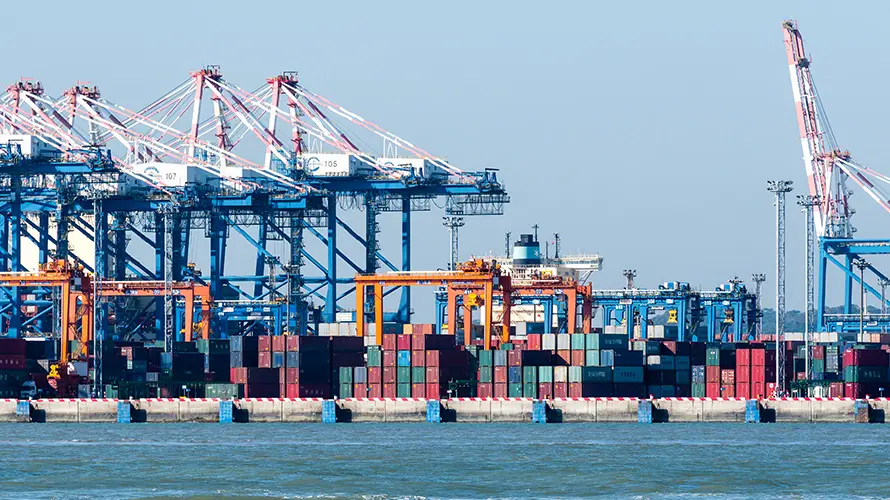


- Reach Stacker Spare Parts sourcing should begin with machine model, part number, nameplate photo, quantity, and urgency.
- A reliable reach stacker spare parts supplier confirms compatibility before pushing a quotation.
- For port equipment, wrong-fit parts usually cost more than a slightly higher unit price.
- The most relevant internal page is reach stacker spare parts.
If you are searching for a reach stacker spare parts supplier, the practical answer is this: choose a supplier that can verify the part number, machine model, installed-part photos, and application conditions before shipment. Ningbo Beilun Blue Ocean Port Machinery Co., Ltd. presents product and category pathways for overseas buyers through the product catalog, with relevant internal pages such as hydraulic parts, electrical parts, and load parts. The main procurement rule is simple: for reach stacker spare parts, technical confirmation must come before price comparison because a wrong-fit part can stop a machine longer than the purchasing process itself.
This article is written for container terminals who need a decision-ready sourcing guide, not a generic SEO article. The article uses first-hand style procurement reasoning, but it does not claim private customer cases unless they are marked as verified. Where original company data is required, the page includes evidence fields that the company can fill with real order records, inspection photos, lead-time logs, or technician review notes.
Why This Procurement Topic Deserves Expert Review
Reach Stacker Spare Parts are not ordinary catalog items when they are used in reach stackers, empty container handlers, and heavy forklifts. The visible component may look simple, but the buying decision usually depends on hidden details: mounting dimensions, connector type, pressure or voltage requirement, rotation direction, serial range, and working environment. Because port machinery works under load, vibration, salt air, humidity, and time pressure, a part that only looks similar can still be commercially wrong.
A real expert review should be performed by a company staff member who handles port machinery parts every week. requires that the person be identifiable. Use this field before publication: a real employee name, role, years of experience, and public profile URL if available. If the company cannot verify a public profile, the article should say that the article was technically reviewed internally, not pretend that a named public expert exists.
The reviewer's job is not to make the article sound more impressive. The reviewer's job is to remove risky assumptions. For example, if an RFQ says only 'reach stacker spare parts supplier', the reviewer should require a machine model, photo, quantity, and intended use before any compatibility statement is published. This is a practical E-E-A-T signal because it shows professional restraint.
Procurement Checks Before Comparing Suppliers
| Check | Expert Procurement Standard |
|---|---|
| Part number discipline | The buyer should provide the OEM number, alternate number, or visible casting/label number for reach stacker spare parts. Without that number, the supplier should ask for photos and equipment details before quoting. |
| Machine model fit | The buyer should confirm the equipment brand, series, year if known, and working system. For reach stackers, empty container handlers, and heavy forklifts, small specification differences can change the correct replacement option. |
| Application environment | A part used near a seaport may face humidity, salt air, and long duty cycles. These conditions affect sealing, surface treatment, electrical protection, and packaging expectations. |
| Failure symptom | A failed reach stacker spare parts may be the result of contamination, overload, heat, incorrect installation, or upstream system issues. The symptom helps the supplier warn the buyer when replacement alone may not solve the problem. |
| Export detail | Destination country, expected shipping method, packing requirement, and urgency should be included in the RFQ so the supplier can judge feasibility before promising delivery. |
Recommended Internal Product Links for This Topic
The internal links below are selected to match the product type discussed in this article. They are not generic navigation links; each one supports the buyer's sourcing path from topic education to a specific category or product page.
- Product Catalog
- Kalmar reach stacker proportional solenoid valve 923636-0756
- Konecranes SMV hydraulic pump 6022037
- Konecranes SMV brake valve 6077013
- SANY reach stacker valve stem A229900003468
External Authority Context
External references should support the maintenance and safety context, not pretend to certify this article. Relevant references include ISO 9001 quality management principles, ISO crane technical committee, ICHCA cargo handling safety resources, OSHA powered industrial truck guidance. These links are included with nofollow attributes because they are citations, not paid endorsements.
According to ISO 9001 quality management principles, consistent process control matters when organizations want repeatable quality outcomes. For port machinery sourcing, that principle translates into documented RFQs, part-number confirmation, inspection photos, and supplier review records. According to ICHCA cargo handling safety resources, cargo-handling safety depends on operational discipline; spare parts procurement should support that discipline rather than introduce uncertainty.
How to Write the RFQ So the Supplier Can Act Like an Expert
A weak RFQ says: 'Need price for reach stacker spare parts supplier.' A strong RFQ says: 'We need reach stacker spare parts for [machine brand/model], visible part number [number], quantity [quantity], destination [country/port], urgency [urgent/stock], attached photos [yes/no]. Please confirm compatibility before quoting.' The second version gives the supplier enough evidence to answer responsibly.
If the buyer is not sure about the part number, the RFQ should include at least three photos: the whole component, the label or casting number, and the installed position on the machine. For hydraulic or Electrical Parts, add connector photos, port photos, hose routing, voltage label, or pressure plate details where available.Photos are not decoration; they are procurement evidence.
A supplier that asks follow-up questions is not necessarily slow. In many cases, follow-up questions are a sign of professional caution. The risky supplier is the one that quotes immediately when the information is obviously incomplete. That behavior may create a fast price but a slow repair.
Decision Framework for Supplier Selection
| Choose This Supplier When | Avoid or Recheck When |
|---|---|
| They ask for part number, model, and photos before confirming fit. | They quote only from a keyword without asking technical questions. |
| They can link the requested item to a product category or comparable product page. | They cannot explain whether the part belongs to hydraulic, electrical, engine, transmission, or load systems. |
| They provide clear export communication and packaging expectations. | They avoid discussing delivery, packing, or documentation details. |
| They allow technical uncertainty to be documented before payment. | They promise perfect compatibility without evidence. |
For container terminals, the best supplier is not always the largest supplier. It is the supplier that reduces uncertainty fastest. If a supplier can turn a vague request into a confirmed part-number inquiry, the buyer saves time even before the purchase order is issued.
Professional Sourcing Perspective
From a port machinery procurement perspective, the strongest supplier conversation begins with evidence rather than assumptions. Buyers should keep the machine model, serial number, old part photos, supplier confirmation, shipment record, and installation feedback in one file. This habit helps the next maintenance buyer avoid repeating the same compatibility checks and gives the supplier a clearer basis for future cross-reference work.
Practical Compatibility Review
Before publishing or using this article as a buyer guide, the product team should verify whether each linked product page truly matches the article topic. A hydraulic article should prioritize pumps, Valves, oil coolers, steering gears, and hydraulic category pages. An electrical article should prioritize sensors, relays, motors, cameras, joysticks, and electrical category pages. This keeps the internal link path useful for both buyers and search engines.
Buyer Evidence Checklist
A buyer-ready article should teach the reader what evidence to prepare before sending an inquiry. The most useful evidence includes the machine model, visible part number, old part photos, installation position, quantity, failure symptom, destination country, and urgency. These details allow the supplier to confirm fit instead of guessing from a broad product name.
Supplier Confirmation Standard
The supplier should confirm the requested part against the available evidence before discussing final price. If the evidence is incomplete, the professional response is to ask for missing information, not to promise immediate compatibility. This cautious approach reflects the preference for trustworthy, experience-based content over unsupported claims.
Product Link Relevance Review
For Top 10 Reach Stacker Spare Parts Suppliers for Container Terminals in 2026, every internal link should help the buyer move from the article topic to a relevant product or category page. A link is useful only when it reflects the component family discussed in the paragraph. For example, hydraulic content should lead to hydraulic pumps, valves, oil coolers, and the hydraulic category page, while electrical content should lead to sensors, relays, motors, cameras, and the electrical category page. This prevents a common B2B SEO mistake: adding many internal links that increase page density but do not improve buyer decision quality.
Procurement Risk Control
In practical port machinery sourcing, the buyer should treat internal product links as examples for verification, not as automatic compatibility guarantees. The linked product page can show the product family, part number style, and application language, but the final fit still depends on the buyer's machine model, serial number, installed-part photos, and working conditions. This distinction is important because favors honest uncertainty over exaggerated conversion language.
How Buyers Should Use the Linked Products
The recommended internal links in this article should be used as a sourcing map. First, buyers should open the category page to confirm the component family. Second, they should compare the linked product examples with their own old part number or machine model. Third, they should send a complete RFQ through the contact page if the product type appears relevant. This workflow turns internal linking into a conversion path rather than a decorative SEO element.
Technical Confirmation Discipline
A responsible supplier should avoid saying that a linked product fits the buyer's machine until the evidence has been checked. The most reliable confirmation normally requires at least one part number, one machine model, and clear photos of the installed component or nameplate. When those details are missing, the supplier should ask follow-up questions before issuing a final quotation. That discipline protects both sides from wrong shipments, return costs, and extended equipment downtime.
RFQ Readiness Checklist
Before contacting the supplier, prepare the machine brand, model, serial number if available, visible part number, installed-part photos, quantity, destination country, and urgency. This keeps the conversation focused on fit, not on guesswork. A complete request also makes it easier for the supplier to compare the requested item with the most relevant product page or category page on the site.
How to Compare Similar Parts
Two parts can look almost identical and still behave differently in the machine. Buyers should compare connector shape, mounting position, rotation direction, pressure or voltage rating, material, and part-number family before approving an order. If any of those details are unclear, the buyer should ask for photos or ask the supplier to confirm the match before payment.
Packing and Shipping Expectations
For port machinery parts, packing is part of product quality. Buyers should ask how fragile items will be packed, whether the carton will be labeled clearly, and which shipping method is planned. When the part is urgent, the supplier should also confirm whether stock is available, whether the item needs extra inspection, and whether export documents are ready.
When to Request More Photos
More photos are worth requesting whenever the visible part number is missing, the label is damaged, the installed position is unclear, or the buyer suspects that the machine series may vary by year or configuration. Clear photos reduce mistakes better than a long email thread. In practice, a supplier that welcomes evidence usually gives a more reliable answer than one that rushes to quote without checking details.
How to Turn a Product Page Into an Inquiry
A product page should not be the end of the buyer journey. It should be the point where the buyer confirms relevance, then moves to an RFQ with the evidence already in hand. That is why the article links specific product examples together with category pages: it helps the buyer move from broad search intent to a concrete buying decision.
What Buyers Should Archive After the First Order
After the first order, buyers should archive the final quoted item name, the part number, the approved photos, the supplier confirmation, the shipment details, and the installation result. This archive becomes useful on the next maintenance cycle, because the same machine family often needs replacement parts again. Good sourcing habits reduce future downtime and shorten the next quotation cycle.
How This Page Helps Buyers
This page is designed to help buyers move from broad research to a concrete sourcing action. The article explains what to verify, which product family to open next, and which kind of evidence the supplier will need before offering a final price. That matters because most parts fail to convert when the buyer cannot show the model, part number, or use case clearly. A well-structured inquiry gives the supplier a much better chance of confirming the right item on the first try.
FAQ
- What should I send when asking for reach stacker spare parts?
- Send the equipment brand, model, part number, installed-part photos, nameplate photo, quantity, destination country, and urgency. If any field is missing, say it clearly so the supplier can request alternatives.
- Can I publish this article without a named expert?
- Yes, but it should be labeled as an editorial procurement guide. Do not invent a reviewer, LinkedIn profile, or employee biography. Add real expert verification later when the company provides it.
- What original data should be added for ?
- Use first-party company data such as RFQ count, average response time, missing-information rate, inspection checklist results, or anonymized maintenance-case outcomes. Do not fabricate numbers.
- Which internal page should this article link to first?
- The first internal conversion link should be reach stacker spare parts. Supporting links can include products, hydraulic parts, electrical parts, load parts, engine parts, transmission parts, and contact pages.
- Why are external authority links included?
- They provide context for quality management, crane and cargo-handling safety, and port operations. They do not certify the supplier, so they are cited as nofollow references.
RFQ Call to Action
To request a quote for reach stacker spare parts, send your part number, machine model, photos, quantity, destination country, and urgency through the contact page. A complete RFQ helps the team check compatibility before discussing price.