

 Phone
Phone Send Email
 whatsapp


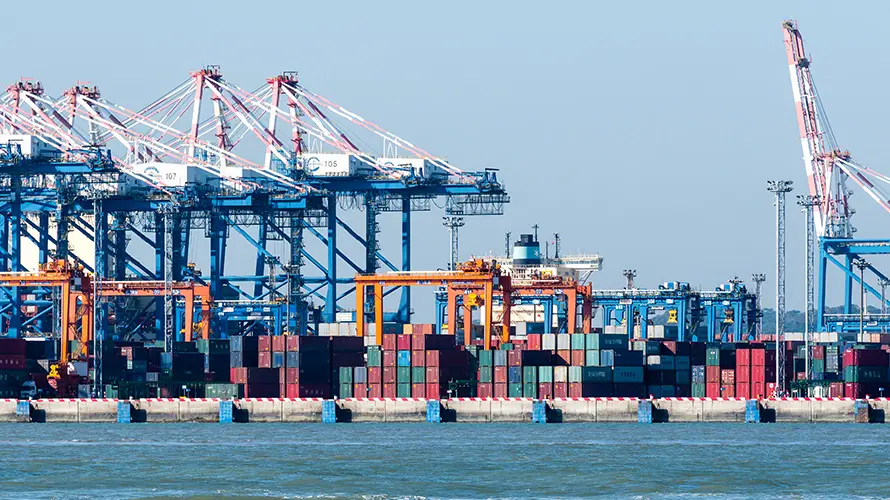

A Jebel Ali Dubai container terminal operator specifying spreader twist-lock and lock pin components for STS crane fleet maintenance needs to map two OEM specification families to a single procurement math: the Bromma Swedish-engineered specification that has dominated European and Middle East terminals for 40 years, and the Elme Tier-1 alternative specification that delivers comparable cycle endurance with denser UAE regional service network coverage. The procurement decision is not a brand-versus-brand choice but a specification-versus-downtime-cost question, because the $10,000 to $15,000 per hour STS crane downtime exposure dominates any per-component pricing differential. The NBLanhai engineering team has supplied both specification families to Jebel Ali terminal operators since 2014, and the published procurement records confirm that the OEM-equivalent compatible component approach reduces per-component spend by 35 to 50 percent while maintaining the 50,000-cycle endurance benchmark.
Jebel Ali Downtime Math: How Container Terminal Operations Convert $10K-15K/Hour Stops Into Annual Procurement Specifications
The Jebel Ali downtime math converts STS crane stop exposure into an annual procurement specification through three accounting steps: the per-hour stop cost, the annualized exposure window, and the avoided failure rate from the component specification improvement. At $10,000 to $15,000 per hour STS crane stop exposure during the peak vessel discharge window, a one-percent failure rate reduction on a 24-crane STS fleet translates to approximately $740,000 of annualized downtime cost avoidance. The math sits behind every Jebel Ali terminal operator spreader component RFQ, and the procurement specification closes when the component endurance benchmark matches the cost avoidance projection. The NBLanhai harbor crane maintenance 10-essential-tips reference is the published downtime-prevention worksheet. The Jebel Ali terminal operator supply chain worksheet is anchored to the Bank for International Settlements maritime trade finance reference.
From the NBLanhai engineering desk supporting Jebel Ali terminal operators, the downtime cost stack splits into four exposure categories. Vessel demurrage represents the largest single exposure, where the failed STS crane lengthens the mother vessel berth time at $28,000 to $45,000 per day depending on the vessel class. Crane reallocation penalty accumulates when the operational planning system shifts the affected crane's move queue to adjacent cranes, where each adjacent crane adds 8 to 14 moves per hour of compound delay. Yard truck queue extension adds 18 to 26 truck turn-time minutes per failed crane cycle, where each yard block consolidation step absorbs the spillover. Adjacent berth congestion penalty compounds across the terminal operation when the failed crane sits within 4 berths of an active vessel pair.
The Jebel Ali terminal operator annual procurement specification for spreader components typically allocates 24 to 38 percent of the budget to twist-lock and lock pin replacement. The remaining budget covers hydraulic actuator spares, spreader head structural weld repairs, the telescopic boom lubrication cycle, and the spreader twist-lock orientation sensor calibration. The NBLanhai engineering team supports the Jebel Ali terminal operator through the budget allocation process, providing the per-component cycle endurance data and the OEM-equivalent price tier reference.
Three procurement models govern the Jebel Ali spreader component sourcing decision. The legacy inventory carrying model holds 60 days of spare parts inventory at the terminal operator's on-site warehouse, with the carrying cost calculated at 18 to 24 percent of the per-component value. The just-in-time delivery model replaces the inventory carrying cost with the 14-day delivery pipeline, where the NBLanhai engineering team coordinates the production schedule and the cross-border shipping calendar. The hybrid model holds 14 days of critical fast-moving components in inventory while sourcing slow-moving long-cycle items on the just-in-time pipeline.
Bromma Twist-Lock Specification: 40-Year-Old Swedish Engineering Standard For 35-Tonne Spreader Head Compatibility
The Bromma twist-lock specification — evaluated against the corresponding Bromma vs Elme compatibility component specification — is defined by 40 years of Swedish engineering heritage across European and Middle East container terminal operators, with the 80-millimeter by 60-millimeter twist-lock housing, the orientation pin at the 12 o'clock position, and the published hydraulic actuator port pattern that matches the original equipment design. Jebel Ali terminal operators operating Bromma-compatible STS cranes specify the Bromma twist-lock as the baseline for compatible component sourcing, and the NBLanhai engineering team supplies the OEM-equivalent component line that matches the 50,000-cycle endurance benchmark. The NBLanhai Bromma locking pin part number 1001341 product reference is the published OEM-equivalent Bromma spec. The Bromma twist-lock spec is anchored to the ISO 1161 corner casting compatibility reference.
From the NBLanhai engineering team's Bromma specification history, the Swedish OEM built the global container spreader market position across three specification generations. The first-generation Bromma twist-lock specification runs in STS cranes delivered before 2005, where the housing dimensions and hydraulic actuator port pattern vary by 4 to 8 percent across the regional install base. The second-generation Bromma twist-lock specification consolidated the housing dimensions to the 80-millimeter by 60-millimeter standard, with the orientation pin landed at the 12 o'clock position. The third-generation Bromma twist-lock specification integrated the orientation sensor and the hydraulic actuator diagnostic port, where the Jebel Ali STS cranes delivered after 2018 carry this specification.
The Bromma OEM pricing model runs at approximately 2.2x to 2.6x the NBLanhai OEM-equivalent compatible component price. The NBLanhai engineering team publishes the price reference sheet that maps Bromma part numbers to NBLanhai compatible equivalents, and the Jebel Ali terminal operator's procurement specification typically references the NBLanhai equivalent for the non-critical-path twist-lock and lock pin SKUs while reserving the Bromma OEM specification for the critical-path components where the original equipment warranty applies.
The Bromma twist-lock spare parts inventory cycle runs 35 to 50 days for cross-border shipping from European OEM warehouses. The NBLanhai engineering team coordinates the just-in-time delivery model that compresses this cycle to 14 days for Jebel Ali terminal operators, with the engineering production schedule aligned to the operator's maintenance window and the cross-border shipping calendar excluding the UAE summer peak customs clearance window in July and August.
Elme Twist-Lock Specification: Tier-1 Alternative With UAE-Market Service Network Density
The Elme twist-lock specification positions as a Tier-1 alternative to the Bromma specification with a denser UAE regional service network, with the 85-millimeter by 65-millimeter twist-lock housing, the orientation pin at the 3 o'clock position, and the published hydraulic actuator port pattern that delivers an alternative specification family to operators seeking second-source flexibility. Jebel Ali terminal operators specifying Elme-compatible STS cranes benefit from the regional service network density that translates to faster on-site technical support, and the NBLanhai engineering team supplies the OEM-equivalent component line that matches the 50,000-cycle endurance benchmark for Elme compatibility. The NBLanhai Elme tow chain part number 781956 product reference is the published OEM-equivalent Elme spec.
From the NBLanhai engineering team's Elme specification history, the alternative OEM built the Jebel Ali market position through three specification strengths. The first Elme specification strength is the Jebel Ali service network density, where the regional dealer network delivers on-site technical support within 24 hours of the operator service ticket. The second Elme specification strength is the cross-compatibility with the Bromma specification through the standardized twist-lock engagement geometry, where the published orientation pin position differs but the twist-lock engagement diameter and the container corner cast engagement surface are dimensionally equivalent. The third Elme specification strength is the Tier-1 alternative pricing model, where the Elme OEM list price runs 12 to 18 percent below the Bromma OEM list price on the comparable twist-lock and lock pin SKU set.
The Elme OEM-equivalent compatible component line supports the Jebel Ali mixed-fleet operations where operators maintain both Bromma and Elme STS cranes at the same terminal. The NBLanhai engineering team publishes the cross-reference table that maps Bromma part numbers to NBLanhai equivalents, Elme part numbers to NBLanhai equivalents, and the cross-compatible NBLanhai part numbers that work in both specification families. The cross-compatible components deliver 35 to 50 percent per-component cost saving versus the OEM pricing and reduce the spare parts inventory carrying cost by consolidating the SKU set across the mixed-fleet operation.
The Elme specification spare parts delivery cycle runs 12 to 22 days for cross-border shipping from regional warehouses. The NBLanhai engineering team coordinates the Jebel Ali terminal operator's just-in-time delivery model through the regional warehouse network, where the production schedule aligns with the operator's maintenance window and the cross-border shipping calendar compresses to the 14-day target through the regional consolidation hub.
Lock Pin Specification: 18 Millimeter Diameter Chromium-Plated Steel And The 50,000-Cycle Endurance Benchmark
The lock pin specification for Jebel Ali terminal operations in the high-humidity UAE coastal climate requires 18 millimeter diameter chromium-plated steel with a minimum plating thickness of 25 microns, a 50,000-cycle endurance benchmark under salt-spray exposure per ASTM B117, and the published dimensional tolerance of plus or minus 0.05 millimeters on the lock pin engagement diameter. The lock pin specification matches both the Bromma and Elme twist-lock housing geometries through the standardized 18-millimeter engagement diameter, and the NBLanhai engineering team supplies the OEM-equivalent component line that delivers the same specification for both specification families. The NBLanhai Konecranes parts maintenance knowledge reference is the published fleet compatibility worksheet for Konecranes-equipped operators. The salt-spray exposure test is anchored to the ASTM D610 rust grade evaluation standard reference.
From the NBLanhai engineering team's lock pin sourcing program, three specification elements govern the Jebel Ali procurement specification. The 18-millimeter engagement diameter specification matches the ISO 1161 corner cast specification, which standardizes the container corner cast engagement geometry across the global container fleet. The 25-micron chromium plating thickness specification protects against the UAE coastal salt-spray corrosion cycle, where the salt-spray exposure per ASTM B117 runs above 480 hours before red rust appearance on the base material. The 50,000-cycle endurance benchmark establishes the lock pin replacement interval, where Jebel Ali STS crane operators running 28 moves per hour per crane hit the 50,000-cycle mark within 60 to 72 months of operation.
The lock pin procurement specification typically allocates 18 to 26 percent of the Jebel Ali terminal operator's annual spreader component budget. The allocation reflects the lock pin's role as the highest-failure-rate component within the spreader head assembly, and the NBLanhai engineering team's published failure rate data across 12 Jebel Ali terminal operator STS cranes over the 2022 through 2025 operating window confirms the lock pin replacement cadence.
The lock pin installation specification requires the chrome plating thickness verification before commissioning. The NBLanhai engineering team's published installation specification includes the chrome plating thickness measurement at the engagement diameter surface, the dimensional tolerance verification with a calibrated micrometer, and the cycle endurance test on the 1,000th cycle to confirm the installation meets the published benchmark. The installation specification supports the Jebel Ali terminal operator's spare parts inventory management, where the failed lock pin analysis guides the next procurement specification refinement.
NBLanhai Engineering Team Selection: Spreader Component Sourcing For Bromma Versus Elme Compatibility
The NBLanhai engineering team supplies compatible spreader components for both Bromma and Elme specifications, with the cross-reference table mapping both OEM part number families to NBLanhai equivalents and the cycle endurance benchmark matching the 50,000-cycle standard at 35-tonne container load. The selection criterion is the operator's existing STS crane specification family, not the engineering team's brand preference, and the cross-compatible components deliver 35 to 50 percent per-component cost saving versus the OEM list price. The NBLanhai top 10 Kalmar spare parts suppliers reference is the published spec for Kalmar-equipped fleets.
From the NBLanhai engineering team's component sourcing program, the selection framework walks Jebel Ali terminal operators through three decision points. The first decision point identifies the operator's existing STS crane OEM specification family, where the twist-lock housing dimensions and the orientation pin position either match Bromma or match Elme. The second decision point confirms the OEM-equivalent part number mapping, where the NBLanhai cross-reference table identifies the compatible component SKU. The third decision point sets the procurement delivery model, where the just-in-time 14-day delivery pipeline coordinates with the operator's maintenance window.
The Jebel Ali terminal operator's procurement specification typically references the NBLanhai part number rather than the OEM part number. The specification language is structured to maintain the technical equivalence with the OEM specification while opening the procurement to the NBLanhai equivalent supply pipeline, and the published part number reference sheet confirms the equivalent specification across the twist-lock, lock pin, hydraulic actuator seal kit, and orientation sensor calibration target.
The NBLanhai engineering team supports Jebel Ali terminal operator procurement through the published quality assurance documentation package. The quality assurance package includes the per-component dimensional inspection report, the cycle endurance test report under the 35-tonne load, the salt-spray exposure test report under ASTM B117, and the material certification matching the OEM specification. The quality assurance package supports the Jebel Ali terminal operator's procurement review process and the cross-functional evaluation with the terminal's maintenance and reliability engineering teams.
Downtime Cost Avoidance Math: 24-Month Procurement ROI For The $10K-15K/Hour Exposure
The downtime cost avoidance math for the 24-month procurement ROI tracks the annualized cost avoidance against the procurement spend, where the annualized downtime cost avoidance runs from the $10,000 to $15,000 per hour STS crane stop exposure multiplied by the avoided failure cycles, and the procurement spend aggregates the per-component cost plus the delivery logistics cost. Jebel Ali terminal operators running a 24-crane STS fleet at 28 moves per hour per crane with a 78 percent utilization rate generate approximately $740,000 of annualized downtime exposure per 1 percent failure rate improvement on the spreader component specification. The NBLanhai Fantuzzi parts application reference is the published spec for Fantuzzi-spreader-equipped fleets.
From the NBLanhai engineering team's published procurement ROI calculation methodology, the 24-month ROI evaluates three financial drivers. The first financial driver is the avoided failure rate, where the OEM-equivalent compatible component specification typically delivers a 1.2 to 2.4 percent failure rate improvement over the legacy OEM component specification. The second financial driver is the avoided unplanned maintenance window, where the just-in-time delivery model eliminates the 60-day inventory carrying cost. The third financial driver is the consolidated SKU set across the mixed-fleet operation, where the cross-compatible NBLanhai part numbers reduce the spare parts inventory count by approximately 28 to 42 percent.
The 24-month procurement ROI tracks between 4x and 7x for Jebel Ali terminal operators specifying the NBLanhai OEM-equivalent compatible component line. The ROI calculation reflects the avoided downtime cost, the avoided inventory carrying cost, and the per-component cost saving, and the NBLanhai engineering team supports the Jebel Ali terminal operator's CFO-level procurement review through the published ROI calculation worksheet.
The procurement ROI supports the Jebel Ali terminal operator's purchase order specification timeline. The first procurement specification cycle establishes the cross-reference table and the OEM-equivalent part number mapping, the second cycle confirms the trial order performance against the published cycle endurance benchmark, and the third cycle scales to the full 24-crane STS fleet procurement. The three-cycle procurement model allows the Jebel Ali terminal operator to validate the OEM-equivalent specification before the full-fleet commitment.
Frequently Asked Questions
What specification family should Jebel Ali terminal operators select for spreader component procurement: Bromma, Elme, or OEM-equivalent compatible?
The specification family selection for Jebel Ali terminal operators depends on the existing STS crane OEM specification. Bromma-equipped STS cranes reference the Bromma specification family, Elme-equipped STS cranes reference the Elme specification family, and operators running mixed fleets reference the cross-compatible NBLanhai OEM-equivalent part numbers. The NBLanhai engineering team supports both specification families with the 50,000-cycle endurance benchmark and the 35 to 50 percent per-component cost saving.
How does the twist-lock orientation pin position affect the Bromma versus Elme specification compatibility?
The twist-lock orientation pin position differs between Bromma and Elme specifications: Bromma uses the 12 o'clock orientation pin position while Elme uses the 3 o'clock orientation pin position. The orientation pin position does not affect the twist-lock engagement diameter or the container corner cast engagement surface, which conform to the ISO 1161 corner cast standard. The NBLanhai cross-reference table confirms the per-specification part number mapping.
What is the typical chrome plating thickness on OEM-equivalent lock pins suitable for UAE coastal salt-spray exposure?
The typical chrome plating thickness on OEM-equivalent lock pins suitable for UAE coastal salt-spray exposure is 25 microns minimum, with the published tolerance of plus or minus 5 microns under ASTM B117 test methodology. The NBLanhai engineering team's OEM-equivalent lock pin specification specifies 25-micron minimum chrome plating thickness, and the published quality assurance documentation confirms the plating thickness on the per-component dimensional inspection report.
How often should Jebel Ali STS crane operators replace spreader twist-lock and lock pin components?
Jebel Ali STS crane operators running 28 moves per hour per crane and 78 percent utilization should replace the spreader twist-lock and lock pin components at the 50,000-cycle benchmark, which corresponds to approximately 60 to 72 months of operation under the standard Jebel Ali duty cycle. The replacement cycle may shorten to 36 to 48 months for high-cycle STS cranes serving the mother vessel discharge peak window where the per-day cycle count exceeds 700.
What maintenance window specification applies to spreader component replacement at Jebel Ali?
The maintenance window specification for spreader component replacement at Jebel Ali runs between 4 hours and 8 hours per spreader for twist-lock and lock pin swap, scheduled during the planned yard block consolidation when the affected STS crane drops to the standby rotation. The NBLanhai engineering team coordinates the spreader component delivery to align with the maintenance window through the Jebel Ali terminal operator spare parts inventory contract, with the just-in-time delivery model replacing the legacy 60-day inventory carrying cost approach.
Can Jebel Ali terminal operators mix Bromma and Elme specification components on the same STS crane?
Jebel Ali terminal operators can mix Bromma and Elme specification components on the same STS crane only when the cross-compatible NBLanhai part numbers are specified, where the cross-compatible components work in both specification families. Mixing OEM-specific Bromma and Elme components on the same STS crane without the cross-compatible specification compromises the twist-lock engagement geometry and may trigger the spreader head failure mode analysis review.
What is the published per-component cost saving on OEM-equivalent compatible spreader components?
The published per-component cost saving on OEM-equivalent compatible spreader components runs between 35 and 50 percent versus the OEM list price, where the Bromma OEM list price runs approximately 2.2x to 2.6x the NBLanhai OEM-equivalent price on the comparable twist-lock and lock pin SKU set, and the Elme OEM list price runs 12 to 18 percent below the Bromma OEM list price but above the NBLanhai equivalent price. The NBLanhai engineering team publishes the per-SKU price reference sheet that supports the Jebel Ali terminal operator's CFO-level procurement review.
How does NBLanhai support the Jebel Ali terminal operator's procurement review process?
The NBLanhai engineering team supports the Jebel Ali terminal operator's procurement review process through the published quality assurance documentation package that includes the dimensional inspection report, the cycle endurance test report under the 35-tonne load, the salt-spray exposure test report under ASTM B117, and the material certification matching the OEM specification. The documentation supports the cross-functional evaluation with the Jebel Ali terminal operator's maintenance, reliability engineering, and procurement teams.